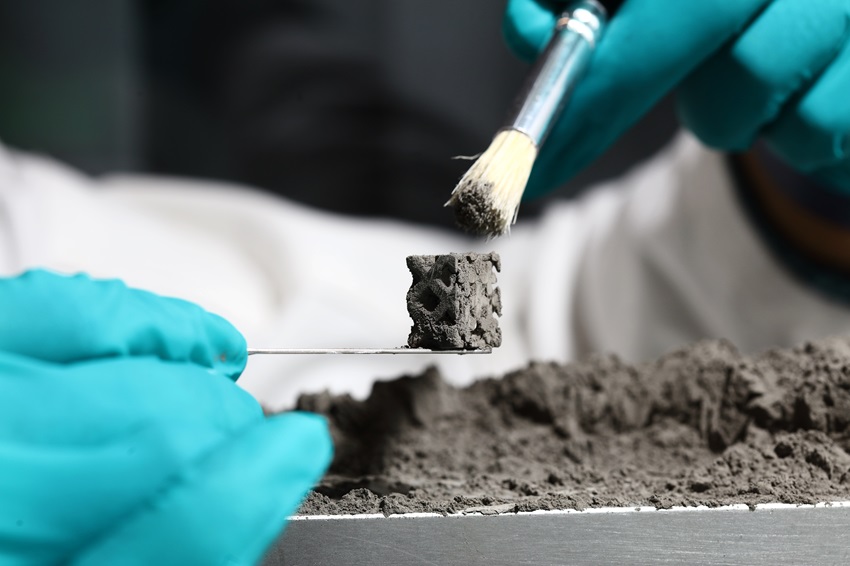

Developments within aerospace and energy transition require materials that meet ever-higher requirements. Think extremely high pressures or temperatures. In TU Delft's Materials for Additive Manufacturing lab, researchers can now explore new materials and process them into products and components for these kinds of extreme conditions. This unique lab was opened on 30 November.
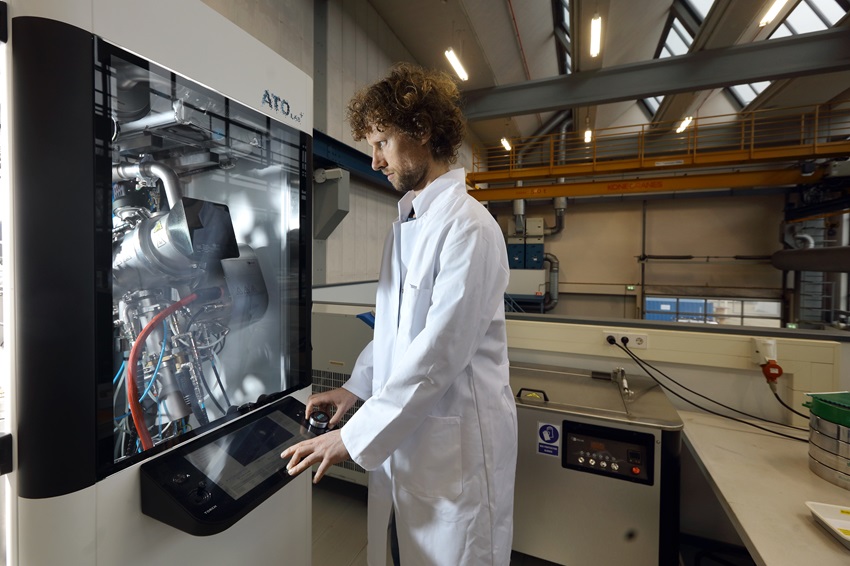
The TU Delft campus does feature more additive manufacturing labs. But this new lab is the only one of its kind, says Vera Popovich. She is associate professor at the Faculty of Mechanical Engineering, Maritime Engineering and Technical Materials Science (3mE). "This is because we can now also make the material that goes into 3D printers ourselves," she says. Until now, these powders were supplied by commercial parties. As a result, the raw materials are often a black box for researchers. "The composition and quality of the raw materials are like DNA," Popovich explains. "It influences the entire production process and the final properties of the product. If we don't know the full DNA, it limits our process and design flexibility." That the researchers themselves are now able to design and incorporate metal and ceramic raw materials into the complete production chain is a unique milestone.
Building bridges
In addition, the Materials for Additive Manufacturing (MAM) lab is able to design and produce materials with higher strength and better energy efficiency. But it also offers the ability to create complex shapes. Researchers can reduce the amount of material where necessary or even use natural and more sustainable resources. It is a collaboration between faculties 3mE and Aerospace Engineering (LR). The focus of the lab is on two things. Exploring materials and developing products that can withstand extreme conditions, such as in air and space. "We see this lab as a bridge between the different disciplines of 3mE and LR and between fundamental and applied researchers," says Popovich. "This lab allows us to investigate not only new materials. We can also investigate existing materials from a new perspective, and their advanced production," says Yinglu Tang, associate professor at LR.
Social problems
Popovich and colleagues' goal is to eventually significantly change the way 3D printing is applied. This is necessary so that it is no longer seen as a method to produce prototypes with. The technology should be seen as a real, high-performance production method that offers enhanced or integrated functionalities. "We want to use this new laboratory to explore existing and new metal, ceramic and composite materials and design products with extraordinary properties at different length scales," says Popovich. "These will ultimately bring us closer to solving important societal problems, such as the energy transition and general sustainability."
From aerospace to chips
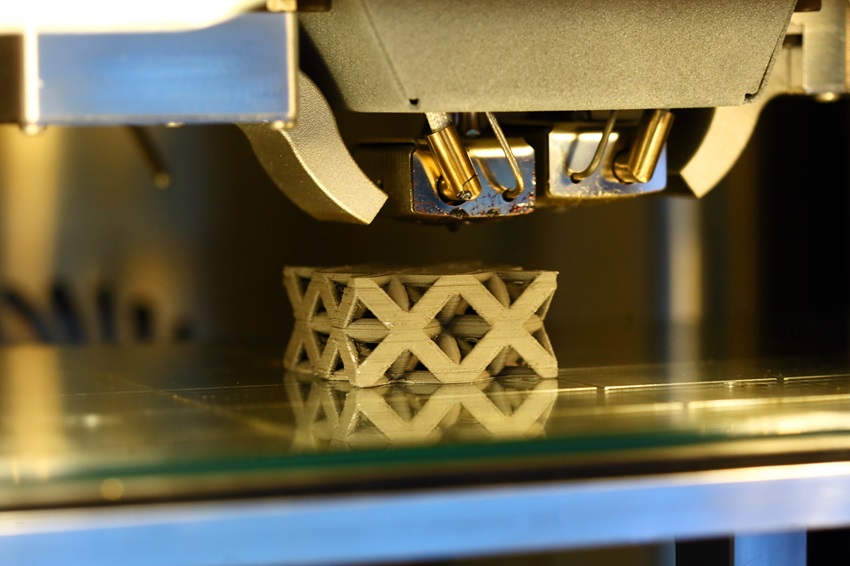
The joint research efforts of 3mE and LR have already started, in the form of shared PhD and master's students. For example, PhD student Yun-Ching Lin is studying the high-temperature oxidation resistance of ultra-high temperature ceramics (UHTC) with different porosities, shapes and grain sizes. This can form the basis for new materials that meet the requirements of applications in extreme environments, such as high temperatures and radiation. But the application areas extend beyond air and space. Master's student Adithya Keshav Mohan is investigating whether a steel part in lithography machines can be replaced by ceramic 3D-printed material. This project lays the groundwork for designing more efficient parts for lithography machines, potentially improving the chip manufacturing process.
Source: TU Delft // Photos: TU Delft | Sam Rentmeester