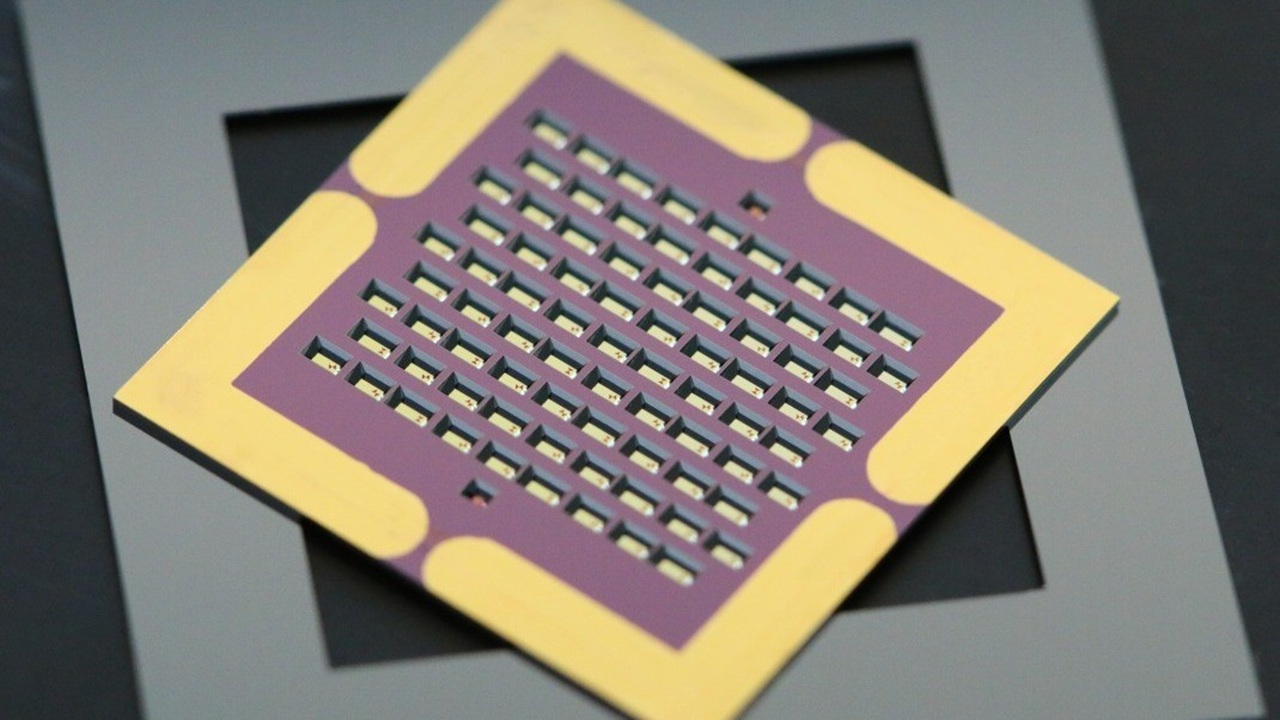

NASA has selected the far-infrared space mission PRIMA as the best candidate. It will be the first space telescope with an actively cooled mirror, set to 4.5 degrees Kelvin. This reduces noise to such an extent that PRIMA will be between a thousand and a hundred thousand times more sensitive than its predecessors. SRON, TU Delft and the University of Groningen are the proposed partners to supply the detection system, housing and insulation for the PRIMAger instrument.
The PRobe far-Infrared Mission for Astrophysics (PRIMA) is scheduled to be launched to Lagrange point L2 in 2033. PRIMA is ideally suited to observing the earliest galaxies. These are surrounded by dust through which only infrared light can pass. Due to the expansion of the universe, this light reaches us as far-infrared.
Uncharted territory
Astronomers aim to unravel how galaxies and supermassive black holes influence one another, what the chemical composition of dust and metals in interstellar clouds is, and how planets and their atmospheres form. The new infrared telescope also opens the door to unexpected discoveries, as the far-infrared is a blind spot in astronomy. It is precisely the wavelength of most thermal radiation, meaning that an uncooled mirror would quickly blind the camera. The combination of PRIMA’s actively cooled mirror and Dutch detector technology brings far-infrared sources within reach that emit light thousands of times fainter.
PRIMA is thousands of times more sensitive
SRON and TU Delft are the leading candidates to supply the innermost, most innovative part of the infrared telescope: the detection systems, associated housing and thermal insulation. This is based on their Kinetic Inductance Detectors (KIDs), which are so sensitive that they can even measure the background radiation of the universe. The instrument takes between a thousand and a hundred thousand times less time to make an observation than similar missions. Alternatively, PRIMA can photograph objects that are thousands of times fainter, such as the earliest galaxies.
Dutch rainbow filter
SRON and the University of Groningen (RUG) are best placed to manufacture the colour filter that will transform the KID detectors into a colour camera. This Linear Variable Filter (LVF) allows different shades of far-infrared light to pass through at each point. In this way, it replaces a prism or grating by creating the same rainbow effect, but with less volume and weight. Drawing on fifteen years of experience and technology developed from an earlier mission concept, SRON and the University of Groningen are also contributing to the system design, integration and testing of the infrared telescope’s flight hardware.
Featured image: Kinetic Inductance Detectors (KIDs). Credit: SRON
Read also: TNO, MCPV and Airbus Netherlands explore the application of terrestrial PV technology in space