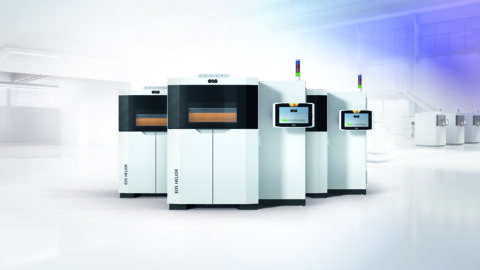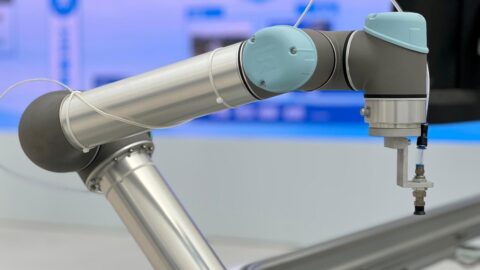

Reinforce3D is launching Delta Factory, an industrial version of its Continuous Fibre Injection Process (CFIP) technology. This machine enables parts to be reinforced with fibres from the inside out. Delta Factory makes this fibre reinforcement process suitable for larger-scale production. Among other features, the machine is equipped with an improved injection head, offers an injection speed up to ten times faster and supports automated resin handling. This is expected to improve production speed and process consistency, whilst reducing downtime.
CFIP is a technology in which continuous fibres are injected into internal hollow channels within a component. These are long, continuous fibres, similar to carbon fibre or glass fibre. In CFIP, the fibres are combined with a liquid resin, which, once cured, forms a mechanical bond between the fibres and the base material.
Tailoring reinforcement to mechanical loads
By embedding the fibres within the component, the reinforcement can be tailored to the mechanical load. This allows components to be made stronger without the need for a traditional mould. The technology is of particular interest for applications in the aerospace, automotive, motorsport, robotics, civil engineering and sports equipment industries. It is also relevant for medical devices, such as orthoses and prostheses. Using this technology, designers can locally reinforce components and tailor the fibre orientation to the forces encountered during use.
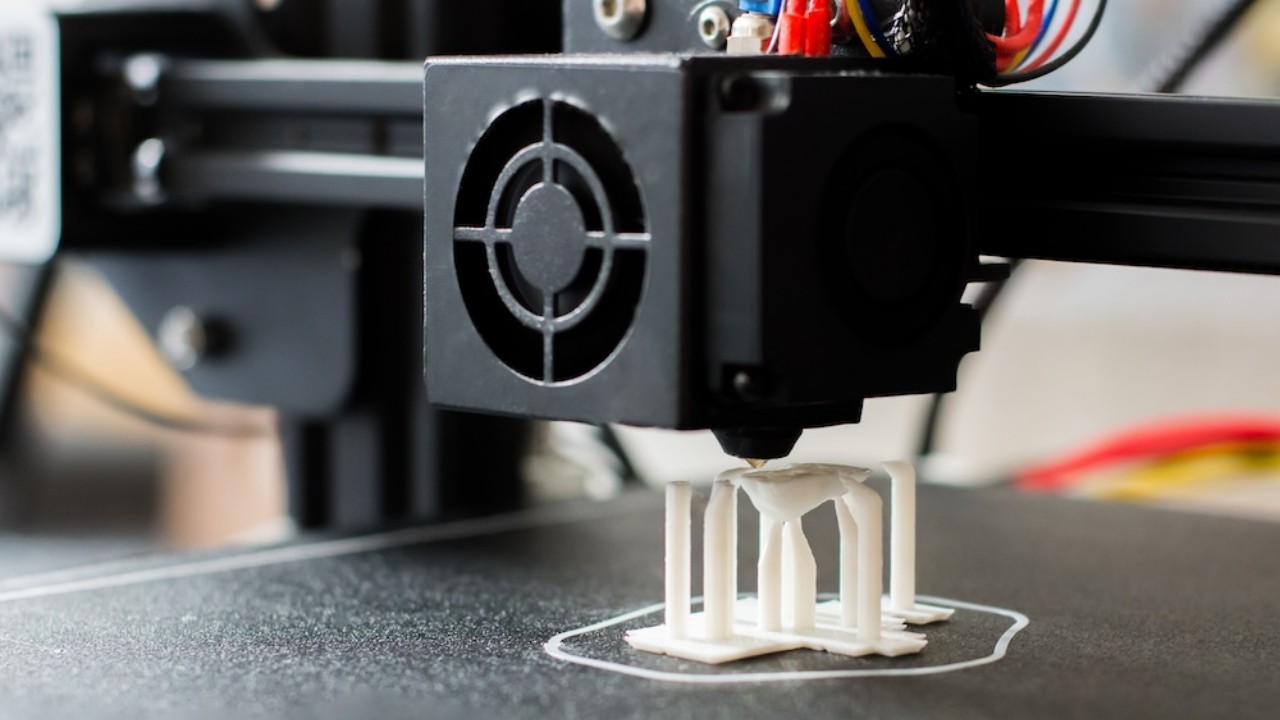
Previous applications of CFIP have included the reinforcement of 3D-printed objects. With Delta Factory, Reinforce3D aims to further develop the technology. The technology can be applied not only to 3D-printed parts, but also to parts manufactured using traditional production techniques such as injection moulding and compression moulding. A variety of combinations of polymer materials and fibres are possible.
According to the manufacturer, Delta Factory can be integrated into existing production processes. Reinforce3D is also targeting research and development environments with this machine.
Improved injection head
A key component of Delta Factory is the redesigned injection head. According to Reinforce3D, it can inject fibres up to ten times faster than previous models. The injection process is controlled via a closed-loop control system with integrated electronics and sensors. The system also monitors the temperature, which helps to maintain process stability and reduce the porosity of the end product.
The injection head can be adapted to different part geometries and internal channel diameters. An automated cutting system ensures that the fibres are automatically cut to the correct length.
Ease of maintenance played a key role in the design of the Delta Factory, according to Reinforce3D. The machine is therefore easy to clean and maintain, which keeps downtime to a minimum.
Automated resin processing and fibre storage
Resin processing has also been further automated. The machine automatically dispenses and mixes the resin components. The mixing ratio can be adjusted digitally. The system automatically monitors flow and pressure. Furthermore, the components are degassed to minimise air bubbles in the material.
The fibre storage is integrated into the machine. The fibres are stored in a protected, clean environment, and the increased spool capacity is designed to enable longer production cycles without interruption. Delta Factory supports various types of fibres, including carbon, glass and aramid fibres. Up to three fibre spools can be loaded into the system at the same time.
Users can operate the system via a touchscreen, which guides them through the production process and also displays the process parameters in real time. Via this screen, users can also manage recipes, view log files and receive maintenance support.
A broader CFIP platform
The machine forms part of Reinforce3D’s broader CFIP platform. In addition to hardware, this platform includes design verification software, such as Design Checker, as well as supporting materials and services.
By automating injection, resin processing and fibre feeding, Delta Factory aims to expand the application of CFIP from product development to mass production. The actual production speed and scalability depend on factors such as the part’s geometry, the choice of material and the process settings.