
Small, autonomous robots moving in groups across steel structures can help to assess the condition of bridges and other infrastructure more accurately. Researcher Bahar Haghighat of the University of Groningen is developing such robot swarms, which are designed to collect data at various locations. In the long term, this information should contribute to better decisions regarding maintenance and replacement.
Much of the Netherlands’ infrastructure dates back to the decades following the Second World War. As a result, many bridges, viaducts and roads are ageing and require maintenance or replacement. It is important for infrastructure managers to know which structures require immediate attention and which can still be used safely. This requires reliable data on the condition of individual components.
Recent problems highlight the urgency of this task. For example, in 2025 it was discovered that the fixed section of the Haringvliet Bridge was showing signs of fatigue in the steel joints, necessitating additional reinforcement and more intensive inspections. An increased risk of hairline cracks in the steel was also identified at thirteen Dutch bridges and viaducts, prompting the replacement works to be brought forward. In 2026, structural problems also came to light at the Giessense Bridges in Rotterdam, where, amongst other things, weight restrictions and additional support structures proved necessary. At the Merwede Bridge near Gorinchem, additional material tests in July 2026 led to its immediate closure to heavy goods vehicles, as the strength of the steel proved to be lower than previously assumed.
Fixed sensors do not provide a complete picture
Current monitoring is largely based on fixed sensors. These take measurements at a limited number of locations and therefore do not provide a complete picture of a structure. Mobile robots can move around and take measurements at various points. The robots developed by Haghighat are only a few centimetres in size and can carry various sensors. Using magnetic wheels, they move across steel surfaces such as bridge components, enabling them to examine the condition of the material. Among other things, the measurements make it possible to detect cracks and other structural damage.
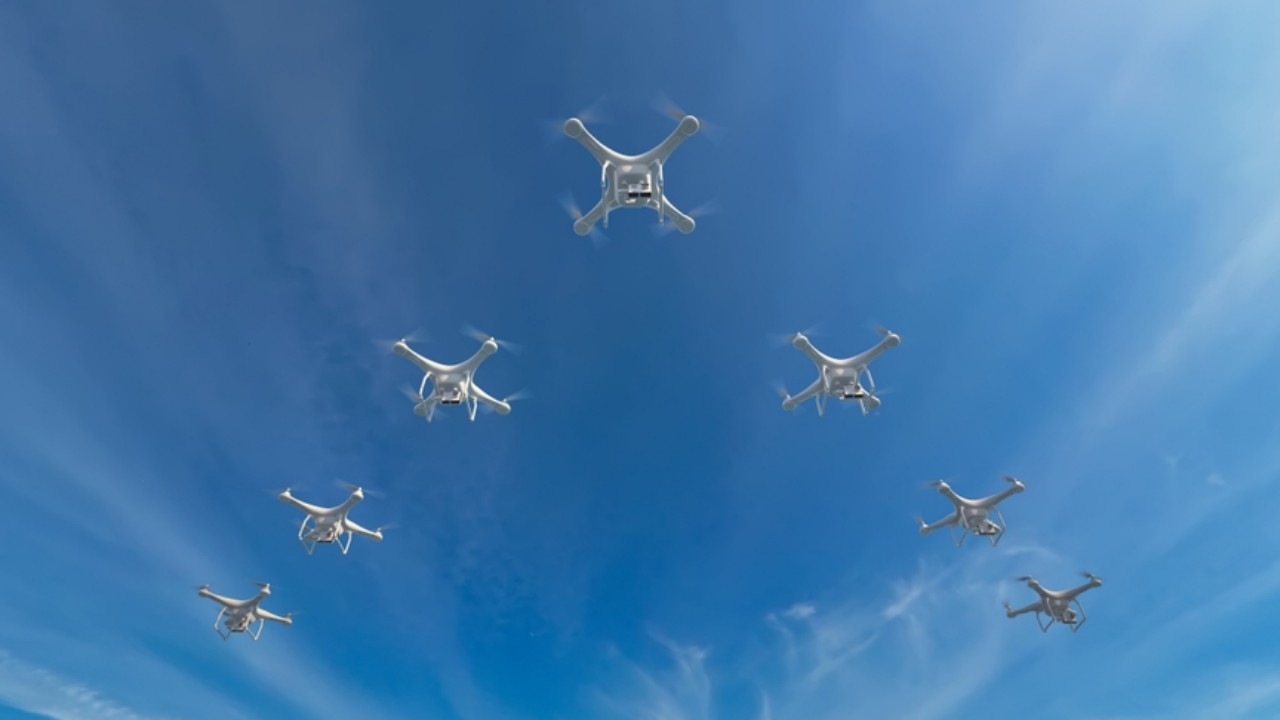
This approach falls under the umbrella of swarm robotics. In this context, individual robots carry out relatively simple tasks, whilst their collective behaviour serves a more complex purpose. A swarm can thus carry out measurements across a large area without the need for a single central robot to control all actions. This principle is inspired by natural groups, such as schools of fish, flocks of birds and colonies of insects. In such groups, coordinated behaviour can emerge through local interactions between individuals.
More measurement points, scalability and a more detailed picture
Swarm robotics offers practical advantages for inspections. For example, a larger number of robots can reach more measurement points than a single device. If a robot or sensor fails, another can take over part of the work. This approach is therefore scalable and suitable for locations that are difficult for inspectors to access. The robots can collect information from different parts of a structure. Combining this data gives them a more detailed picture of its condition.
The autonomy of the robots is one of the greatest technical challenges. An inspection system can only function autonomously if the individual robots make reliable decisions and continue to work together as a group. This requires systems that can withstand malfunctions and changing conditions on a bridge. Furthermore, the measurement data collected must be usable for assessing the condition of a structure.
Vidi grant
In 2025, Haghighat received a Vidi grant to accelerate the development of autonomous robots for construction inspection. The grant provides an opportunity to tackle fundamental problems that still prevent the robots from operating independently in real-world situations. A large-scale programme to inspect all Dutch bridges within five years is not the intended outcome. The emphasis is on demonstrating that the approach works and on laying the foundations for follow-up research, collaboration with companies or potential start-ups that may emerge from the research.
In addition to technical issues, legal and safety considerations also play a role. For example, deploying a robot swarm on existing infrastructure may raise questions about the safety of the robots, the handling of measurement data and responsibility for decisions taken on the basis of inspections. Such issues cut across more disciplines than just robotics and mechanical engineering.
The development of robot swarms for infrastructure inspection is still at an early stage. The coming years will show whether small, mobile robots can take reliable measurements and operate with sufficient autonomy. In the long term, the robots should be able to provide inspectors with additional information about structures that are currently only checked at a limited number of points. This should support the planning and prioritisation of maintenance work.