
A drone weighing less than 50 grams can move around in dark and visually challenging environments with the aid of artificial whiskers. This lightweight tactile sensor enables small drones to detect obstacles, track surfaces and explore unfamiliar spaces – all without relying on cameras.
The artificial whiskers have been developed by researchers at Delft University of Technology. They have published their findings in *Nature Communications*. With this development, the researchers aim to create a lightweight tactile sensor specifically designed for small drones. This is because sensors pose a significant technical challenge for small autonomous drones. For example, cameras require processing power and are dependent on adequate visibility. LiDAR and other range-finding sensors can offer a solution, but they make the drone heavier and increase energy consumption.
In practice, this additional load is unacceptable, as it limits the usability of small drones in situations where autonomous navigation may be important. As an example, the researchers cite dark, dusty or smoke-filled spaces.
Artificial whiskers
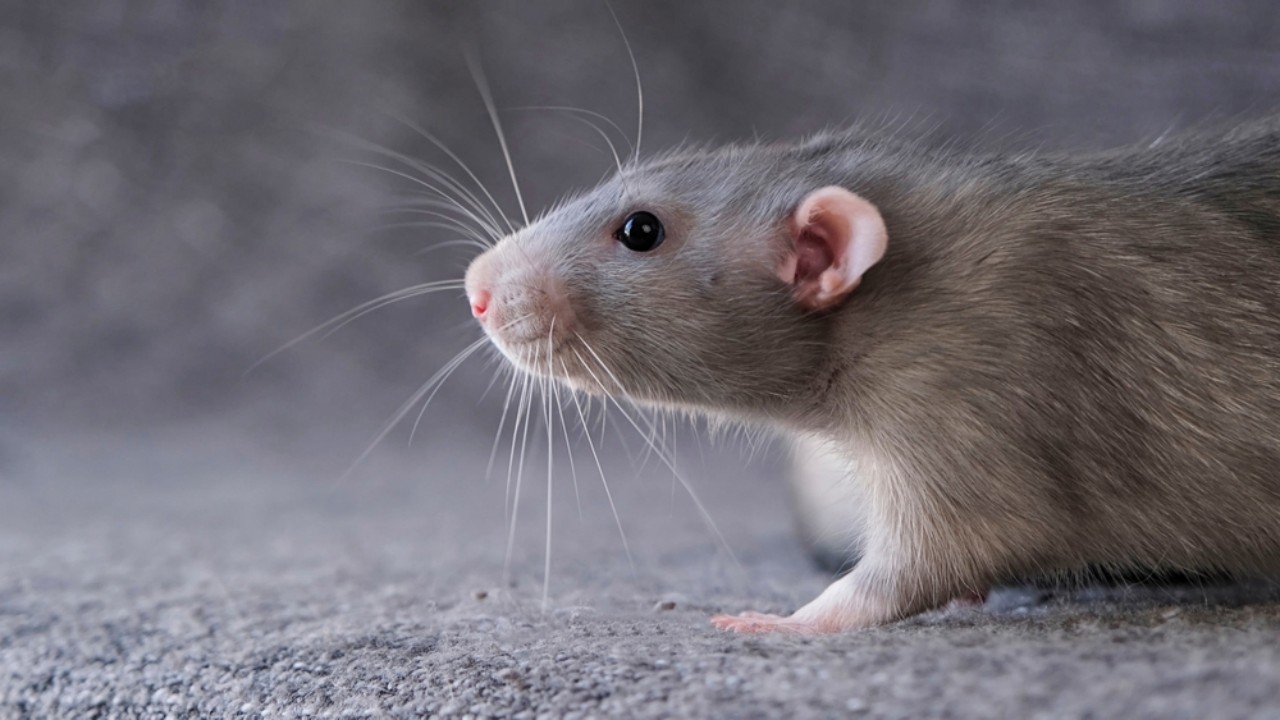
Researchers Chaoxiang Ye, Guido de Croon and Salua Hamaza from Delft University of Technology therefore sought an alternative way of sensing their surroundings. According to them, the solution lies in tactile sensations. The system is inspired by rodents, which use their whiskers to find their way in dark and confined spaces.
The researchers attached a pair of flexible artificial whiskers to the front of a small drone. Each whisker contains three miniature barometers that measure changes in pressure when the flexible rod bends upon contact with a surface. Based on the information gathered, the drone can then deduce where an obstacle is located and how far away the contact point is from the drone.
Goes beyond a collision sensor
Although the whisker may at first glance resemble a collision sensor, the approach goes further. It allows the drone to maintain constant contact with a surface whilst flying, thereby continuously measuring its distance from an obstacle. Among other things, this makes it possible to follow walls and avoid obstacles more accurately. The researchers have demonstrated the technique using both hard and soft surfaces and in complete darkness.
The researchers report that airflow from the drone’s propellers poses a challenge and can interfere with measurements. For instance, the propellers cause pressure changes and vibrations, which can produce signals similar to those of actual contact. The researchers use, amongst other things, an algorithm, a neural network and a so-called Kalman filter to suppress noise and drift. This makes it possible to measure contact distances to the nearest millimetre, despite any interference.
Data processing takes place on board
All collected data is processed directly on board the drone. This means that raw data does not need to be transmitted and only the processed data is sent, which helps to minimise data usage. The researchers used an STM32F405 microcontroller with 192 kilobytes of RAM, of which the developed algorithms use approximately 34 kilobytes. No external computers or positioning systems are required for tactile sensing and control. The software runs at a frequency of 50 hertz.
During experiments, the drone successfully navigated around obstacles and followed walls. A method was also tested that enables the drone to actively explore unknown, enclosed spaces. To do this, the drone combines wall-following with a mapping technique that determines which parts of the environment have not yet been sufficiently mapped. A total of ten simulations were carried out using this method, with the drone managing to find the exit within five minutes in nine cases. Practical tests also show that the drone can explore an environment and reach the exit using only tactile information.
A number of challenges remain
Although the experiments have been successful, the technology is still very much under development. There are still various challenges that the researchers aim to overcome. For example, prolonged contact can cause drift in the sensor readings. Soft or moving surfaces also lead to more oscillations and less accurate reconstructions. Furthermore, each drone must be calibrated individually, which takes around 15 to 20 minutes. The reproducibility of the sensors and the scaling up of production also remain areas of concern.
The researchers envisage various applications for small flying robots. These include inspection and reconnaissance activities, as well as search and rescue operations.