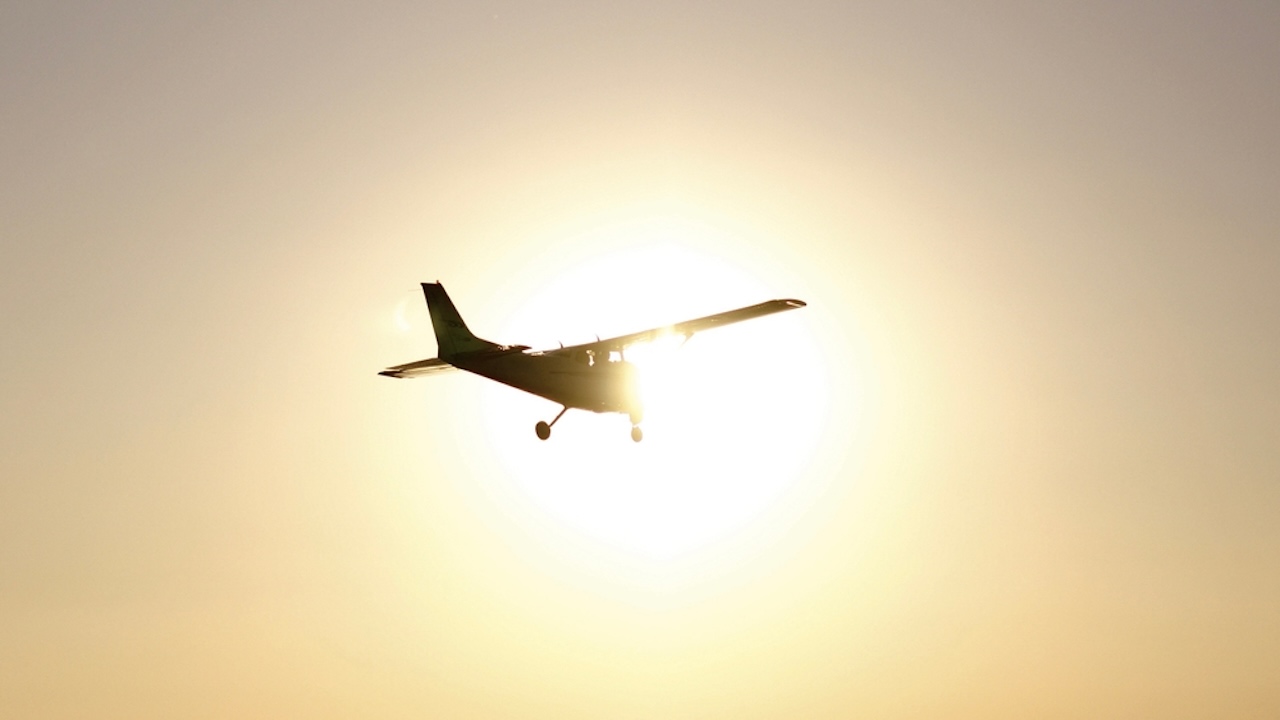

TU Delft's new Albatross team is starting work on the development of an electric, autonomous plane in the so-called Dream Hall. The plane, which can accommodate two occupants, should be able to take off and land vertically. Among other things, this will make it possible to take off from a regular car park. In this way, the students aim to offer an alternative to car journeys and regional train journeys, without travellers needing a pilot's licence or hiring a pilot.
The Delft Dream Hall is a facility at Delft University of Technology where student teams, also known as Dream Teams, work on innovative projects. In many cases, these teams are composed of students from different fields of study. They focus on both technological and societal issues. The Dream Hall provides the space, resources and guidance to develop their ideas and turn them into practical applications.
'Bringing dream of flying itself closer'
"Everyone has the dream of being able to fly themselves, we want to bring that closer," says technical manager Noam Hendriks. Team manager Philip Benschop points to opportunities that the plane can offer for Europe. In doing so, he stresses that regulations and certification are not yet set up for autonomous aviation, especially from regular car parks.
"We know that you cannot just fly without a licence, that certification of autonomous aircraft takes time and that the mobility system is not yet ready for it. But step one is demonstrating that it can be done technically and safely. After that, you can adjust regulations. First you use the aircraft from airports, then autonomously with pilot supervision, and so a path to fully autonomous transport emerges," Benschop explains.
He also points to the wider impact. For example, less traffic on the road also means less need for new roads, bridges and viaducts and thus less disruption to ecosystems.
'Less complex than autonomous driving'
Hendriks sees technically interesting opportunities. "Autonomous flying is less complex than autonomous driving, because there are no cyclists or pedestrians and there is much more space. Large commercial aircraft can already do almost everything autonomously and the pilot mainly supervises."
Energy consumption is also favourable: per kilometre, the autonomous plane uses about the same amount of energy as an electric car. Using current battery technology, the team modelled a two-seater with a range of about 175 kilometres. This would allow a journey from Amsterdam to Brussels to be made in 50 minutes, which is more than twice as fast as by high-speed train.
Blended wing body
The design is a so-called 'blended wing body'. In this, the cockpit is integrated into one large wing. Four propellers provide lift in horizontal flight and can rotate ninety degrees for vertical take-off and landing. The team already developed a 3D-printed scale model with working components. Next year, development of a 40 per cent-scale prototype with a wingspan of 2.6 metres will start. In three years, the team aims to fly a single-seater version. This model should then be further developed into a full-scale two-seater.











