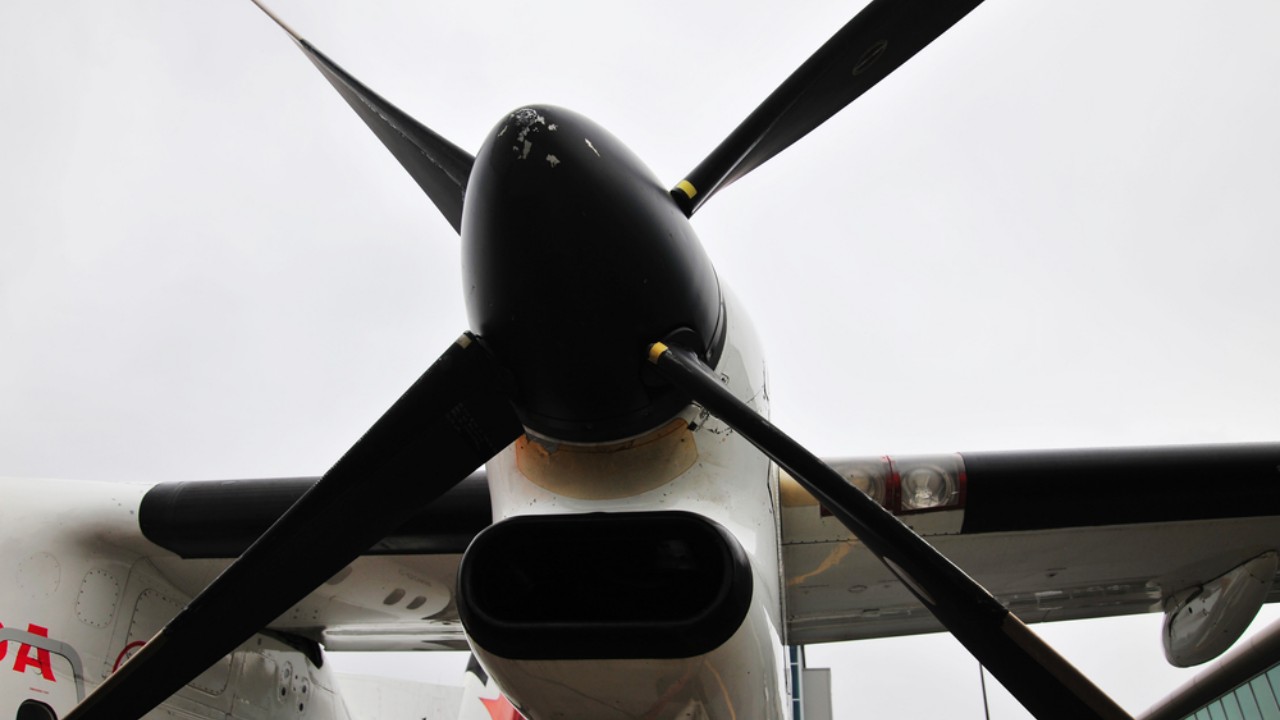

MTU Aero Engines is joining forces with Airbus to industrialise its hydrogen-based aircraft propulsion system, known as the Flying Fuel Cell (FFC). The German engine manufacturer also reports that the FFC’s central hydrogen and air supply systems have now been successfully tested.
The German company MTU Aero Engines specialises in the development of aircraft engines. Key customers of MTU Aero Engines include Airbus, Boeing and the consortium behind the Eurofighter. For example, the company supplies engines for Boeing’s 747 and 777, as well as Airbus’s A319, A320, A321 and A400M.
Supply systems validated
MTU reports that both the liquid hydrogen system and the system that feeds gaseous hydrogen to the fuel cell have been tested and approved under severe operating conditions. The performance and control models for the air supply have also been validated at the Munich site. These two supply systems now form the basis for the integration and demonstration programmes that the company will be launching in the near future.
This validation marks an important step in the development of the FFC. The focus is now shifting to integrated testing of the complete system. In Munich, the first fuel cell stack – which is almost ready for production – is being built with a power output of 350 kilowatts, alongside a complete system demonstrator that will enable the interaction between all components, subsystems and control functions to be investigated. MTU Aero Engines aims to demonstrate the system’s performance under flight conditions and thereby gather information for a future aircraft propulsion system. Both test campaigns will commence this year in two specially equipped test cells in Munich.
Converting hydrogen and oxygen into water and electricity
The FFC is based on the concept of a conventional fuel cell. In this cell, hydrogen and oxygen from the air react with one another, releasing both water and electrical energy. An electric motor uses this energy to drive the propeller via a gearbox, which in turn propels the aeroplane.
The only by-product generated in this process is water. This means that no CO₂, nitrogen oxides or particulate matter are emitted. MTU Aero Engines states that this could reduce the climate impact of flying by as much as 95 per cent. At the same time, noise levels are also significantly reduced, as only the propeller produces any sound. The fuel cell uses platinum, which, when processed correctly, is virtually infinitely reusable.
The system consists of various interconnected components. As a single cell delivers only a limited amount of voltage, hundreds of cells are stacked on top of one another to form a stack. These fuel cell stacks convert hydrogen and oxygen into electricity and water. In addition, there is a powertrain that converts electrical energy into mechanical energy via an electric motor, a hydrogen line that regulates the gas to the correct temperature, pressure and humidity, and an air line that supplies oxygen for the reaction. A cooling line ensures that the system remains at the correct temperature, whilst a control line coordinates all the sensors, data and actuators. This control line is also regarded as the ‘brain’ of the system.
Stored at approximately -250 degrees Celsius
For hydrogen storage, MTU is working with MT Aerospace on a fully liquid-hydrogen system, comprising tanks, sensors, heat exchangers, valves and safety systems. The hydrogen is stored at approximately -250 degrees Celsius in a double-walled, vacuum-insulated tank and is only converted to a gaseous state immediately before use. According to MTU, earlier tests with this system – initially using liquid nitrogen and later using actual liquid hydrogen – have been successful.
The electric motor was developed by MTU Aero Engines in collaboration with its subsidiary eMoSys. It is a compact motor weighing 40 kilograms and measuring 300 millimetres in diameter, delivering a continuous power output of 600 kilowatts. The motor achieves an efficiency of over 96 per cent, both during take-off and at cruising altitude. During a recent test campaign, the powertrain reliably reached this maximum continuous power for the first time, reports MTU Aero Engines.
Initially, the engine manufacturer expects the FFC to be of particular interest for shorter flights in regional aviation. In the long term, MTU Aero Engines aims to further develop the technology and make it suitable for medium-haul flights as well.