It is now clear that modern technologies such as robotisation and artificial intelligence form a powerful combination for smart manufacturing in the future.
A recent example of what can be achieved when these technologies are brought together comes from the electric aircraft manufacturer Eviation Aircraft and the 3D printing company Stratasys.
Challenges
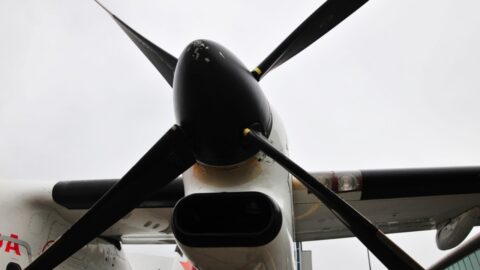
Eviation is using Stratasys' 3D technology to develop an all-electric passenger plane, of which there are still few. This will save a lot of time and money.
In the aerospace industry, both among startups and the big aviation giants, there has been a lot of interest in electric aircraft for a while but their actual development has a number of engineering challenges. Batteries, for example, need to be lighter and more powerful to generate sufficient power. Aerodynamic design is needed and that whole process is quite time-consuming and costly.
Eviation thinks it can make strides in the latter areas in particular with 3D printing. "3D printing encourages in-house innovation and can speed up the development phase, which is normally long and expensive. This allows us to develop new concepts and prodcuate working prototypes quickly, without incurring significant upfront costs." The company has chosen to start 'from scratch' and take a holistic approach. The entire development process, including aerodynamic testing and the propulsion system, has been revised to maximise the efficiency of electric flight.
Pre-testing
Stratasys' 3D printing technology allowed the company to extensively test many of its designs before actually having to invest in certifiable parts to build an aircraft. This ensured accelerated processes, innovative designs and much lower production costs.
"Because we had the ability to create new iterations of designs with 3D printing and were able to see how everything held up, we were able to make huge cost savings. This in-house manufacturing process is crucial for a company in the constantly changing and competitive aerospace industry."
Eviation used for electric wingtip motoring. Using 3D printing, these could be made in just a few hours. While waiting for the delivery of the actual motors, the 3D variants could already be extensively tested. The design also reduced the number of interventions on the aircraft's exterior by using smooth and curved surfaces. It creates strong, complex and lightweight parts to support these surfaces by 3D-printing a composite lay-up tool that was then covered with the already-made carbon fibre model.
"All in all, in the two-year operation we saved hundreds to thousands of dollars and about six months of work by 3D printing," he said. "Currently, we are using the technology to make prototypes of test parts and tools. The ability to make lightweight parts in complex geometries also puts us in state to explore opportunities to 3D print parts for the final aircraft."
Eviation expects to start test flights during 2018 and the first commercial flights are planned for 2021. "Eviation aims to make regional air travel more cost-effective and environmentally friendly. With people working at greater distances from home than ever before, we believe electric flight will bring mid-sized cities like Seoul and Beijing or London and Paris, closer together."
By: Kelly Bakker
Source: Eviation/Stratasys