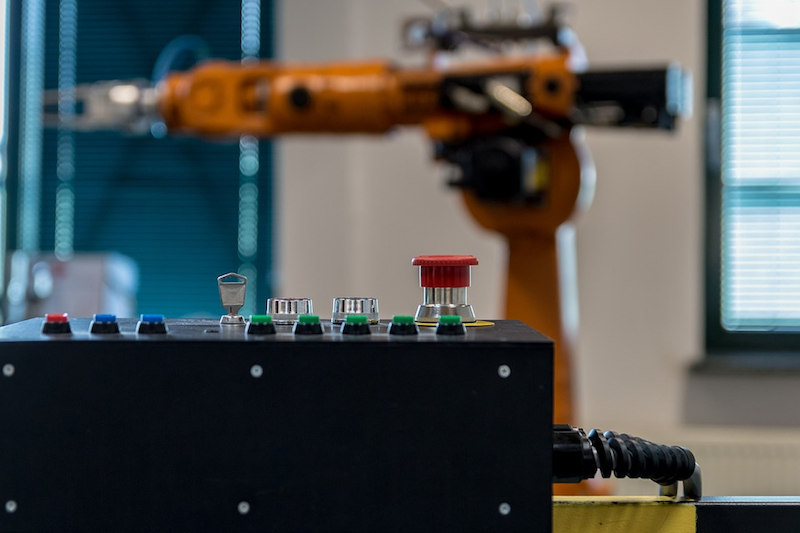

381,000 industrial robots were installed in factories worldwide in 2019. This will triple the amount of installations in less than a decade. The International Federation of Robotics sets out five trends contributing to this. "The mission to replace traditional manufacturing with 'go digital strategies' puts robots in the pole position," says Dr Susanne Bieller, secretary general of the IFR.
1. Robots learn new tricks
Software with artificial intelligence combined with vision systems and other sensors enables robots to perform increasingly complex tasks. Think of bin picking, something that previously could only be done by a human. New generations of robots are easier to install and programme, as well as to connect. Developments in communication protocols allow robots to integrate seamlessly with automation and Industry 4.0 strategies.
2. Deployment of robots in smart factories
The automotive industry has been a pioneer in achieving smart factories with the deployment of industrial robots on production lines. IFR calls interactions between robots and autonomous guided vehicles (AGVs) the future. These are also called autonomous mobile robots (AMRs).
AMRs offer much more flexibility than traditional production lines. Today, for example, the body of a vehicle is transported via autonomous transport systems. They can easily be taken off the assembly line and assigned to specific assembly stations where individual variants of models can be manufactured. Is the model being modified? Then it is only necessary to reprogramme the robots and AMRs. This is in contrast to the traditional situation, where an entire production line has to be rebuilt.
3. Robots are entering new markets
Breakthroughs in connectivity are playing an important role in the use of robots, according to the IFR. For example, it is leading to an increasing embrace of robots in industries that previously relied mainly on other forms of automation. These include the food and beverage, textile, wood and plastics industries. The ongoing digital transformation is leading to new business models, as manufacturers can diversify more easily than ever. Traditional production lines that can only produce one product are a thing of the past; in a smart factory, different products can be produced using the same equipment.
4. Lower carbon footprint thanks to use of robots
The need to reduce the carbon footprint is also driving investment in robot technology. For instance, modern robots are energy-efficient, reducing the energy consumption of the production process. In doing so, they make a direct contribution to reducing a company's carbon footprint. In addition, because higher accuracy is possible, fewer products are rejected, requiring fewer raw materials to produce the same quantity of products. The IFR also highlights the role robots can play in cost-efficient production of renewable energy generation equipment. Think solar panels or hydrogen fuel cells.
5. Robots make supplier chain safer
The pandemic reveals weaknesses in global supply chains. For instance, many parties depend on foreign suppliers. In some cases, supplier chains were disrupted, which can have far-reaching impact on manufacturers. Robots enable manufacturers to redesign their supplier chain. For instance, automation can help increase productivity, making countries with high hourly wages more interesting as production locations.
"Developments in robot technology are contributing to an increasing embrace of robots," Bieller said. "The COVID-19 pandemic is not creating new trends, but accelerating the use of robots alongside established uses. In view of this, the pandemic is the biggest driver of change in the industry."
Author: Wouter Hoeffnagel









