
A number of new materials for 3D printers are able to repair themselves independently after damage. These are liquid resins with a consistency similar to superglue. During the lithographic process, these resins solidify selectively, curing the material layer by layer.
Self-repairing materials offer interesting opportunities. More reliable parts with restorative properties provide benefits in various sectors, including by saving costs and increasing the resilience of materials. Printed materials can thus last longer and be used more efficiently.
"When you break a bone or cut yourself, we take it for granted that there is a self-healing mechanism that allows bones or skin to recover to some extent," Christopher Lewis said. "But for synthetic materials or man-made objects, that is not true. Our work on self-repairing materials looks to the future: how can we develop systems that mimic natural material properties?" explained Christopher Lewis, a professor in the College of Engineering Technology at the Rochester Institute of Technology (RIT).
Challenges and progress
Many 3D printed materials in use are inherently brittle, which increases the risk of failure. Thus, 3D-printed objects can crack over time, especially if they are stressed. The RIT team found that combining a thermoplastic with a UV-curable resin strengthens the material and also repairs cracks in the material.
"It makes the material significantly stronger than before. One of the problems with these soft, elastomeric materials is that they are traditionally weak. In addition, the material gains a new property: shape memory. We are just beginning to understand how this works," says Lewis.
Various challenges
A key challenge in developing self-healing materials for 3D printers is regulating the viscosity of the reactive resin. It is also necessary to ensure that all materials are soluble and light-sensitive.
"Our approach combines two components: a photoreactive, thermosetting polymer that becomes a soft rubber after curing, and a thermoplastic repair agent," Lewis explains. "By using polymerisation-induced phase separation (PIPS), the thermosetting and thermoplastic materials separate during curing. This is crucial for the whole process."
How does PIPS work?
PIPS is a single, segmented process in which an optically transparent liquid allows light to pass through. As the UV resin cures, the thermoplastic phase separates. Lewis compares the final phase-separated structure to a lava lamp, which changes shape under the influence of light or heat.
"Previous research on thermoplastic polymer blends processed by conventional techniques such as injection moulding or extrusion suggested that it was precisely this phase separation that seemed to drive the self-healing behaviour of those systems," says Lewis. That insight led the researchers to experiment with the same repair agent and photoreactive polymer system, which ultimately led to this development.
How can self-healing materials improve the 3D printing process?
The research was carried out by Lewis in collaboration with scientists at RIT's AMPrint Centre. Central to this was the question of how self-healing materials can improve the 3D printing process. The findings of this research were published by Lewis along with co-authors Vincent Mei and Kory Schimmelpfennig, PhD students at RIT, in ACS Applied Polymer Materials, Polymer and 3D Print Industry, among others.
In the coming period, the researchers intend to focus on further optimisation of the materials and their applications in industry.
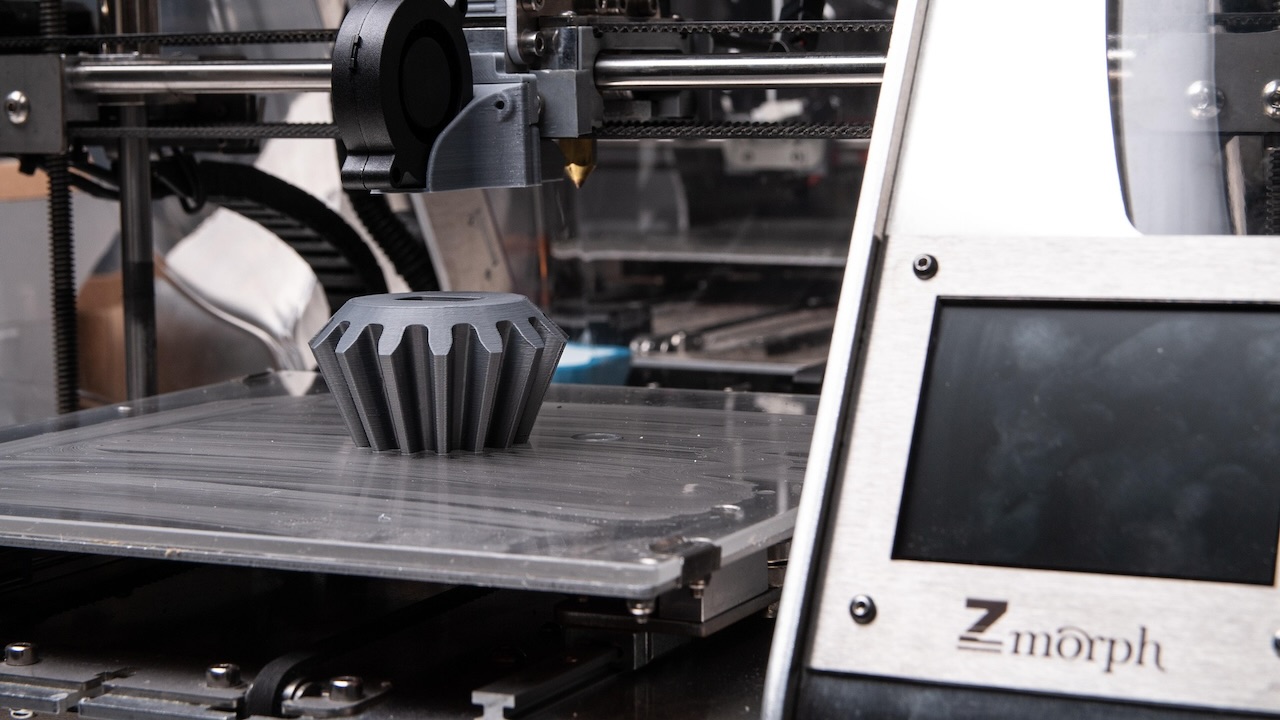
Image: ZMorph Fab 3D Printer via Pixabay









