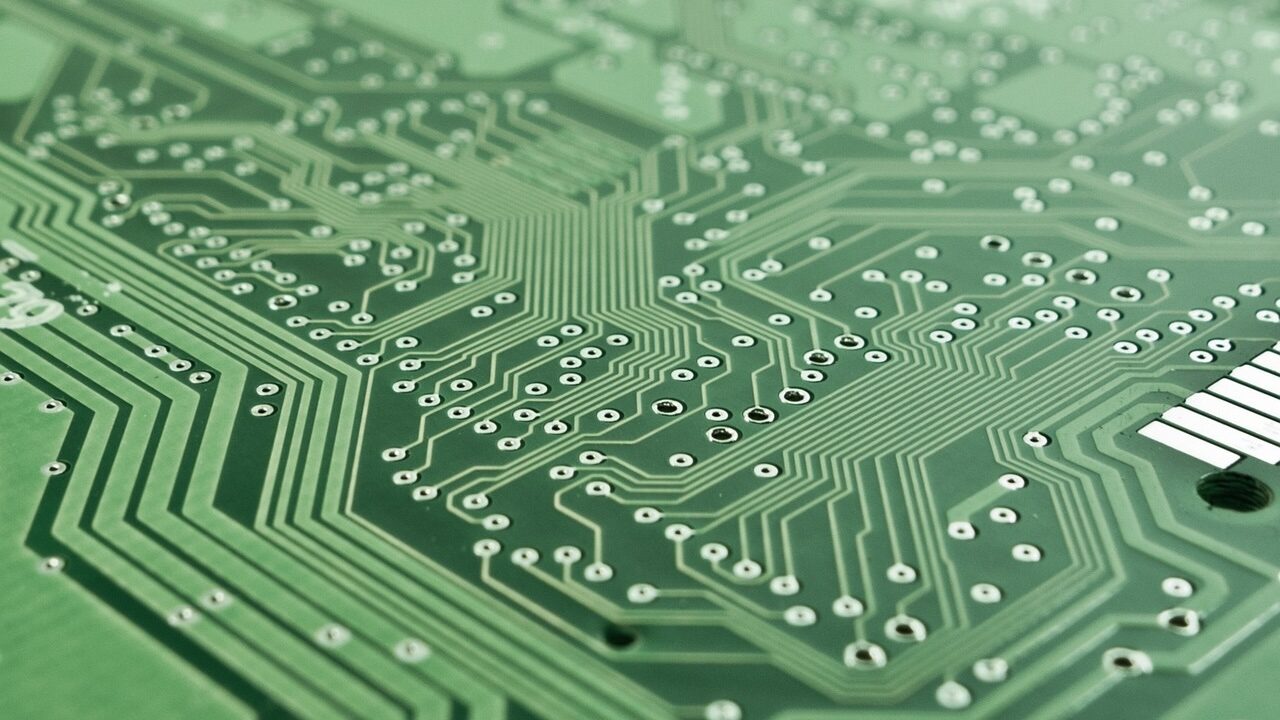

TNO's deep-tech spin-off TracXon is raising 4.75 million euros from investors. It plans to use the money to accelerate the industrialisation of hybrid printed electronics (HPE). This technology is a sustainable and more material-efficient alternative to traditional printed circuit boards (PCBs).
PCBs play a role in a wide range of products, ranging from laptops and smartphones to ovens, refrigerators, washing machines and cars. In practice, PCBs are one of the most polluting parts of many electronics. HPE should provide a solution. TracXon's technology makes it possible to produce PCBs with a five times lower carbon footprint and 12 times less material consumption than traditional PCBs.
TracXon specialises in manufacturing Hybrid Printed Electronics using sheet-to-blade (S2S) and roll-to-roll (R2R) printing techniques and component assembly. In addition, the company is a partner in co-design, prototyping and pilot project manufacturing and mass production.
From compact IoT devices to large-scale applications
TracXon's technology has already been deployed in practice. In the past three years, for instance, TracXon supported over 20 customers from 10 countries in co-developing and manufacturing their HPE products. TracXon deployed its design and application knowledge and roll-to-roll (R2R) manufacturing capabilities for this purpose.
The HPE products that customers produce using the technology range from compact industrial and portable Internet of Things (IoT) devices to large-scale applications of more than 1m². These include LED films for displays and lighting.
Several parties are investing
Several parties are putting money into TracXon. These include Invest-NL and the Brabantse Ontwikkelings Maatschappij (BOM). BOM also previously put money into TracXon in the form of a pre-seed investment.
TracXon plans to use the money to build equipment, including an R2R VIA printer. This is an advanced type of 3D printer designed for continuous production of flexible, thin or large objects on roll material. With this equipment, the company can produce a multilayer and double-sided HPE.
Producing sustainable electronics
This 3D printer enables vertical connections between circuit layers on both sides of a substrate roll. This is an important step in the production of sustainable electronics, according to TNO. The R2R VIA printer is expected to enter the market in mid-2027.
"TracXon is leading a fundamental change in electronics manufacturing. From traditional and polluting to efficient and very sustainable. This investment round brings us closer to our goal of replacing at least 10% of PCBs with our HPE technology by 2033. This means about €15 billion worth of circuits per year. Our technology is a huge step towards 'ubiquitous electronics' - electronics that are all around us, in a socially responsible way," says Ashok Sridhar, co-founder and CEO of TracXon.
Changing electronics manufacturing fundamentally
Hans Boumans, director of TNO Ventures, says: "We are proud of this achievement. TracXon is a good example of how TNO innovations can grow into impactful businesses. TNO invests in technologies that make for a better world and TracXon contributes directly to a more sustainable future by fundamentally changing how electronics are produced."
Image: Michael Schwarzenberger via Pixabay









