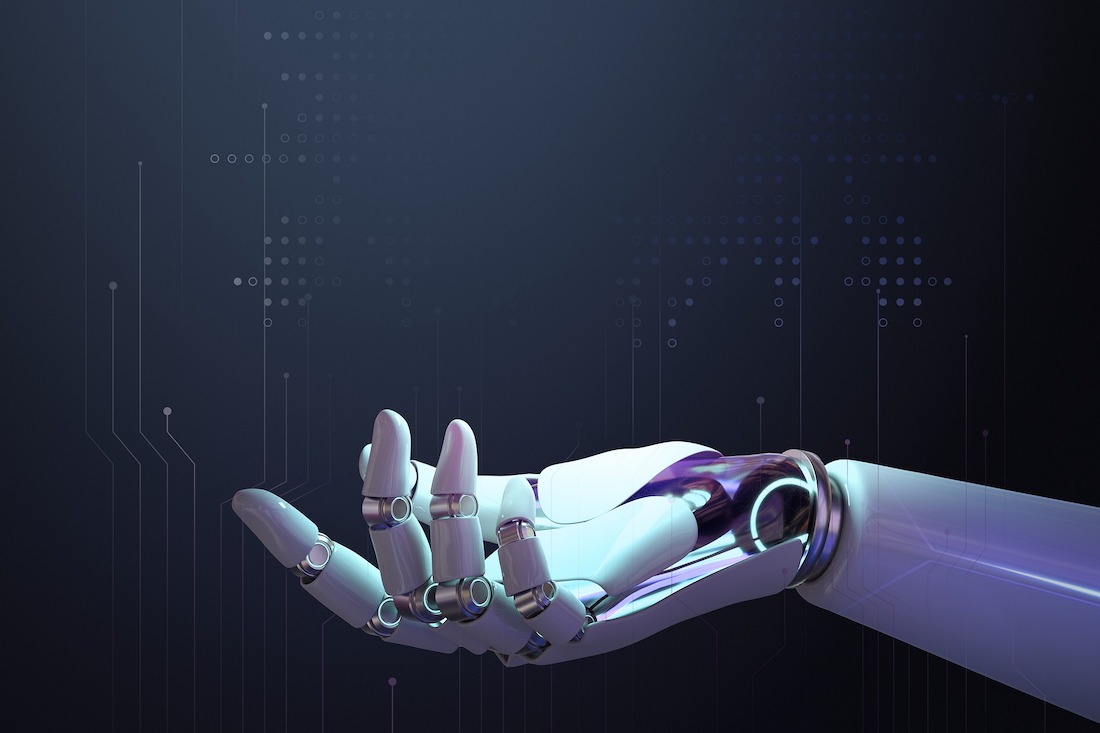

Researchers from the University of Twente and the Artificial Intelligence Lab of Meta, parent company of Facebook and Instagram, are organising MyoChallenge. This competition challenges participants to simulate complex movements with robotic hands using the open source software MyoSuite.
Machine Learning Challenge has been issued by UT and sponsored by the Technical Medical Centre and DSI. The challenge is organised by Dr Guillaume Durandau, Dr Huawei Wang and Prof Massimo Sartori from UT, Dr Vittorio Caggiano and Dr Vikash Kumar from Meta AI, Dr Seungmoon Song from Northeastern University and Dr Yuval Tassa from DeepMind.
Co-simulation of AI-controlled musculoskeletal systems
MyoChallenge builds on MyoSuite. MyoSuite is software that supports the co-simulation of AI-controlled musculoskeletal systems that physically interact with assistive robots such as exoskeletons. MyoSuite can be used to simulate biological phenomena such as muscle fatigue, sarcopenia (a form of muscle atrophy), tendon rupture and recovery of tendon function, among others. Simulation also offers opportunities for optimising the design and control of assisting robots. This enables the use of robots for restoring movement after injury.
MyoChallenge participants face the challenge of using MyoSuite to develop controllers that allow a realistic digital hand to perform tasks that require deft manipulation.
Two challenges
Challenge consists of two challenges. In the first challenge, a digital hand must flip a die to achieve the desired accuracy. "Manipulating a single object seems simple, but this task requires precise control of several muscles to turn the die correctly without dropping it," says Dr Guillaume Durandau, one of the initiators of the challenge.
The second challenge involves rotating two balls around each other in the palm of a robotic hand. "Simultaneous rotation of two balls is even more complex. This requires not only dexterity, as in the first part, but also a high degree of coordination," explains Dr Durandau.
Open phase and play-off phase
Challenge consists of two phases: an open phase and a play-off phase. The open phase is open to everyone. Participants may submit up to five solutions per day. The phase is open immediately and runs until 20 October. All participants will be automatically ranked on a scoreboard. The participants with the highest score will advance to the play-off phase.
In the play-off phase, participants submit their three best solutions. These will be tested in a new environment, simulating new physical conditions. As an example, UT cites the use of balls that bounce more. Dr Durandau: "We really want to put the submitted solutions to the test. We are also going to match the difficulty level of the second phase with the results from the first phase." The play-off phase ends on 28 October. The performance of the results will take place at the NeurIPS 2022 machine learning conference.
Further information about the MyoChallenge and the conditions for participation can be found here. Guides and documentation to help you use MyoSuite are available here.
Author: Wouter Hoeffnagel
Photo: Christopher White via Pixabay









