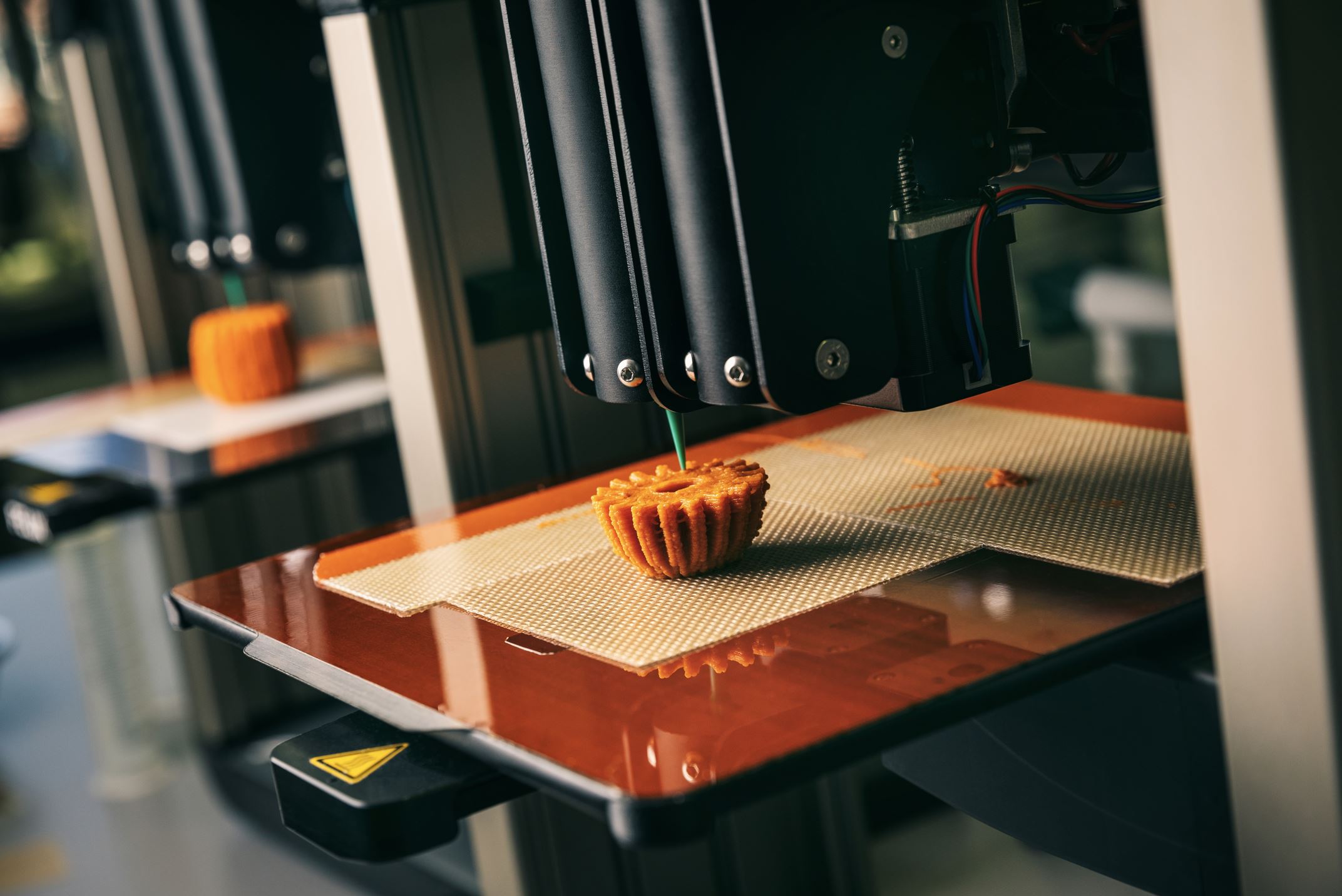

IJsselstein-based FELIXprinters has been focusing on the development and production of 3D printers since 2011. It has now also launched a series of 3D food printers. The food printers can prepare dishes and foods such as pasta, chocolate, purees, fats or soya in a wide range of shapes. A food printer can additionally improve efficiency in the kitchen. The printer does its work independently. Cooks can occupy themselves with other tasks.
Building up a product or a dish layer by layer opens up many new possibilities in the food industry and (mass) kitchen. Normally, difficult and complex shapes are made using (baking) moulds or ready-made flat shapes stacked on top of each other. With 3D printing, an extensive range of shapes and structures is possible. This adds a spectacular new way of working to food preparation. By printing names, logos and pictograms, for example, a dish can also be given a personal touch.
Increasing productivity with 3D food printers
As well as offering great creative freedom, 3D printing can boost productivity and efficiency in food preparation. The food printer operates entirely autonomously based on the 3D design uploaded, allowing the chef to focus on other tasks. Food printing can also help reduce food waste. Food scraps or leftovers can easily be incorporated into the filaments used as 3D printing material. The 3D food printer then transforms them into tasty and visually appealing products.
The choice of edible materials
It is obvious that not all food products are suitable for 3D printing. The following factors play a role in the choice of material: viscosity, texture, the nozzle of the food printer, flavour combinations and the composition of the final product.
Viscosity
The viscosity of the material is the most important factor. The paste must be soft enough to be easily extruded through the print nozzle. The paste must not set or harden too quickly, as this would cause the nozzle to become blocked. Nor, however, should it be too runny, as this would prevent the structure from becoming firm and retaining its shape. Some pastes – such as dough – can be printed in liquid form and then left to set, frozen, boiled or baked. The ideal viscosity is between 50 and 1,000 pascal-seconds (Pa·s).
Texture
Texture is also important. A soft and smooth substance is better and more precise to process than a puree with coarse particles. The diameter of the nozzle also plays a role in this, of course. The combination of two pastes with different textures in one product can also produce a surprising product. For example, in meat simulation, this technique is used to realistically mimic flavour and texture.
Materials
In general, materials such as fruit and vegetable purees, fats like butter, chocolate, advocado, sugar products like marzipan, soy, seaweed and algae, (pasta) dough, egg whites and gelatine are good candidates for 3D food printing.
Three models
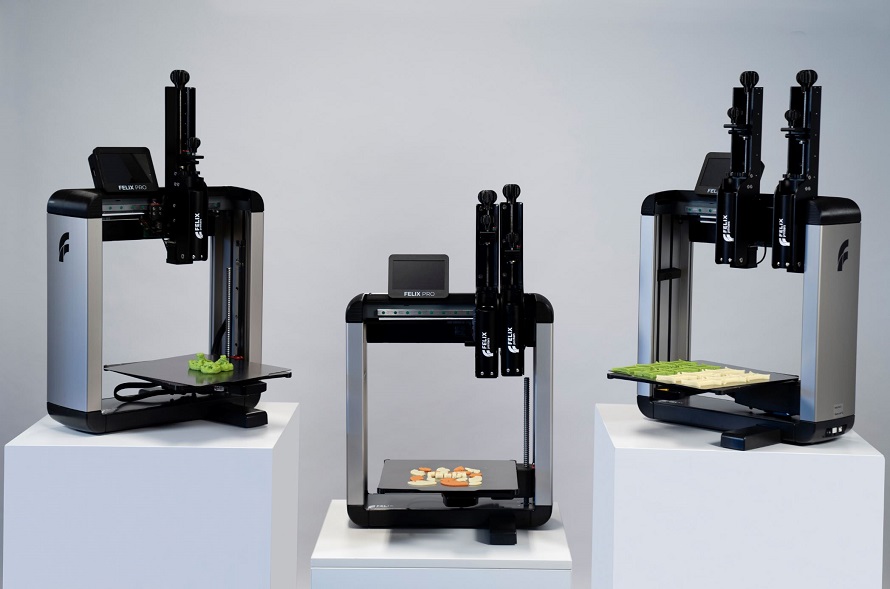
FELIXprinters supplies three types of 3D food printers. The Single Food 3D Printer has one print head. This allows the pasta to be printed in any desired shape and to a maximum height of 17 centimetres. The Switch Food 3D Printer has two print heads. The user can fill these with two different types of pasta. The print heads can be swapped in a matter of seconds. The Twin Food 3D Printer also has two print heads. These are mounted in a fixed position. They print simultaneously, thereby doubling the printing capacity.









