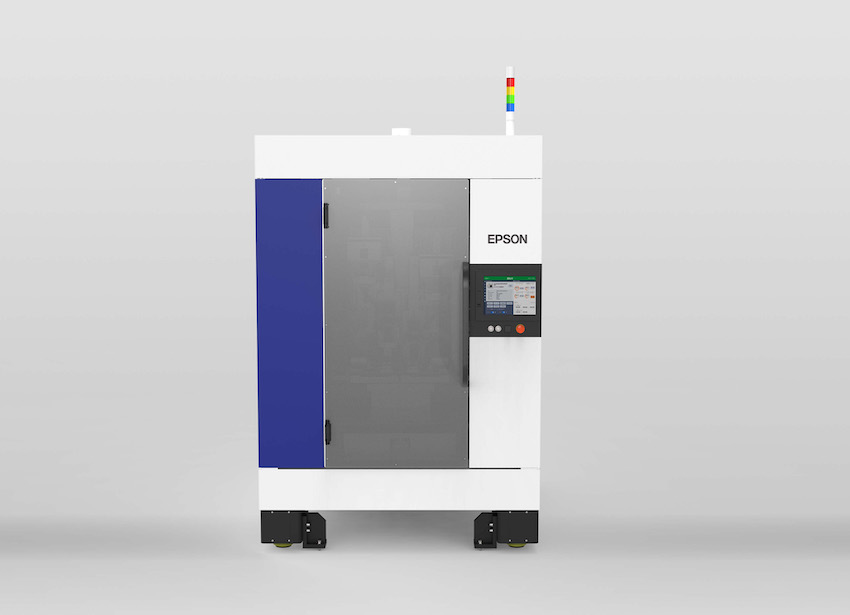

Seiko Epson Corporation introduces an industrial 3D printer. The Japanese company known, among other things, for its traditional printers is taking its first step into the 3D printer market with this.
Seiko Epson is better known as Epson. The company is known for its inkjet, matrix and laser printers, among others, as well as scanners. The then Seiko introduced its first printer in 1968. It was called the Electronic Printer. This model was succeeded a short time later by the EP-101, which was seen as the 'son' or son of the Electronic Printer (EP). Thus the name Epson was born.
Suitable for various third-party materials
In a press release, Epson reports that it is now launching an industrial 3D printer. Many details about the printer are not known; Epson is not even sharing the name of the new product for now. The company reports having developed an industrial 3D printer that uses wide range of available third-party materials. With this, the printer produces "strong, precise industrial parts of various sizes and functions".
Among other things, the printer should be suitable for manufacturing end products, not just prototyping. Users can use the 3D printer to produce goods in small runs, among other things. This allows products to be customised for customers to a large extent.
"3D printers can be used to manufacture a wider range of products in small runs in a short period of time. Manufacturers have responded to this promise by accelerating the development and launch of 3D printers for the industrial market, something that is expected to expand rapidly in the future. However, conventional industrial 3D printers require the use of special modelling materials. They are additionally not well suited for producing objects that require both strength and accuracy, limiting their use in industrial parts for final products," reports Epson.
Unique extrusion method
The new 3D printer that Epson is now announcing uses a unique extrusion method. This uses a flat screw, which is also used in Epson's precision injection moulding machines. This extrusion method makes the printer suitable for several commonly used third-party materials, including low-cost materials such as popular resins and metal pellets. In addition, the extrusion method is also suitable for sustainable biomass pellets and PEEK materials, which offer high heat tolerance.
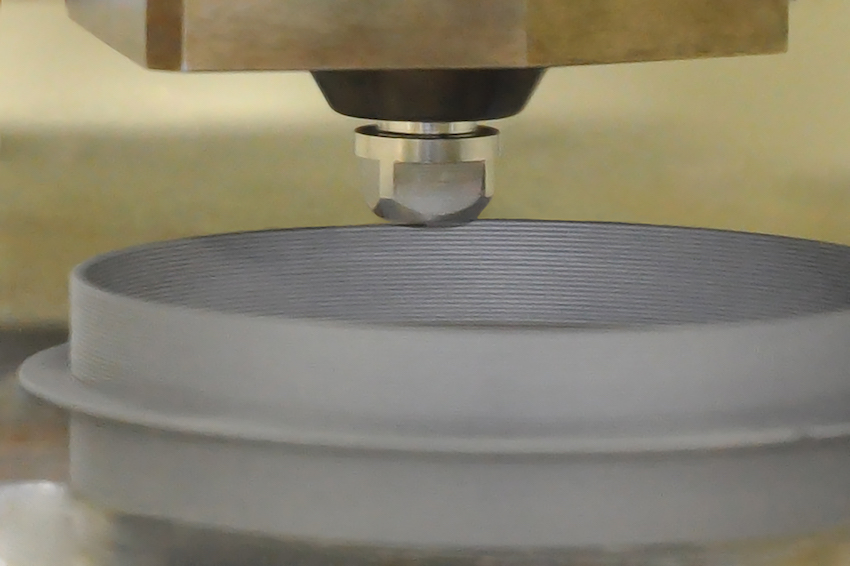
Epson regulates the amount of material dispensed through the extruder by adjusting the pressure in the print button. In addition, the company uses a valve that is regulated based on the print speed. It also affects the temperature of the surface on which an object is printed. Epson reports deploying a unique mechanism that precisely controls this temperature, enabling a combination of strength and accuracy.
The printer is not yet fully developed. Epson reports launching the industrial 3D printer after some refinements have been made. Internally, the Japanese company is already deploying the printer to produce certain parts for both commercial and industrial equipment.
Other printer manufacturers also active on 3D printing market
Epson is relatively a latecomer to the 3D printing market. Other printer manufacturers preceded the company. These include Canon, Xerox and HP. In 2017, for instance, Canon announced the FDM MARV 3D printer, taking its first steps into 3D printing. In December 2018, the company additionally announced a 3D printing technique for ceramics.
US-based Xerox is also active in additive manufacturing. The company introduced its ElemX 3D printer for liquid metal printing in February 2021. This printer is based on technology from Vader Systems, which was acquired by Xerox in February 2019. Unlike many other 3D printers for metal, the printer uses wire instead of powders. The printer is suitable for producing production-class parts, reports Xerox.
The third example is HP, also a US manufacturer of printers, among other things. The company has been in the additive manufacturing market for some time with its Multi Jet Fusion technology. This technology uses powder, which is cured using chemicals. These chemicals are accurately applied to the print bed using an inkjet array. This allows targeted curing of the powder material to build up an object layer by layer.
Author: Wouter Hoeffnagel









