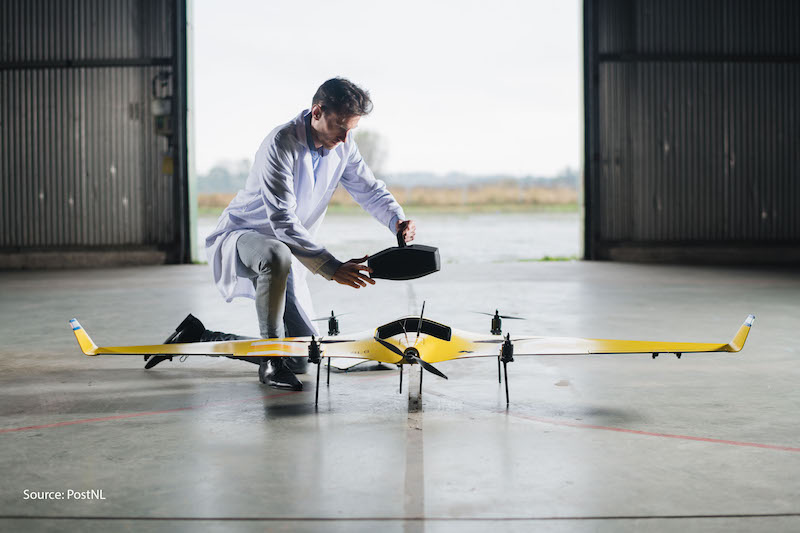

The St Antonius Hospital in Utrecht in Nieuwegein is conducting research into the deployment of medical drones for transferring medical materials such as blood samples and biopsies. The hospital is conducting the research as part of Medical Drone Service.
Medical Drone Service is a consortium set up on the initiative of PostNL and ANWB Medical Air Assistance. The consortium involves several parties. For instance, KPN and drone manufacturer AVY provide technical support. From the medical community, Erasmus MC, Isala, Sanquin, Certe, Resultlab, Amsterdam UMC and St Antonius are associated with the project.
Keeping care accessible and available
By deploying innovative mobility solutions, the consortium aims to contribute to keeping healthcare accessible and available throughout the Netherlands. Drones play an important role in this. The deployment of drones should bring care faster and closer to patients. Drones should also connect healthcare facilities.
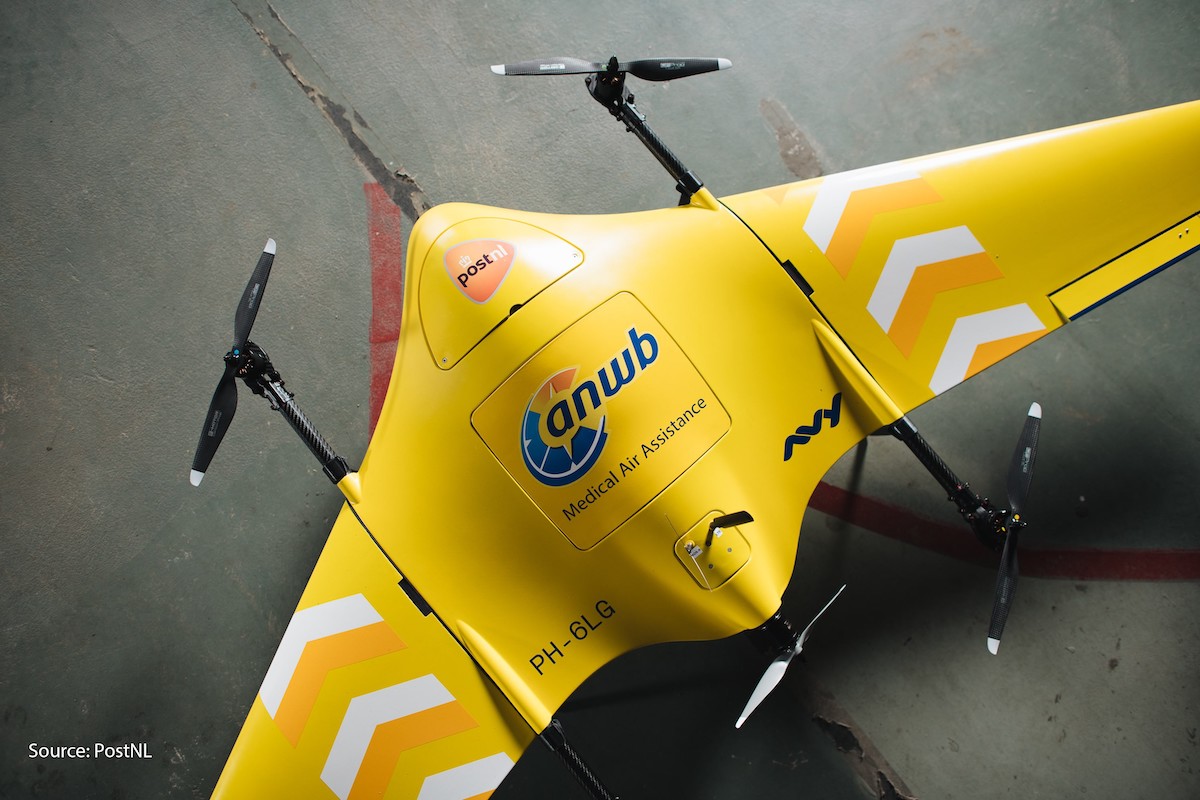
The parties are deploying a drone developed by the Amsterdam-based company AVY. The device features a striking design. For instance, the drone is equipped with a large yellow wing, which provides carrying capacity just like an aircraft. Thus, the device can cover a distance of almost 100 kilometres on a battery charge with a 3-kilogram load.
Interchangeable battery
The drone is equipped with an interchangeable battery. Upon arrival, this allows it to go out again immediately with a new battery, without charging time. The consortium is also working on a wireless charging system that allows the drone to charge on a platform.
The medical drone can carry a 3-kilogram load of medical materials. A special compartment is available for this material, which cannot freeze or get too hot thanks to insulation.
Unclear when flights will start
It is still unclear when the drone will take to the skies in Utrecht. Project leader Bart Deege of St Antonius Hospital says: "We still have to arrange some practical matters such as the construction of a landing platform and the internal route to the lab in particular. There are still numerous questions, but I have no doubt that these drones will fly."
A lot also still needs to be figured out, says Angela Bikker, a laboratory specialist on the Clinical Chemistry team at St Antonius Hospital. "The fast connection offers many possibilities, not only for clinical chemistry, but also for pathology and microbiology, for example. Now, messengers still drive, sometimes delivering a large amount of material to the lab at once for examination. The drone is not only faster, but the delivery might also be better spread over the day. For the next two years, the hospital is part of the consortium that eventually wants to roll out the medical drone nationwide," Bikker said.
The consortium does expect flights between Meppel and Zwolle to start early next year. This area has relatively few built-up areas and less air traffic than in the Utrecht region or the Randstad. the consortium speaks of an important step. However, aviation regulations still need to be adjusted, something Medical Drone Service is working hard on.
Previous trials
Previously, several pilot projects have been carried out with the drone. The consortium conducted test flights for emergency medical transport by drone between Isala Hospital locations in Meppel and Zwolle in late 2020. It was then the first time that a long-distance medical drone flew over sparsely populated areas in the Netherlands.
Test flights over a shorter distance were also carried out last year between Rhoon and Oud-Beijerland in South Holland. The drones took off from a field in Rhoon and landed in Oud-Beijerland on a dyke along the Oude Maas. These flights helped to identify what is required for flights in the airspace between Erasmus MC and Zeeland.
Author: Wouter Hoeffnagel
Photos: PostNL / AVY











