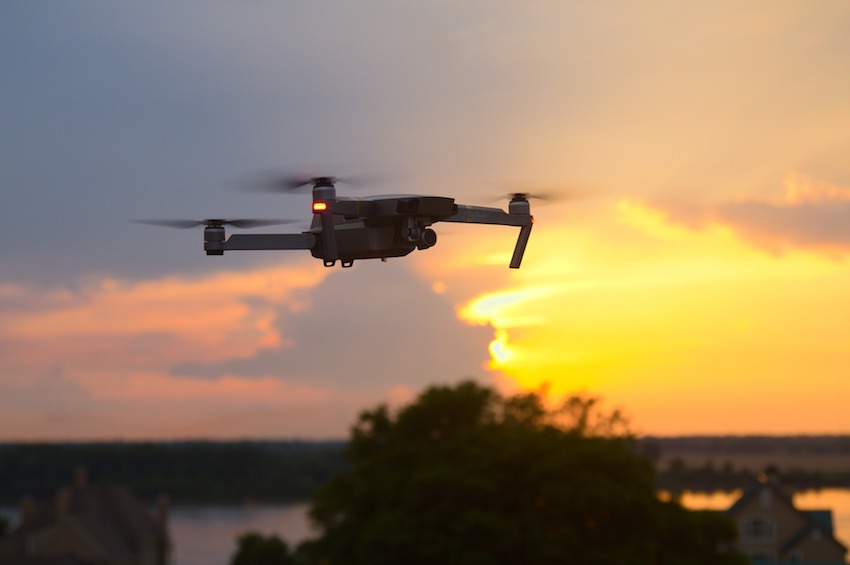

The ANWB and PostNL are launching a pilot project together with Erasmus MC in Rotterdam and blood bank Sanquin. The parties are conducting research into transporting blood and medication via drones, which should enable faster delivery to locations.
Within the project, blood and medication are not yet actually transported. Current regulations in the Netherlands do not yet allow for this. The project examines what is needed to make such transport via drones possible. To this end, a number of test flights will be carried out from the end of May at a shorter distance between Rhoon and Oud-Beijerland in South Holland.
From meadow in Rhoon to dike along Oude Maas
The drones will take off from a meadow in Rhoon and land in Oud-Beijerland on a dike along the Oude Maas river. With the flights, ANWB and PostNL are mapping what is needed to fly in the airspace between ErasmusMC and Zeeland. This includes testing flight procedures in the airspace of Rotterdam The Hague Airport. This involves close consultation with Air Traffic Control the Netherlands.
The parties expect that the use of drones in Zeeland can bring many benefits. For instance, blood and medicines can be brought to location faster than by road. Zeeland is an interesting location for such transport as the province does not have many hospitals. Also, the two-lane roads in Zeeland quickly clog up as soon as the weather is nice. ANWB and PostNL also point out the more sustainable nature of drones compared to road transport.
Previous trials between Meppel and Zwolle
This is not the first time that ANWB and PostNL are carrying out trials of using drones for medical transport. The parties announced in November 2020 that in the following months they would carry out test flights for emergency medical transport by drone between locations of the Isala hospital in Meppel and Zwolle. It was then the first time in the Netherlands that a long-distance medical drone flew over sparsely populated areas.
The trials are part of Medical Drones Services, an initiative set up by the ANWB and PostNL. In cooperation with ErasmusMC, Isala, Sanquin Certe and technology partners Avy and KPN, the use of drones in transporting emergency medical shipments has been investigated. These include blood, medicines and diagnostic samples.
Route over sparsely populated area
Exemptions for the test flights on the Meppel-Zwolle route have been granted by the Environmental and Transport Inspectorate. The drones will fly only during working days near Isala's location in Meppel to Zwolle. The drones land in a meadow north of Zwolle. The route runs over sparsely populated agricultural land over a distance of 15 km. The last part of the route to the hospital in Zwolle is in built-up area. This part will therefore be carried out at a later stage.
The drones fly automatically and are monitored during their flight. With safety in mind, systems have been built in to ensure safety on the ground and in the airspace. For instance, control of the drone can be taken over at any time. Also, the drones do not fly over houses and farms. In bad weather, the drones do not fly. The airspace is closed to other air traffic during the test flights.
The trials will use a drone specially developed for this purpose. The drone has a wingspan of 2.5 metres. The drone takes off vertically and then flies horizontally towards its target. This involves flying at an altitude of 100 metres at a speed of 75 km/h. As a result, a flight between Meppel and Zwolle takes 15 to 20 minutes.
Matternet
The use of drones to transport medical goods has been experimenting abroad for some time. In 2017, for instance, the company Matternet announced it was using autonomous drones to transport blood for blood transfusions and ship diagnostic samples between hospitals in Switzerland.
However, two incidents took place with the drones in 2019. In one incident, the drone made an emergency landing in a lake, while in the second incident, a drone crashed near children playing. There were no injuries in either incident. However, the incidents did prompt the temporary suspension of flights in 2019. Flights resumed in early 2020.
Author: Wouter Hoeffnagel
Image: ericearles via Pixabay











