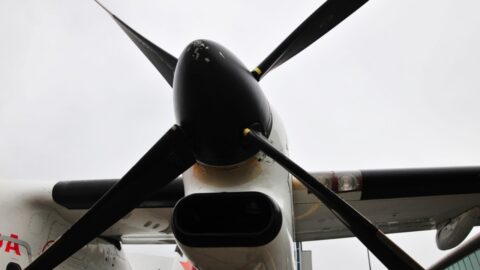
A group of TU Eindhoven students are busy building electrically powered aircraft. They hope to get the first plane into the air next year.
The Falcon Electric Aviation student team at TU/e has big plans. By retrofitting existing aeroplanes, they aim to offer a sustainable alternative for leisure flights, flying lessons and business flights, thereby following in Tesla’s footsteps. “Elon Musk also started out by converting existing cars into electric vehicles. Tesla has since grown into a multi-billion-euro company,” says Brandon van Schaik, co-founder of Falcon Electric Aviation, in a press release. “That’s what we want to do with aeroplanes.”
Where many friends talk about the latest Netflix series, for example, at get-togethers, Brandon and his friends were talking about the energy transition a few years ago. "For cars and buses, all kinds of sustainable solutions are already being devised at the moment, but for planes and boats there are far fewer," Van Schaik explains. "That's why we started looking at the possibilities for planes." Soon, the students found out that designing and certifying a new aircraft takes a lot of time and money. "We don't have that time anymore. We have to work towards a more sustainable world now," he says. So they looked at the possibilities of converting existing aircraft.
The first converted aeroplane is due to be ready in just over half a year. “We received a grant from the Eindhoven Metropolitan Region. This enabled us to demonstrate the technical and financial feasibility,” says Van Schaik. According to the student, actually converting an aeroplane was the best way to do this. “To this end, we are working closely with Kempen Airport in Budel. They are also very interested in our project.”
Flight schools
But batteries are far too heavy to fly, aren't they? "Yes, for a Boeing 747 with 200 passengers flying to America, that probably won't work. In any case, a lot of development is still needed for that," Van Schaik admits. "But for shorter flights with aircraft where there is room for up to 20 passengers, it works well." The first aircraft the students will convert to electric is therefore a Cessna 150, a two-seater aircraft. "We find that flight schools, for example, are interested in our technology. They use these small aircraft a lot," he explains. "After an hour-long lesson, the plane is always on the ground for a while. So recharging is not a problem either."
Apart from helping the environment, it is also price-wise interesting for flight schools. "They earn the conversion package back in about four to five years," states Van Schaik. "Because electricity is cheaper than paraffin and because the maintenance of an electric engine is much easier than with an internal combustion engine." The conversion package will cost about €150,000. In addition, the batteries have to be replaced every five years or so because they lose their capacity over the years. "But even then, it is comparatively cheaper for flight schools to fly electric," he says.
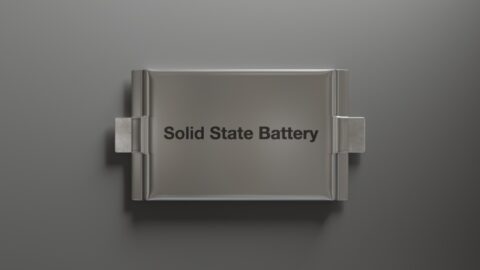
Moreover, the batteries will not make the plane bigger or heavier. "A combustion engine weighs about 200 kilos. An electric engine with the same capacity weighs only 12 kilos. So we can use the remaining weight for batteries," Van Schaik explains. "The interior also remains the same. Pilots can therefore fly both current and electric aircraft."
How many people fly such a small plane? "Most people immediately think of large passenger planes, but about ninety per cent of the planes registered in the Netherlands are small aircraft," he explains. According to Van Schaik, these are used for pleasure flights, flying lessons and business flights, for example. "You could say that people themselves should look for alternatives to the plane, but adapting human behaviour is very difficult. That is why we want to offer these people a more sustainable alternative," he says.
Hydrogen
With their conversion package, the students want to contribute to the energy transition. "Innovation in aviation is very slow. The planes we fly in now were made in the 1960s. After that, companies have only made modifications to the aircraft, but nothing has fundamentally changed," Van Schaik states. The students now want to change that. "If our plan with electric planes goes well, we also want to look at other possibilities, for example in the direction of hydrogen."
"The development of hydrogen-powered aircraft is going to take a few more years," he continues. "But it could provide a sustainable alternative for longer flights with more passengers." He explains that scaling up for electric planes will be difficult. "For a long flight, you have to carry too many heavy batteries. Also, the engine has to be bigger. Because an electric motor works with magnets, it cannot get too big. Then the magnets will no longer work properly," he says. "You can then opt for several smaller motors, but then the plane has to be built completely differently." Rebuilding an aircraft is then out of the question. "While that is precisely Falcon's added value," states Van Schaik. Falcon also wants to look into converting an existing aircraft for hydrogen.
He concludes: "To make aviation more sustainable, we need to combine different sustainable options, such as electric flying and hydrogen, just like in traffic. We want to show what the possibilities are and bring this to the market in the most accessible way possible."
Source: TU Eindhoven.