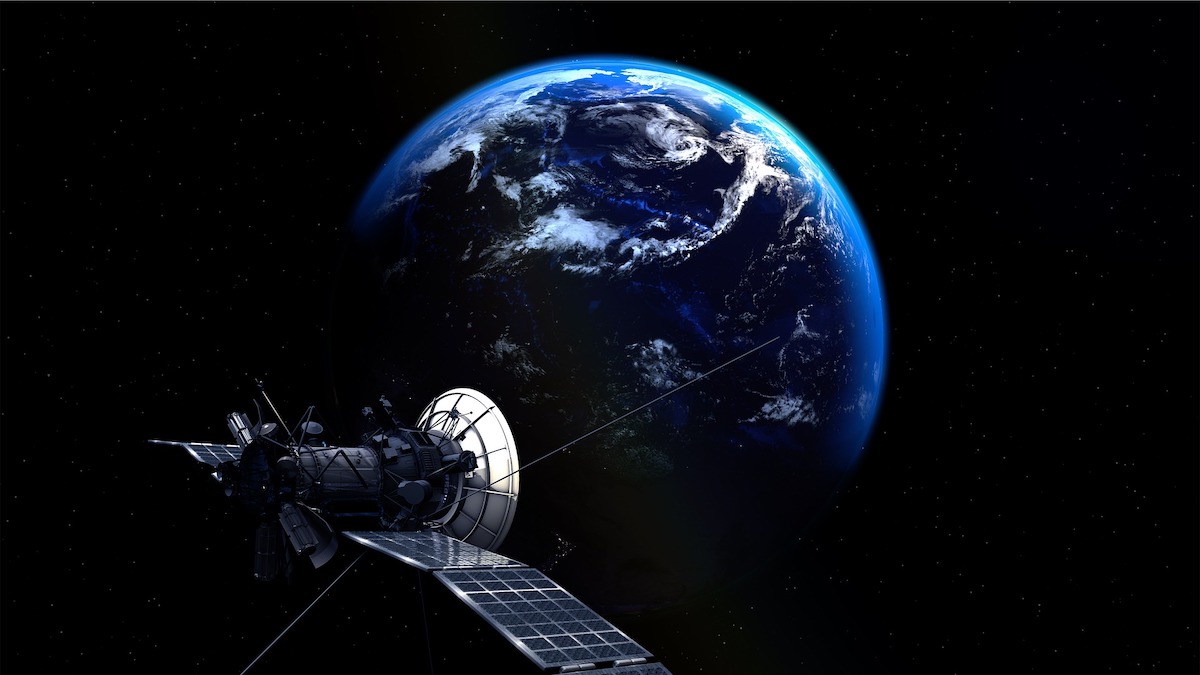

Japan's Pale Blue has been selected by the Japanese research body New Energy and Industrial Technology Development (NEDO) for the SBIR Promotion Programme for the fiscal year 2022. Pale Blue is working within the programme to further develop its water vapour-based propulsion system for use in small satellites that are part of large satellite constellations.
Pale Blue is a spin-out from the University of Tokyo. The company focuses on developing water vapour-based propulsion systems for satellites. It draws on research from both the University of Tokyo and Japanese space agency JAXA.
SBIR stands for Small Business Innovation Research and is a programme that promotes R&D-focused startups that contribute to solving societal problems and promoting both creation and innovation. NEDO's SBIR Promotion Programme is part of Japan's SBIR System, an initiative of the Japanese government spanning multiple ministries and government agencies.
Demand for satellite constellations grows rapidly
The demand for satellite constellations is growing rapidly. This includes the rise of using satellite services for observation purposes and realising high-bandwidth optical communications. However, until now, safe and relatively cheap propulsion with sufficient thrust was not available for small satellites, reports Pale Blue.
The Japanese startup is therefore working on a new type of propulsion for satellites, based on water vapour. The technology includes an ion source, neutraliser, high-voltage power supply and an innovative thermal design. This combination leads to a low-cost ion engine that uses water vapour as fuel, is safe, easy to operate and suitable for satellites weighing up to 100kg, reports Pale Blue.
Not new
Propulsion technology has been in development for some time. For instance, NASA launched JAXA and the University of Tokyo's EQUULEUS using its Space Launch System (SLS) in November last year. EQUULEUS is a nano-exploration spacecraft that has now successfully released its first manoeuvre with its water vapour propulsion system.
This propulsion system was developed by Koizumi Laboratory at the University of Tokyo led by Jun Asakawa, who later co-founded Pale Blue with Hiroyuki Koizumi (CTO), Kazuya Yaginuma and Yuichi Nakagawa. The startup speaks of "the world's first successful orbital manoeuvre beyond low-Earth orbit using water vapour as fuel".
On the road to EML2
The EQUULEUS uses the propulsion system to get into the right orbit, make minor corrections to its course and - once it has flown past the moon - altitude determination. The vehicle is now successfully on its way to the Earth-Moon Lagrangian point 2 (EML2), a journey that is expected to take about a year and a half.
"It is a great milestone for Pale Blue that the water vapour propulsion system has successfully operated in space for the first time globally, establishing its orbit in space outside low Earth orbit," said Jun Asakawa, CEO and co-founder of Pale Blue. "We continue to work on the social implementation of water vapour propulsion and creating mobility capabilities that are essential to the space industry."
Four drives
Pale Blue is developing the water-vapour propulsion system used by the EQUULEUS. The company is supplying four water-based drives:
- The ResistoJet Thruster Mini (1.0mN thrust, a power of 9 watts and compact dimensions of 9 by 9.5 by 5cm)
- The ResistoJet Thruster (1.0mN thrust, a power of 20 watts and dimensions of 9 by 9.5 by 10.5cm)
- Hybrid Thruster (4.0mN/150μN, a power of 40 watts and dimensions of 9 by 12 by 16cm)
- Ion Thruster (170μN thrust, a power of 40 watts and dimensions of 10 by 10 by 10cm)
Pale Blue also announced earlier this year that it will supply a water vapour drive system for a Sony nanosatellite. This satellite is part of Sony's STAR SPHERE Project. This project is aimed at changing people's perspective of space, with technology playing an important role. The project aims to create opportunities for people by fuelling their thinking about the global environment and social problems by observing the Earth from space.
Further information is available here.
Author: Wouter Hoeffnagel
Image: PIRO via Pixabay










