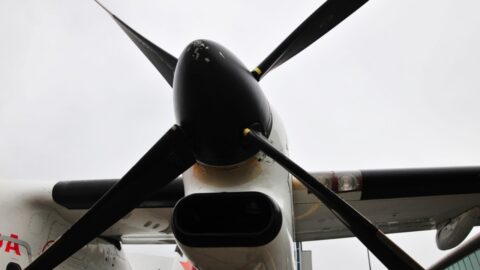
The Netherlands Aerospace Centre (NLR) is partnering with zepp.solutions to develop a fuel cell system. The collaboration is part of a wider project, aiming to conduct a liquid hydrogen demo flight in 2026.
NLR aims to conduct a manned flight on liquid hydrogen with its electric-powered research aircraft in the foreseeable future. It is equipping the Pipistrel Velis Electro with a hydrogen powertrain for this purpose. A crucial part of this powertrain is the fuel cell system. Dutch company zepp.solutions is handling the development of this system.
Fully integrated fuel cell modules
zepp.solutions specialises in hydrogen fuel cell technology, specifically developing fully integrated fuel cell modules. These modules contain all the necessary hardware and software to use hydrogen as an energy source in a variety of applications ranging from aircraft to stationary installations. The company was founded in 2017 by Jan Bot, Jonas Brendelberger, Remco Duba, Joost Kortleve and Kevin Schreiber. They were previously part of Delft University of Technology's Forze Hydrogen Electric Racing Team, which focused on promoting hydrogen fuel cell technology in the mobility sector.
Previously, zepp.solutions realised several projects, including the supply of a hydrogen generator for stationary aircraft applications. It also previously worked with the NLR on the integration of hydrogen technology in aviation.
Also involved in test activities
zepp.solutions, incidentally, will not only develop the fuel cell system, but is also involved in its integration into the Pipistrel Velis Electro. The company is also collaborating in all test activities surrounding the system, including the final demo flight.
NLR project leader Arjen Kloosterman says: "NLR aims to use this project to gain knowledge and experience in the development and integration of hydrogen components and drivelines for the benefit of manned aviation. The biggest challenges, besides physical integration, are the airworthiness and safety aspects associated with the introduction of hydrogen on board an aircraft. The entire process, up to the demo flight now scheduled for 2026, provides us with valuable knowledge and insights for integration of hydrogen technology and is thus a prelude to further developments and implementation of this technology in the aviation sector. The collaboration with zepp is an essential step for us and will make an important contribution to NLR's KLV showcase."
Jan Bot, co-founder of zepp.solutions, concurs. "Our fuel cell technology has already proven itself in various sectors. We bring a lot of knowledge and experience when it comes to developing efficient and compact fuel cell systems. However, aviation does offer completely different challenges. This cooperation, and to be able to learn from each other in this way, is therefore incredibly valuable. In developing the hydrogen system for the Pipistrel, together with NLR, we will not only demonstrate the potential of hydrogen in aviation, but also learn lessons that can be of great value to this sector."
Production and test facility for green hydrogen
NLR previously partnered with ROGER to realise a small-scale hydrogen production and test facility for green hydrogen. This facility should demonstrate and validate hydrogen technology in realistic conditions. The test facility is available to NLR and ROGER as well as external parties.
Green hydrogen is hydrogen produced using renewable energy. When producing hydrogen, an electrolyser converts water into hydrogen and oxygen, which takes energy. When the energy required comes from fossil fuels, we speak of grey hydrogen. If, on the other hand, the energy is renewable, it is called green hydrogen. In practice, however, this proves challenging.
Climate neutral aviation programme
Test flight on green hydrogen that NLR is working towards is part of a wider programme called 'Climate neutral aviation'. With this, it wants to contribute to cleaner and quieter aviation with less impact on the climate and the environment. NLR is aiming for aircraft powered by batteries, hydrogen and sustainable aviation fuel (SAF).
The Pipistrel Velis Electro being used in the project is part of the Living Lab Electric Flight (LLEF). This is a virtual knowledge centre with joint research projects, which offers the opportunity to test and demonstrate technology in an accessible way. In addition to the Pipistrel Velis Electro, the LLEF also includes test facilities and wind tunnels, amongst other things.
Author: Wouter Hoeffnagel
Image: NLR