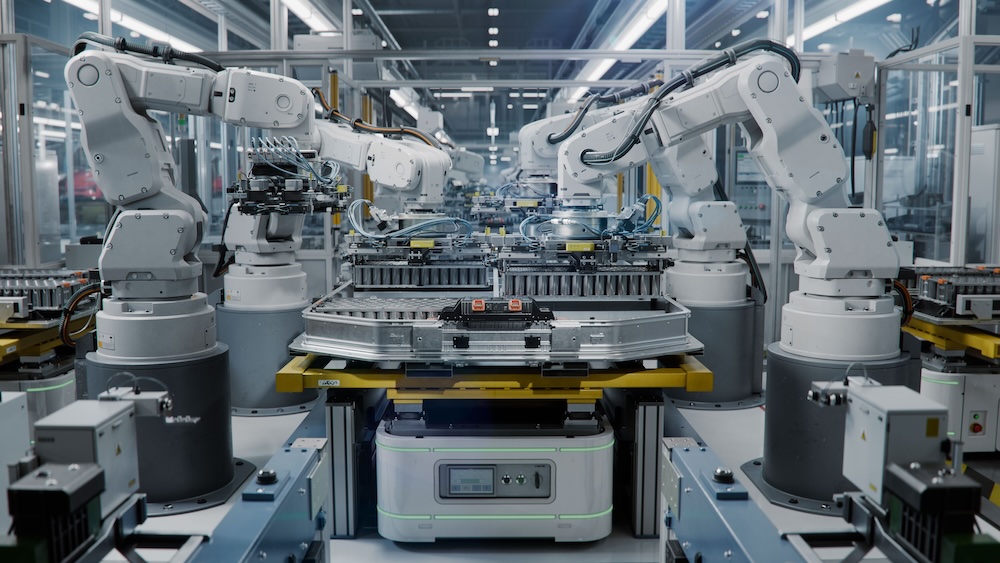

euRobotics launches a new strategy for innovation, growth and societal impact for the industrial robotics sector. To this end, it also sets a number of objectives for monitoring and further boosting Europe's strong position in the robotics market. It also makes a number of recommendations for achieving these objectives.
euRobotics is a Brussels-based non-profit organisation representing the European robotics community. The organisation focuses on promoting the development, use and acceptance of robotics in Europe. To this end, it is committed to research, development and stimulating knowledge sharing.
'Europe is a leader in robotics'
The strategy outlines the collective vision of the European robotics community and draws on various sources of information, both from Europe and beyond. euRobotics calls Europe a leader in robotics, but at the same time argues that the clock is ticking. It argues that Europe needs robots more than ever to maintain its economic edge and meet demographic and climate-related challenges. The strategy it presents must support this.
It advocates a so-called 'Whole Europe' approach to research, innovation, implementation and adoption. Research, industry and policymakers should thereby work together within a common framework to support innovation from lab to market in an unbroken chain. Standards and regulations should thereby be aligned with market and innovation needs.
Stimulating growth
In the strategy, euRobotics also advocates investment and fiscal policies that stimulate growth. Not only in robotics, but also in sectors that can increase productivity through the use of smarter robots. Strategic investments in education, skills, technology, research, implementation and adoption, among others, are needed to maximise the economic and societal benefits of robotics, according to the strategy.
The strategy outlines the collective vision of the European robotics community. It makes a series of recommendations on cooperation between public and private organisations to ensure that robotics in Europe has an economic and societal impact in the medium and long term. The recommendations focus on enabling European value-added products and services, while maintaining the strong foundation of robotics research and innovation in Europe.
Robotics support
The strategy also advocates supporting the robotics sector in Europe. This includes promoting robotics take-up, creating a long-term research focus and providing a strong innovation infrastructure.
According to euRobotics, the value of robotics lies in its impact on services and increasing productivity in manufacturing. "Robots are the only reason Europe is still capable of producing cars and appliances on a large scale and keeping its advanced, internet-driven supply chain running. This very real impact is just the beginning, and even with the robotics technology we have today, there are many more opportunities that can be exploited with today's technology," euRobotics writes in the strategy.
End-user acceptance
According to the non-profit organisation, this calls for boosting end-user adoption and exploring opportunities to increase the impact of robotics. However, a lack of awareness, low investment levels and a lack of qualified staff and resources to support broad development, implementation and operation stands in the way of this.
To overcome these obstacles, euRobotics says Europe must seize the opportunity to develop and deploy more capable, smarter robots. "Europe has a leading position in the development of industrial and service robotics, and this should be supported within research and the translation of that research into innovative products and services," the non-profit organisation said.
Long lead time poses challenge
The long lead time for bringing robotics to market is a key challenge in this regard. For example, euRobotics points out that it is not unusual for this to take 10 to 15 years. By comparison, this is three to five times longer than for software-based innovations.
euRobotics also points to higher costs due to the time and resources required to build, test, validate and integrate prototype hardware into existing systems. "These long-term investments and high costs do not fit well with short-term cycles within research and innovation funds or the return expectations of investors used to the 'sugar rush' of investing in AI and related software technologies," euRobotics argues.
Regulations that stimulate innovation
euRobotics also highlights the need for regulation that facilitates robotics-based innovation. Current regulations often focus more on human processes than robotic ones, according to the non-profit organisation. Combined with a lack of knowledge about robotics, this significantly slows down the adoption of robots.
In the strategy, euRobotics proposes eight goals for Europe:
- Capitalise on Europe's leading position by strengthening investment in robotics, with the aim of increasing industrial competitiveness and delivering societal benefits.
- Make full use of the robotics expertise that Europe generates and build on the investments already made to ensure they deliver value.
- Assure that developments in AI address the needs of robotics and the need to create AI that can naturally reason and learn within the constraints of the physical world.
- Better connect but not merge the various robotics-related ecosystems so that opportunities are not missed due to a lack of cooperation or awareness.
- Adopt a more active approach to technology investment and risk. This by delivering faster, more flexible and better aligned research and innovation investment mechanisms that match robotics' research and innovation profile.
- Using robots more widely, quickly and effectively than competitors.
- Focus on maintaining technological lead in robotics by addressing challenges. This calls for investment funds aimed at supporting the long-term retention of robotics technology and expertise in Europe.
- Educate and train current and future workforce in the use and adoption of robotics.
Recommendations
To achieve these objectives, euRobotics also makes a number of concrete recommendations:
- Make robotics a policy priority so that Europe strengthens its leadership position in robotics and balances the focus between robotics and AI by treating them as parallel policy goals.
- Increase the scale and flexibility of investment in research and innovation to strengthen Europe's leading position in robotics.
- Offer of long-term support for increasing robotics adoption. With the aim of supporting return on investment and bringing developments to market.
- Encourage collaboration between end-users, technology innovators and research to foster the collaboration needed to deeply integrate robotics into end-users' processes and systems.
- Recognise and actively support the full robotics innovation pathway to bring ideas to market.
- Maintain sovereignty over robotics capabilities by aligning initiatives from EU member states, the EU and the private sector. This will allow Europe to match the scale of investment in the US and China for maintaining sovereign capabilities.
- Create a European skills framework to deliver the unique skills needed to design, develop and deploy robotics at scale in Europe. And support companies in scaling up their robotics deployment with the aim of realising economic and societal benefits.
- Provide tailored support for robotics scale-up so that innovative robotics companies in Europe can grow and not be lost.
- Improve social awareness and acceptance of the need for robotics so that acceptance is not limited by misunderstandings and fears, and ensure that citizens understand the benefits that robotics can offer.
The full euRobotics strategy, entitled ‘A Unified Vision for European Robotics’, can be found here (pdf).
Author: Wouter Hoeffnagel











