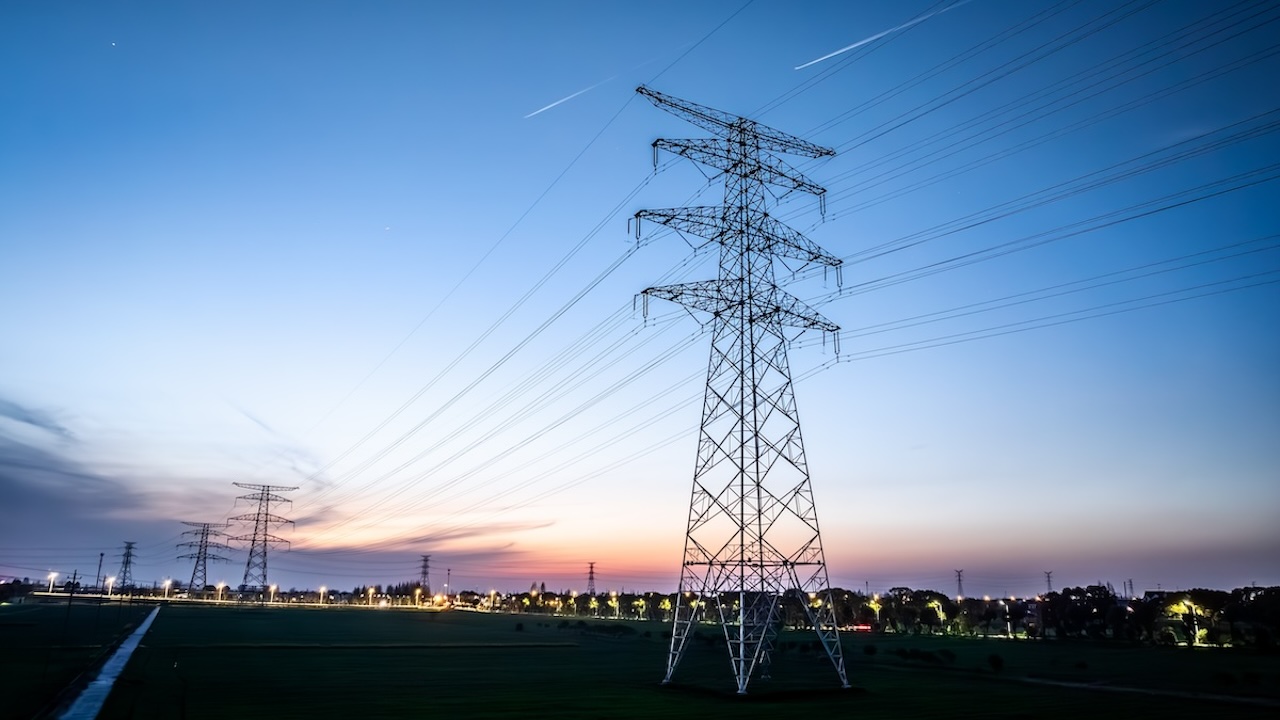

The government aims to accelerate the expansion and utilisation of the electricity grid through a package of emergency legislation. Among other things, it is focusing on streamlining procedures for new electricity infrastructure, making better use of existing grid capacity and possibly introducing a separate fast-track scheme for urgent projects. This should create more scope for businesses, housing construction and sustainability measures.
This was announced by State Secretary Jo-Annes de Bat for Climate and Green Growth in a letter to Parliament. The measures form part of the implementation of the crisis legislation on grid congestion announced in the coalition agreement. Rather than waiting for a single new law to go through the entire legislative process, the government intends to implement changes in stages. According to the State Secretary, the package now announced is therefore just the starting point. Should new bottlenecks arise, the government intends to take additional measures in the coming years.
The measures could ease the pressure on industry. For instance, industrial players involved in expansion, electrification and sustainability initiatives are dependent on sufficient transmission capacity. At the same time, making industry more sustainable actually requires more electricity.
Streamlined procedures for grid expansion
A key part of the package is speeding up procedures for new electricity projects. For new 110 and 150 kV projects, the government intends to assign authority to the provincial authorities as a matter of course. This is intended to prevent delays arising during complex projects over the question of which government body is responsible. According to the letter to Parliament, the measure – which is due to come into force in July 2027 – could speed up processes by a few months up to a maximum of two years.
The construction and expansion of high- and medium-voltage substations is also to be made simpler. For new substations, the government intends to exempt them from the requirement for a technical building permit. For extensions to existing substations, consideration is also being given to waiving planning permission where the extension is already permitted under planning regulations. The government expects that this will enable dozens of projects a year to be completed several months to one and a half years sooner.
Fewer regulations for underground high-voltage cables
Furthermore, the government intends to scrap the national EIA requirement for underground high-voltage cables. This is a legal obligation to identify any significant adverse environmental impacts. However, according to the letter to Parliament, European regulations do not require such an assessment for underground cables. The State Secretary estimates that scrapping the requirement could save between six weeks and three months of preparation time.
Appeal procedures will also be fast-tracked. From 1 October 2026, appeals against electricity projects of 21 kV or higher will go directly to the Administrative Law Division of the Council of State, bypassing the district court. A pro forma appeal will then no longer be possible, and a maximum timeframe for the ruling will be introduced. The government expects that these procedural changes could reduce the processing time by up to one and a half years in some cases.
More scope for urgent projects
In addition to general measures to speed up the process, the government is working on a special regime for a limited group of highly urgent energy projects. These include, for example, high-voltage substations in strategic locations that can unlock significant additional grid capacity.
For these projects, an assessment is being carried out to determine whether certain legal steps can be bypassed, deadlines can be set and objection and appeal procedures can be further expedited. The balance between environmental requirements and the urgency of individual projects is also being examined.
Established criteria will be used to select these projects. The government intends to provide further clarity on these criteria later this autumn.
Greater focus on the energy system
The government also wants to make energy an integral part of spatial planning decisions. This means that, for new spatial developments, the implications for the energy system and the necessary infrastructure must be considered at an earlier stage. The government also wants to ensure structural coordination between provinces and grid operators regarding future infrastructure, land use requirements and potential bottlenecks.
The proposal for this so-called ‘energy assessment’ is due to go out for consultation around the turn of the year, the State Secretary reports. For businesses, this could mean, in the long term, that the availability of electricity infrastructure will be given greater weight in decisions regarding new business locations and expansions.
Using the grid more intelligently
The government is also focusing on making better use of existing infrastructure. According to the letter to Parliament, grid congestion does not mean that the electricity grid is being used to full capacity at all times and in all locations. By shifting electricity consumption to times when more capacity is available, space can be created without the immediate need for new infrastructure.
Flexibility will therefore be given greater priority. The government aims to remove legal barriers to flexible transmission capacity and is investigating whether large electricity consumers should be required to carry out a ‘flex scan’ at regular intervals. Consideration is also being given to utilising part of the grid’s contingency reserve, subject to certain conditions. In doing so, explicit account is being taken of the potential consequences for security of supply and the risks of disruption.
For businesses, it is also important to have a better understanding of available grid capacity, queues and opportunities for flexible use. The government is therefore investigating whether additional legislative measures are needed to improve the provision of information and data exchange.
CO₂ infrastructure
For industry, the availability of grid capacity is a key prerequisite for further electrification and expansion. The government is therefore also working on measures relating to CO₂ infrastructure. For example, it should become easier to gain access to land for the design of strategic CO₂ pipelines as early as the design phase. Furthermore, for large pipelines crossing several provinces, the central government wishes to assume direct responsibility for certain planning permissions. These measures are due to come into force in 2027.
Most of the measures are still at the preparation, consultation or research stage. For some of the legislative amendments, the government intends to launch the consultation process in the first half of 2027, with the aim of bringing them into force in 2028. A detailed timetable must be submitted to the House of Representatives by the end of 2026.











