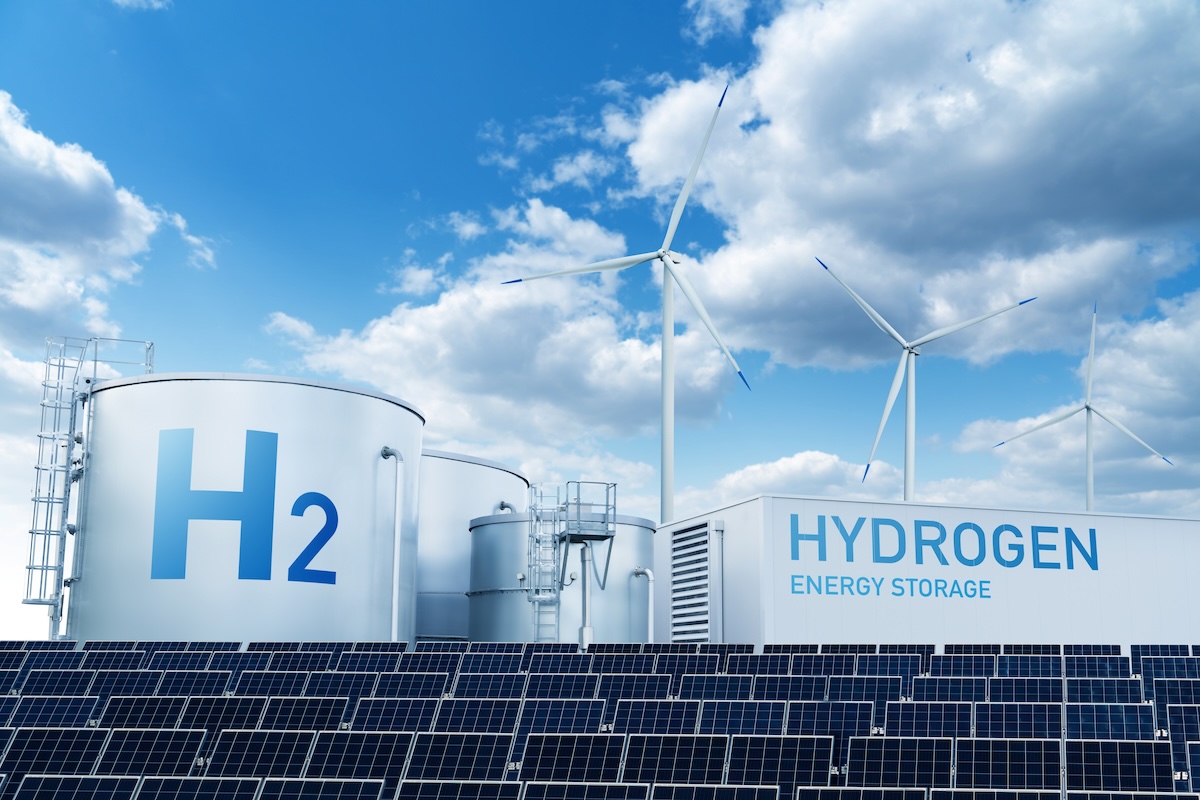

The Fieldlab Industrial Electrification (FLIE) in Rotterdam is opening its doors. The facility offers companies and developers the opportunity to test and validate innovations in the fields of hydrogen, industrial electrification, sustainable heating and Power-to-X under real-world conditions.
FLIE, located at SubZero in the Merwe-Vierhavens area (M4H) in Rotterdam, offers companies the facilities needed to validate technology under realistic operational conditions. This is important, as such validation is essential before promising technologies can be applied on a larger scale. The field lab includes a pilot hall, where technologies can be tested in an environment that ‘mirrors the reality of industrial processes’, reports TNO. This enables companies to gain a better understanding of performance, reliability, integration issues and operational conditions. Among other things, this helps to minimise technical and economic risks and to underpin investment decisions.
Focus on Power-to-X
Within FLIE, the focus is on Power-to-X: Power-to-Hydrogen, Power-to-Heat and Power-to-Chemicals. This involves converting renewable electricity into hydrogen using an electrolyser. Hydrogen and CO₂ can then be used as raw materials for the production of other substances, such as methanol, dimethyl ether and other sustainable chemicals and fuels.
A key advantage of the new field lab is that these technologies can be tested not only individually, but also in conjunction with the necessary infrastructure and utilities. Facilities available include electricity supplies, a PEM electrolyser, hydrogen and CO₂ infrastructure, Direct Air Capture, steam and hot-air supplies, and test sites for pilot projects. This enables companies and developers to investigate how processes perform under realistic and flexible operating conditions and how different components in a supply chain interact. They can also identify the technical and economic barriers that need to be overcome to enable large-scale implementation.
The pilot hall forms part of SubZero on Keileweg in Rotterdam. The entire complex comprises approximately 2,700 square metres of testing and production space, of which around 800 square metres are used by FLIE for pilot and testing activities. Its location within Rotterdam’s port and industrial cluster provides access to industrial infrastructure and potential end-users.
Kick-off for various projects
The opening of the FLIE has also marked the launch of various projects designed to contribute to the further development of industrial electrification and Power-to-X. For example, FlowVolta is testing the next generation of electrolysis systems that can operate flexibly based on the availability of renewable energy. ZEF is testing a Direct Air Capture (DAC) plant to capture CO₂ from the air. The plant is integrated into a system for the production of alternative fuels.
In another project, Equans is using an Inocel fuel cell to investigate how this technology performs under various operational conditions for industrial and maritime applications. TNO is installing a commercial electrolyser, with the aim of gaining practical experience in integrating hydrogen production into an industrial environment. The focus here is on the link between hydrogen production, storage, utilities and Power-to-X applications.
Grant
For companies wishing to test a technology, FLIE also offers a Power-to-X voucher scheme for feasibility and pilot studies. Under the current scheme, a feasibility study can be fully reimbursed up to a maximum of 15,000 euros, whilst 50 per cent of the costs of a pilot study can be subsidised.
FLIE is a joint initiative by TNO, FME, Deltalinqs, the Port of Rotterdam Authority, InnovationQuarter and Platform Zero. The province of South Holland and the municipality of Rotterdam are involved in supporting the field lab; its development has been made possible in part by European ERDF funding.











