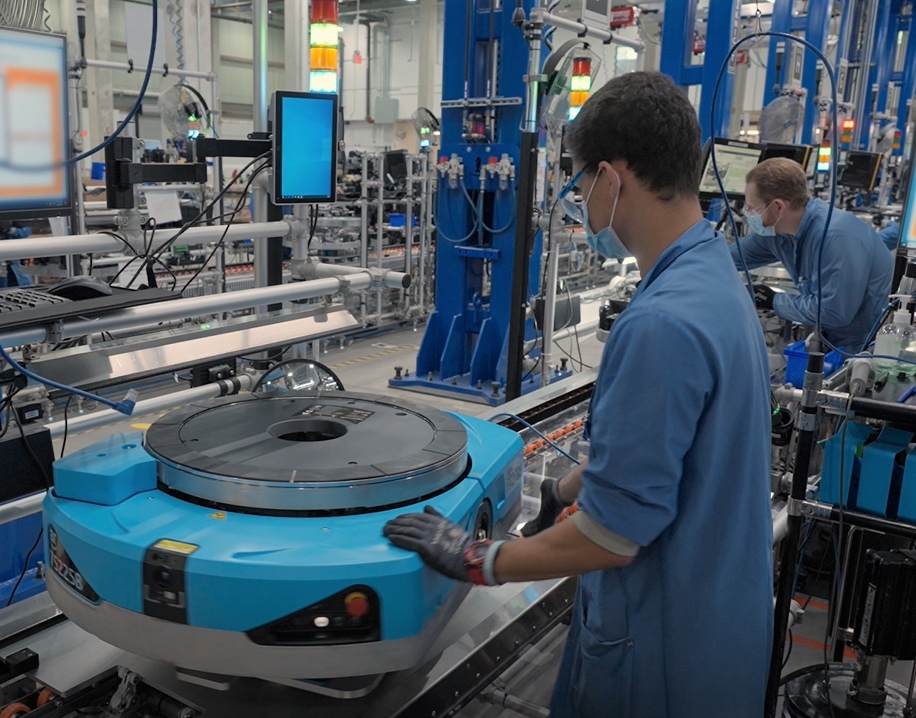

Amazon is launching a new mobile robot, which it will deploy in its fulfilment centres. The robot can lift over 1,100 kilograms and should increase efficiency and safety in its centres.
The robot in question is Titan, which is specifically aimed at lifting heavy loads in Amazon's fulfilment centres. In this way, the US e-commerce giant aims to increase safety and efficiency.
Amazon has been developing mobile robots in-house for some time. These activities stem from its acquisition of Kiva Robotics in 2012. After acquiring Kiva, Amazon transferred its operations to Amazon Robotics. Robots from Kiva were used by several large parties, including Staples and Office Depot. Amazon did not renew its contracts with these organisations; the company now uses the robots exclusively.
Based on previous robots
Previously, Amazon developed Hercules, the precursor to Titan, among others. Hercules is so far the most widely deployed mobile robot within Amazon. Titan is an upgrade over Hercules. For instance, Titan can carry twice as much weight as Hercules.
Technologies from several of Amazon's previous robots can also be found in Titan. These include the battery and charging management system from Hercules, and the computer vision, obstacle detection and management systems from the mobile robot Xanthus. In addition, hardware components from Proteus were used to manage the operating system on the robot, which, among other things, allows it to plan and travel routes. This control system also provides communication with other systems in Amazon's fulfilment centres.
The e-commerce company plans to deploy Titan primarily for transporting large objects. Think household appliances, but also pallets of pet food.
Sequoia storage system
Over time, Amazon plans to expand Titan's range of tasks. Among other things, it foresees integration capabilities with Sequoia, a container-based storage solution developed by Amazon. In this case, the e-commerce company wants to use Titan to transport products in its warehouse, and deliver products directly to employees.
Sequoia is a technology introduced by Amazon in October. The technology enables Amazon to identify and store products 75% faster in its fulfilment centres. In this way, the company aims to be able to offer products for sale online faster, process orders up to 25% faster and make product delivery more predictable.
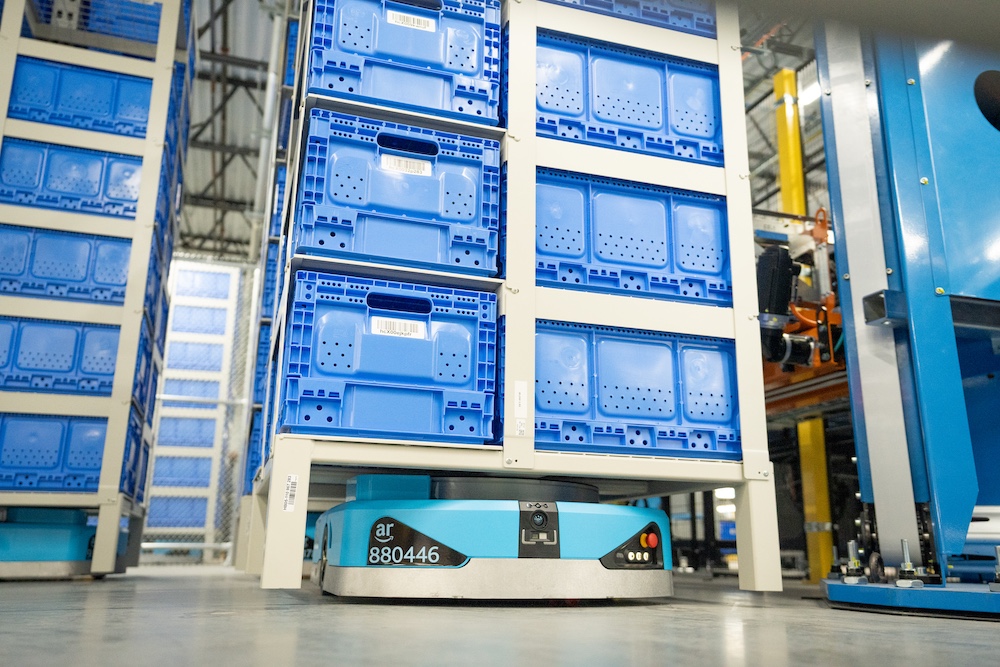
Multiple robotic systems are part of Sequoia. The system combines mobile robots, gantry robots and robotic arms, among others. Mobile robots transport products in containers to a gantry robot. This forwards the containers to workers, who can grab the required products from them. The robot can also replenish or refill containers if necessary.
Rollout of Titan in San Antonio
Amazon's SAT1 fulfilment centre in US San Antonio, Texas will be the first to use Titan. Launched in 2013, the centre is specifically aimed at handling larger, bulkier products. Among other things, Amazon aims to use Titan to increase worker safety at the centre, while taking efficiency at the centre to the next level.
Amazon produces the Titan robots at its innovation hub in the US state of Massachusetts. This location opened its doors in 2021; Amazon investors put over $40 million into the development.
Humanoid robot Digit
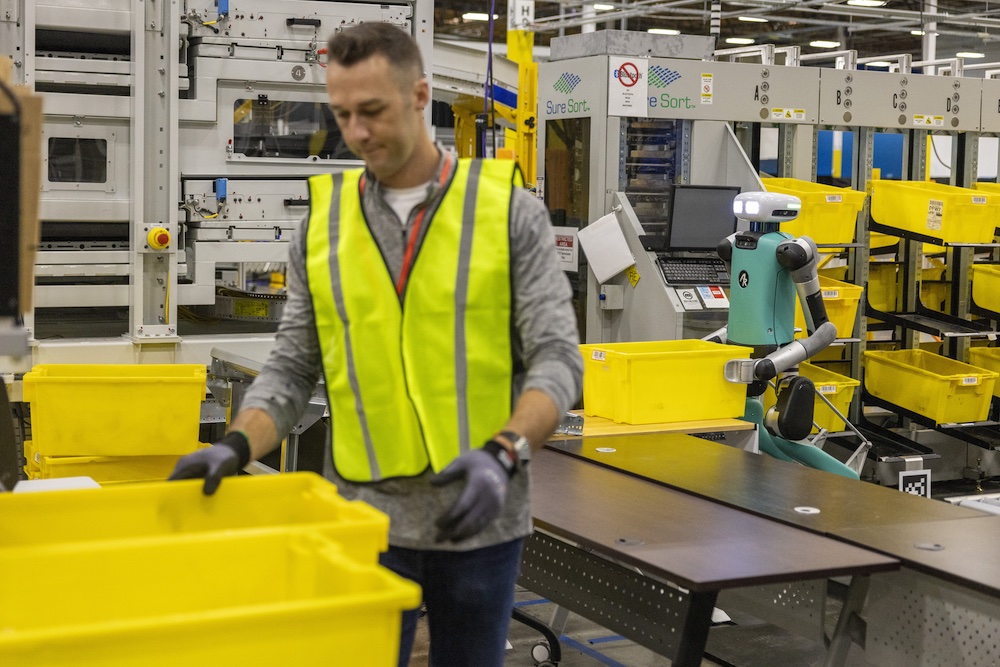
The US e-commerce giant also announced in October that it will test a robot from partner Agility Robotics: Digit. This is a humanoid robot with arms and legs that can work side-by-side with employees. Digit can pick up and manipulate objects, in a way similar to human workers. Amazon wants to use Digit initially for simple tasks, such as picking up and moving empty containers for reuse.
Author: Wouter Hoeffnagel
Photo: Amazon









