
The South Limburg region will receive 58.5 million euros from the European Just Transition Fund (JTF) to cushion the social and economic impact of the transition from fossil to green industry. Vertoro, based at Brightlands Chemelot Campus, is the first Limburg company to receive a JTF grant.
Vertoro focuses on the production of lignocellulosic biomass, a product it calls 'Goldilocks'. The material, according to the company, is the most economical, common and sustainable natural resource in the world. Its focus is on using residue from biomass as feedstock.
The three basic components of biomass are cellulose (40-50%), hemicellulose (20-30%) and lignin (10-25%). Cellulose and hemicellulose have long been used in various industrial applications, including paper and ethanol production. However, lignin is difficult to process as a loose material. The use of lignin is therefore limited for the time being; it is estimated that less than 2% of the lignin created annually is used by industry.
Scaling up production
Using the €1,228,665 grant, Vertoro plans to further scale up its plant that produces lignin oil from biomass. The company wants to produce sustainable raw materials for the chemical industry on a large scale from this lignin oil. And thus contribute to making Chemelot more sustainable.
"Making our economy more sustainable is a quest with many challenges that we will tackle together in the coming years. I am confident that we can do this in Limburg. As a person from Limburg, I am proud to meet today the first consortium that will start working on this challenge with the help of European money and make it possible for Chemelot, among others, to switch to sustainable energy sources and raw materials. Whereby this JTF grant to Vertoro not only contributes to a better environment, but also to the jobs of the future!", says deputy Elianne Demollin-Schneiders.
Converting lignin into crude lignin oil
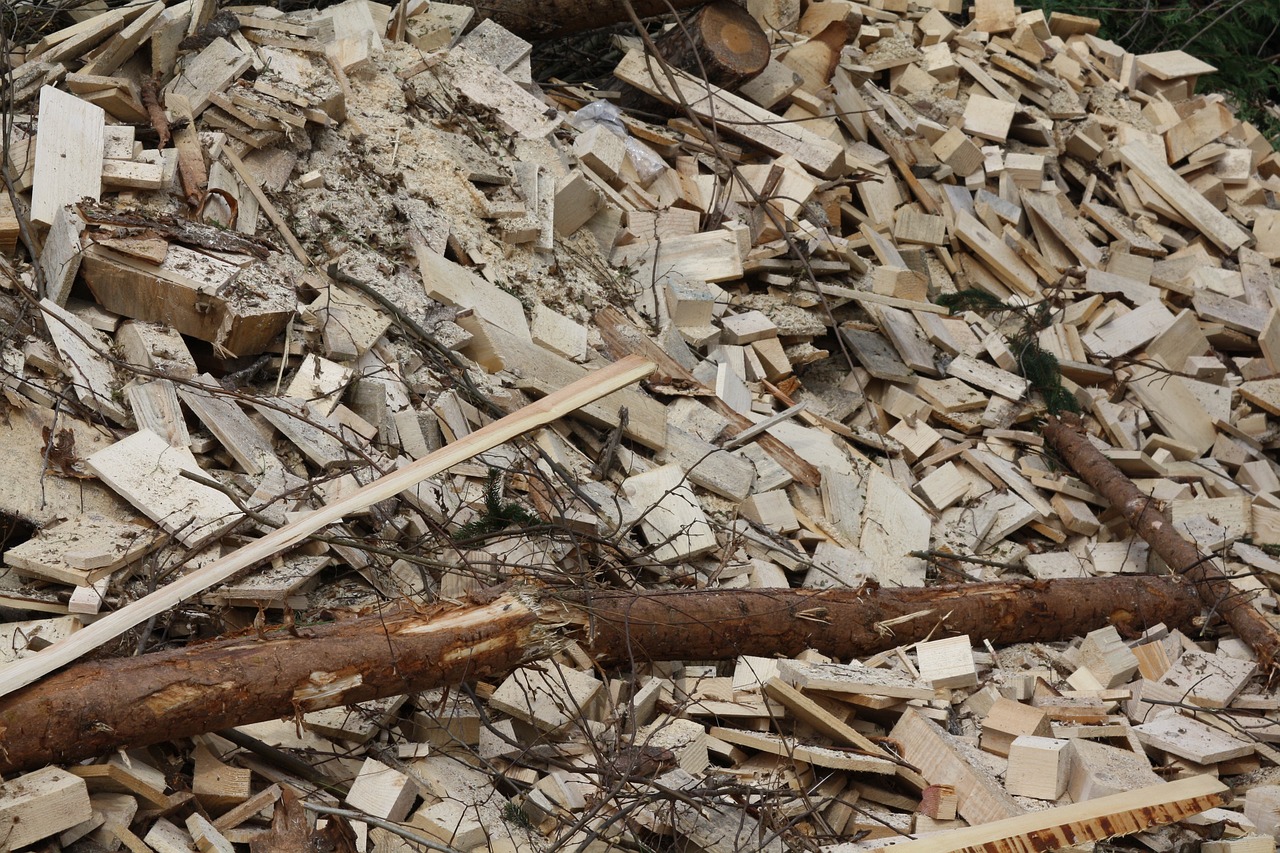
Vertoro converts lignin into crude lignin oil. Michael Boot, co-founder and co-CEO of Vertoro, explains how the process works: "The biomass we use comes from residual products from agriculture and forestry, such as sawdust. This includes lignin, which we convert into crude lignin oil using pioneering technology. This oil is already for shipping as a sustainable fuel. Actually, that is a shame, because from this bio-oil we can first extract some sustainable raw materials for the chemical industry using innovative extraction methods."
The raw materials can be used for a variety of applications. Boot: "From our oil, for example, we can extract a vanilla-like molecule that chemical companies can use to make fragrances and flavourings. Furthermore, from our bio-oil we can extract an antioxidant that can replace vitamin E. Our molecules work the same, but are not identical to the fossil molecules that the chemical industry at Chemelot currently uses. With the JTF grant, Vertoro will scale up production. An important step, because this will make it much more interesting for chemical companies to start testing these new biocarbons."
Transition requires investment
Switching to the new bio-based raw materials requires chemical companies to invest. This is a drastic but necessary switch asserts Boot. "These companies will have to adjust their production processes, but they will have to anyway. Renewable energy and renewable raw materials are necessary for the survival of Chemelot and thus the more than 8,000 jobs in the region," says Vertoro's co-CEO.
In addition, integrating bio-based processes and raw materials into the existing chemical industry at Chemelot also requires changes from personnel. For instance, they have to develop the necessary green skills. Vertoro supports this and develops modules for (re)training technical staff. Think operators and process engineers. In this way, the party wants to tackle demographic shrinkage and the tight labour market in the region.
Training also supports a rapid transition to biomass-based production. Vertoro shares the modules with local educational institutions such as Vista College, Zuyd Hogeschool, Maastricht University and Chemelot Talent Office.
Author: Wouter Hoeffnagel
Photo: recycleind via Pixabay









