
Huisman supplies a composite casing system to Icelandic company Carbfix. The special pipe system is part of a test well in which Carbfix converts CO2 into rock for permanent storage.
Carbfix is focusing on CO2 storage. The company is developing a process for the permanent storage of CO2 via carbon mineralisation in basalt and other suitable rocks. The company dissolves CO2 in seawater. It pumps this water into suitable rocks using injection wells. Here, the CO2 reacts with the rock, creating a stable carbonate.
Permanent and safe CO2 storage
"Trees and vegetation are not the only form of carbon uptake from the atmosphere. Large amounts of carbon are naturally stored in rocks. Carbfix mimics and accelerates these natural processes, where carbon dioxide is dissolved in water and interacts with reactive rocks such as basalt to form stable minerals for permanent and safe CO2 storage," Carbfix writes on its website.
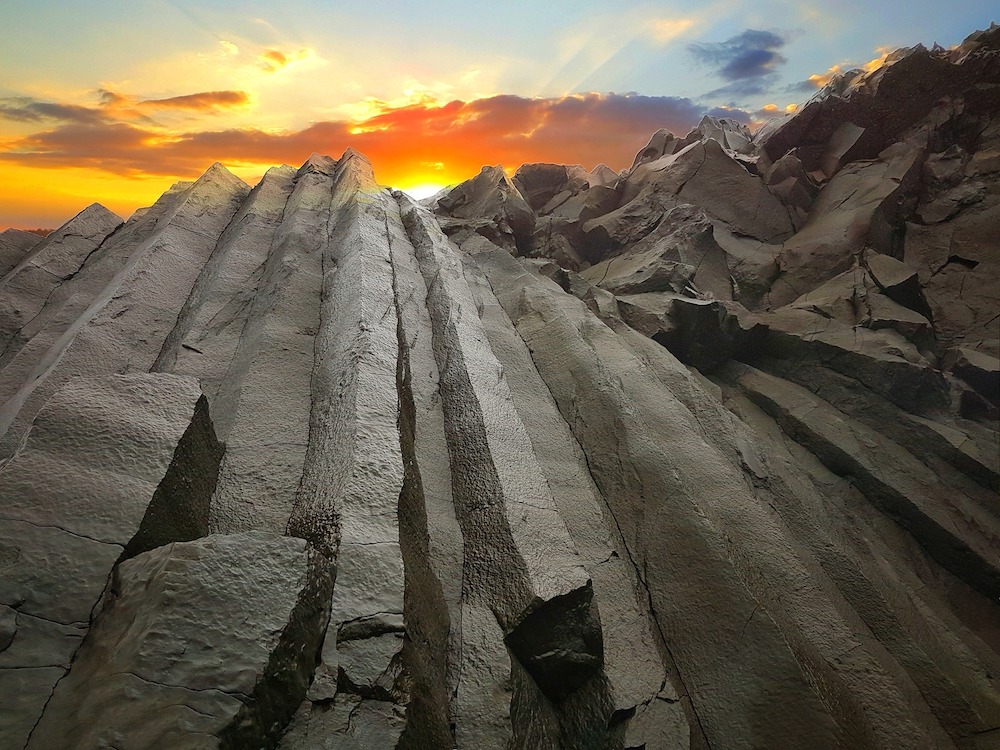
The company deliberately focuses on basalt, partly because of the large presence of this rock on earth. "Basaltic rocks are highly reactive and contain the elements needed to permanently immobilise CO2 via the formation of carbonates. They often have fractures and are porous, and contain storage space for the mineralised CO2. In addition, basalt is the most common rock type on the earth's surface, covering about 5% of the continents and most of the ocean floors," writes Carbfix.
Promising
The technology is promising. For example, Carbfix calculates that the active rift zone in Iceland has enough space to store 400 Gt of CO2. In Europe, the company estimates the theoretical storage capacity to be around 4,000 Gt of CO2, while the United States could store as much as 7,500 Gt.
The theoretical storage capacity of subsea ridges is even greater. The Icelandic company estimates this capacity to be "significantly larger than the estimated 18,500 Gt of CO2 from burning all fossil fuels on Earth". It is now investigating how much of this theoretical storage capacity is deployable in practice.
Test well
Carbfix is building a pilot well at the Coda Terminal, a transport and storage hub for CO2 in Iceland. Industrial sites in northern Europe capture CO2. Carbfix ships the gas to the terminal for temporary storage in onshore tanks. From these tanks, Carbfix pumps the CO2 to a network of injection wells. Here, the company dissolves the gas in seawater and injects it into basalt. The liquid turns into solid minerals in the rock in less than two years.
Huisman developed a composite casing system specifically for well construction for this test well of Carbfix. The choice of composite materials compared to conventional steel prevents corrosion problems, among other things. The internal flow path is extremely smooth and 'flush', minimising friction losses and scaling.
It involves a 9 5/8" composite casing. This will be cemented after installation. The drilling process then resumes, drilling an 8 ½" open section to the final depth of the well. In practice, this means that the bit and drill pipe are routed through the inside of the composite casing. This is a unique process, which Huisman says is possible thanks to the strong, all-composite pipes.
Author: Wouter Hoeffnagel
Photo: Gerd Altmann via Pixabay









