
A new autonomous drone system should improve the efficiency and speed of rescue operations at sea. The system could thus reduce the number of migrants drowning at sea.
A team from Sweden's Chalmers University of Technology is working on the drone system. This system should take action entirely autonomously if migrants run into trouble at sea. This should reduce the chances of migrants drowning and reduce the number of deaths.
Over 3,000 refugees killed at sea
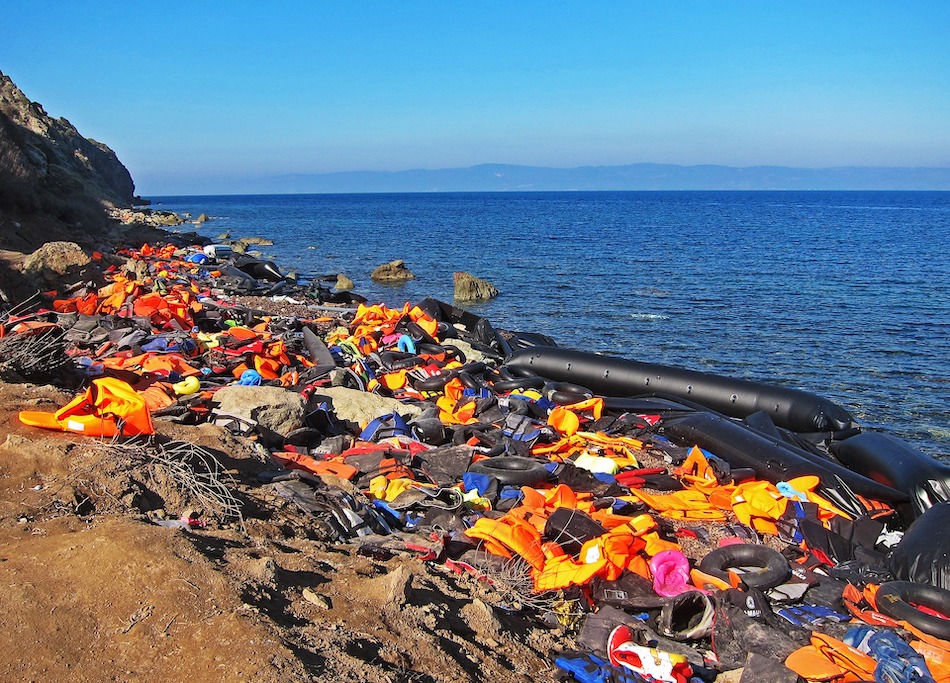
Figures from the UN refugee agency UNHCR show that by 2021, more than 3,000 people will have died or gone missing while attempting to cross to Europe via the central and western Mediterranean and the Atlantic. UNCHR has long called for support in preventing deaths and protecting refugees and asylum seekers.
Chalmers University of Technology's drone system may be able to contribute to this. The system consists of a series of drones, working together. These include both water- and airborne drones. Thus, a catamaran called Seacat acts as a base for the other drones. A series of fixed-wing flying drones monitor the Seacat's surroundings and look for migrants in trouble.
Bringing aids
If the drone encounters them, a quadcopter will spring into action. This quadcopter is equipped with a four engine and can therefore hover in the air. The drone transports resources to migrants in trouble. Think of rescue vests, medical supplies or food and drink. The quadcopter can carry loads of up to two kilograms.
A feature of the system is that it operates completely autonomously, without human intervention. The drones independently search for migrants in trouble and alert emergency services if necessary. In the meantime, the system independently delivers resources that increase the chances of survival. Thus, the system saves time while manned rescue vehicles travel to the specified location.
Seacat plays central role
The Seacat plays a central role in this. For instance, the catamaran is connected to the internet to send out distress signals to emergency services. The Seacat also controls communication with the other drones.
All the drones involved operate fully autonomously. In the case of the Seacat, this means that the catamaran sails a preset route, which always consists of a loop. The drones that search the water for migrants use an intelligent algorithm. This algorithm determines the best search pattern based on the number of drones available. If the drones spot something in the water, the quadcopter springs into action. It takes pictures of the situation on site. It transmits these photos via the Seacat to rescue centres on land. Rescue centres can then send quadcopters with rescue equipment, such as life jackets or water.
If the battery of one of the fixed-wing drones is dead, the vehicle will automatically land in the water near the Seacat. It automatically retrieves the drone from the water, recharges the battery and sends it on its way again.
'Different drones have different advantages'
"The project is based on the simple principle that different drones have different advantages, and by making different types of autonomous drones work together, the search efficiency and response speed of rescue operations can be significantly improved, with the potential to save more lives," said Xin Zhao, a post-doc from the Fluid Mechanics Division at Chalmers University of Technology.
Tomas Grönstedt, a professor in the Fluid Mechanics Division, added: "In addition, the system is in principle linkable to any public service or volunteer providing some form of support."
Development progresses
Development of the system is well under way. For instance, researchers have now succeeded in landing a quadcopter on the Seacat. The team built the Seacat and fixed-wing drones themselves. These have now been completed and are currently being assessed by the team. "As part of the continuation of the project, we are bringing the system together and testing the whole thing at sea," says Ola Benderius, Associate Professor in the Vehicle Engineering and Autonomous Systems Division, at Chalmers University of Technology. Benderius leads the project.
Author: Wouter Hoeffnagel
Photo: Jim Black via Pixabay









