
GIGA Storage and grid operator TenneT have concluded the first-ever time-based connection and transmission agreement. A milestone that marks an important step forward in more efficient use of the existing electricity grid. This new agreement gives GIGA Storage the right to take or feed back electricity from the grid at least 85% of the time.
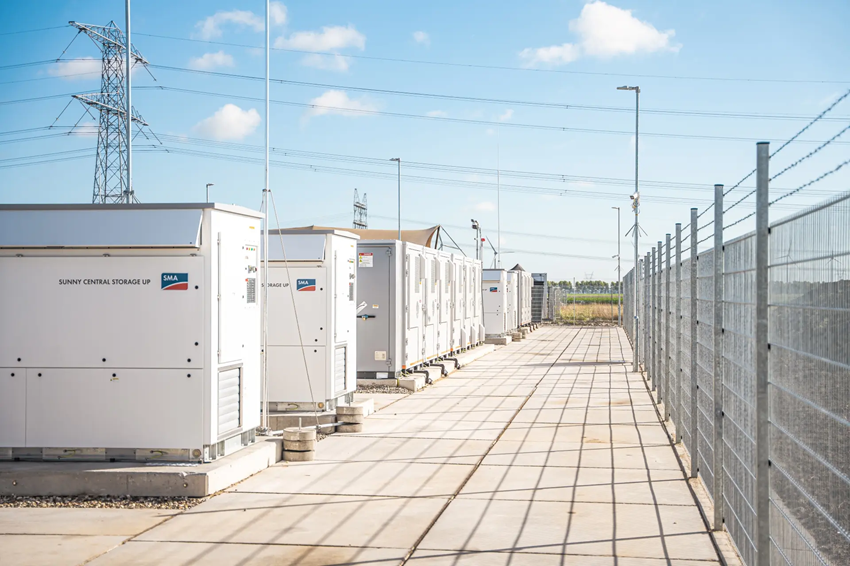
The new type of contract, developed as part of the National Grid Congestion Action Programme, enables GIGA Storage to connect its battery project, GIGA Leopard with a capacity of 300 MW and storage capacity of up to 1,200 MWh, in Delfzijl to the electricity grid. This new form of contract ensures that we use scarce grid space more efficiently. This is necessary because congestion on the electricity grid now means that connections with a full and fixed transmission right are not always possible. At the same time, it is attractive for customers because they can get a discount of up to 65% on transmission tariffs.
Expanding electricity grid
Climate and Green Growth Minister Hermans: "We are all working very hard to expand the electricity grid faster, and we also need to use the grid smarter. Thanks to this new type of contract and good cooperation, it will be possible to make optimal use of the space left on the grid outside 'rush hour'. And moreover, to deploy renewable electricity when there is less sun and wind. I hope this is a breakthrough and other companies that can do so will also consider a flexible contract."
Important step forward
When there is a lot of wind or the sun shines heavily, huge batteries can temporarily store the renewable electricity generated. That green power is used in case of shortage to maintain balance on the power grid and ensure security of supply. Batteries reduce our dependence on coal and gas power plants to produce power once there is little or no solar and wind power. "This agreement with GIGA Storage is a crucial step in improving the efficiency and reliability of our current electricity grid," said TenneT CEO Manon van Beek. "With this time-based contract form, we can make better use of the available capacity and connect more customers who use the grid outside peak hours."
More economical for wallet
The battery helps keep the power grid stable by providing extra power when needed. This can be cheaper and more efficient than switching on traditional power plants. The battery also stores electricity when prices are low so that it can be used later when demand is higher. As a result, green power is better utilised and energy remains affordable. "With this new contract, we are showing that by working together we can come up with very good solutions. By listening carefully to each other, we really take the energy transition a step forward and make a significant contribution to a more sustainable and stable energy supply," says Ruud Nijs, CEO GIGA Storage. The new agreement with TenneT will take effect on 1 October 2025.
New alternative contracts
Complementing the current firm transmission law, the Consumer & Market Authority (ACM) gave the green light to time-based and time-block contracts in spring 2024. Time-based contracts enable connection of large-scale consumers to the electricity grid, with the connection being available at least 85% of the time. This type of contract is only for large business customers of TenneT. They pay a reduced transmission tariff and potentially make room for other parties on the waiting list. These new contract types are particularly interesting for companies without 24/7 business processes and are offered by grid operators as an alternative to the existing fixed transmission right.
Batteries on the high-voltage grid
Ensuring a stable electricity grid in the years to come will require more flexibly deployable power in the form of batteries, among other things. Batteries will play an important role in maintaining stability in the power grid, including for voltage management, dynamic stability, control and reserve power and redispatch. So says TenneT in the position paper 'TenneT's position on Battery Energy Storage Systems (BESS) '. This gives market parties and relevant government authorities insight into the application of large batteries (>70 MW) on the high-voltage grid.
Source and photo: TenneT
Also read: RWE starts construction of large-scale battery storage project in the Netherlands











