
Starbatch project aims to develop a new battery technology that uses sodium instead of lithium. Besides technology development needed for the energy transition, the project helps reduce dependence on foreign countries for battery raw materials. It also contributes to the strategic autonomy of the Netherlands and Europe for battery production.
Batteries play an important role in the energy transition. Currently, lithium (LiFePO4) batteries are mainly used. Availability is limited. And due to the high cost and energy consumption in lithium extraction, however, there is limited scope for large-scale application. Recent research shows that sodium battery cells (based on NaAlCl4, sodium tetrachloroaluminate, STCA) can be an alternative for this and provide similar or even better performance. The Starbatch project focuses on developing this new battery technology.
Collaboration and innovation
In the Starbatch project, Nobian, Exergy Storage, University of Twente and ISPT join forces to develop a new production process for sodium-based batteries. The parties in the consortium will work together on affordable, scalable, safe and energy-efficient production of sodium tetrachloroaluminate (NaAlCl4), a promising and more sustainable alternative to lithium-based batteries. Starbatch stands for: Sodium Tetra chloro Aluminate Recyclable BATtery Chemicals.
Sodium as alternative to lithium
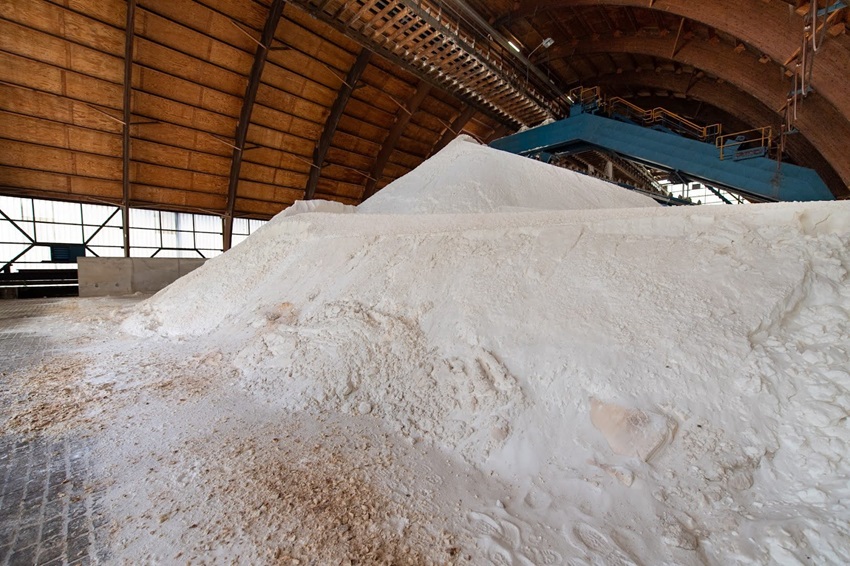
Sodium, unlike lithium, is abundantly available and easily extracted in the form of salt (NaCl). The partners in this project have demonstrated at laboratory scale that the main and active component for the new battery, NaAlCl4, can be produced more simply and sustainably compared to the existing method. In this new production method, sodium chloride, aluminium and chlorine are mixed in one reactor, allowing NaAlCl4 to be produced at lower temperatures.
Energy efficiency and strategic independence
Besides replacing lithium with sodium, this innovative production process uses less energy than current methods. By using raw materials produced through electrical processes, such as chlorine, the carbon footprint is significantly reduced. The raw materials needed, such as salt (sodium chloride, NaCI), are abundantly available, ensuring strategic energy storage independence for the Netherlands and Europe at lower cost. The project aims to create a new value chain for batteries in the Netherlands, from salt extraction to battery production.
Starbatch project
Coert van Lare, Director Innovation Program Renewable and Circular at Nobian: "The STARBATCH project focuses on more sustainable, salt-based batteries, which fits perfectly with our Grow Greener Together sustainability strategy and strengthens Nobian's position in the energy storage sector. By using Nobian's raw materials (salt and chlorine), we are achieving growth that is also green."
Idea developed further
Gert Jan Jongerden, director of battery developer Exergy Storage: " We are pleased that Nobian has further developed our initial idea and will now scale it up. This process will improve the current generation of cells and simplify manufacturing. Exergy will thoroughly test Nobian's chemicals in its battery cells. Nobian's 'Grow Greener Together' vision is right up our alley. Exergy Storage wants to make an important contribution to a new, growing battery industry chain, which is essential for a sustainable future. That is why Exergy is fully committed to this project together with Nobian and other partners." ISPT director Tjeerd Jongsma: " Europe's future is electric. In this, new forms of batteries play an important role. An innovative production process with raw materials sourced from the Netherlands for the required chemicals is therefore spot-on."
Technology development and scale-up
Grant from TKI Energy (Top Consortia for Knowledge and Innovation) allows the STARBATCH project to develop sustainable technologies. The focus is on improving the efficiency and scalability of the production process. Activities include developing and testing a new reactor (by Nobian, supported by subcontractor Demcon-Suster and the University of Twente), testing NaAlCl4 in laboratory batteries (by Exergy Storage), and preparing a conceptual process design and economic analysis (by the University of Twente and Nobian). Preparations for scaling up to pilot-scale production are under way. In addition, cooperation between Dutch and European partners is being strengthened to accelerate technology development. Scale-up of the process technology is expected to lead to commercial production before 2030.
Source and photo: Nobian
See also: Digitalised and sustainable production of battery cells











