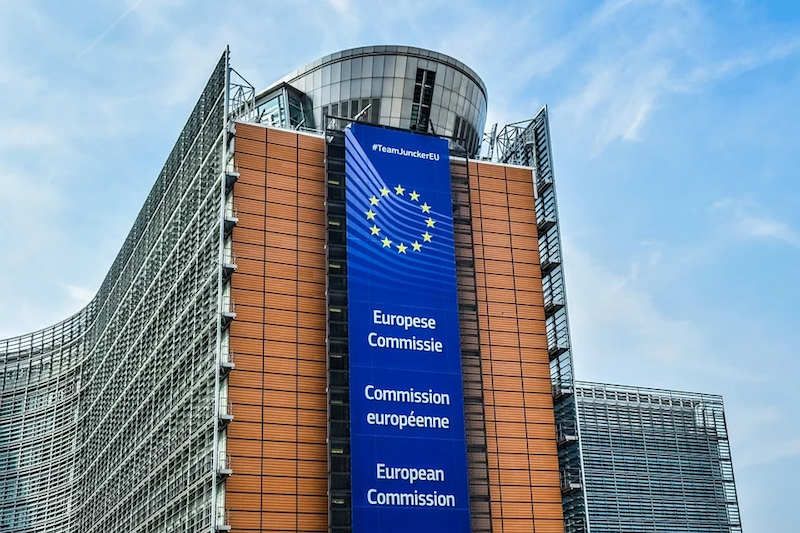

Technological leadership and competitiveness must be central in the successor to the European Horizon programme, argue FME and the European technology industry umbrella organisation Orgalim. The current geopolitical status calls for an ambitious Framework Programme 10 and a budget of €200 billion, according to the parties.
Horizon is the R&D programme of the European Union (EU). It is a framework programme for research and innovation, focusing on the period 2021-2027. The aim of Horizon is to strengthen the EU's science and technology base. This includes developing solutions for policy priorities, which could include the green and digital transition.
'Every euro we earn back one and a half times'
Through Horizon, €95.5 billion in investments are available for research and innovation. Dutch parties score well. We earn back one and a half times every euro the Netherlands puts into Horizon. Horizon Europe rests on three pillars: cutting-edge science, global challenges and European industrial competitiveness, and an innovative Europe.
Horizon Europe is the successor to the earlier Horizon 2020 programme. This programme with a budget of almost €80 billion was available from 2014-2020.
Position is under pressure
At the same time, FME and Orgalim also see threats. They express their concerns about Europe's threatened position in the world and changed geopolitical circumstances. Specifically, they point to Russia's invasion of Ukraine, the Inflation Reduction Act (IRA) in the United States (US) and China's leading role in 37 of 44 key technologies.
The parties also point to the shrinking European share in manufacturing worldwide. Whereas ten years ago Europe's share was as large as China's, it is now only half that. "Strategic innovation policy is therefore dire necessity, and that includes an ambitious European R&D programme," FME and Orgalim write in a statement.
Double the budget
Negotiations on the next framework programme (FP10) will take place in the coming period. FME highlights the importance of strengthening European competitiveness and technological leadership through this programme. "To keep up with the global increase in R&D spending, both Europe and the Netherlands must meet the 3% standard. Doubling the budget of FP10 fits that ambition," FME writes.
The business association for the technology industry wants to make FP10 more attractive for innovative business by increasing the private share of the budget to one-third, and focusing on key technologies that help address societal challenges. "This way, we not only invent innovations in Europe, but also make them," FME said.
'Europe must take the wheel itself'
"In an uncertain and changing world, Europe must therefore take the wheel itself. Smart public investment in research and innovation is crucial. We want the centre of gravity of development and production of key technologies, such as micro-electronics, photonics and quantum technology, to also be in Europe. With these, we can improve healthcare, make a cleaner world and heat our homes. By occupying key positions in value chains, after solar panels and electric cars we will not become undesirably dependent for other technologies as well," concludes the business association.
FME and Orgalim elaborate on their arguments in a position paper, which is available here.
Author: Wouter Hoeffnagel
Image: Dimitris Vetsikas via Pixabay











