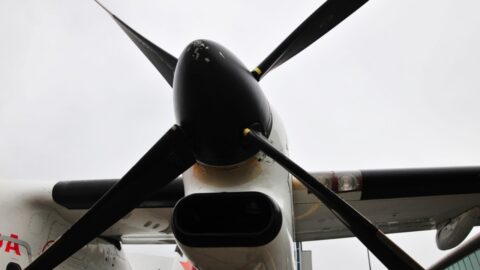
With increasing air traffic and pressure on liveability, the need for quiet aircraft is growing. This is why UT has teamed up with Brazilian aircraft manufacturer Embraer, the Netherlands Aerospace Centre (NLR) and the German-Dutch Wind tunnels foundation to set up a consortium working on the design and development of even quieter aircraft.
With the development of turbofan engines, new aircraft have already become much quieter in recent years. Most gains can now be made in reducing aircraft fuselage noise, caused by airflow along the wings, attached flaps and landing gear, among others. The challenge for aircraft designers here is to develop quieter alternatives that deliver the same or better performance while being at least as safe and economical.
In development, it is important to be able to properly test the noise production of new quiet aircraft concepts during the design process. Because of the huge economic stakes, it is essential that wind tunnel tests of scale models of these concepts match as closely as possible the performance of full aircraft under real flying conditions. The partners in the recently established consortium are pooling their expertise and facilities to make the results of the tests as close as possible to real-world conditions.
From UT, two PhD students from the Engineering Fluid Dynamics (EFD) department are involved. They make intensive use of the department's recently renovated aeroacoustic wind tunnel. This is equipped with the most advanced flow measurement techniques and noise source localisation methods.
Project Silent Approach
Researchers from the Faculty of Engineering Technology are working intensively with Brazilian parties in the aviation industry. For example, there is an exchange programme with the Brazilian aviation institute ITA, and students from UT and ITA can participate in a double degree master's programme, earning a degree from both knowledge institutions. Recently, a UT delegation led by Rector Magnificus Thom Palstra and Dean of the Faculty of Engineering Technology Geert Dewulf visited Brazil. They explored opportunities for further intensifying relations and joint projects with industrial and academic institutes. The project Silent Approach by associate professor Leandro de Santana and Kees Venner (chair) of the EFD group is the major first milestone in these developments. Daniel Moczydlower (Embraer's vice president of technology development): "Silent Approach is a great example where university and industry contribute to faster technological progress. This brings benefits to society as a whole."

Source: UT