
Six Dutch projects in micro- and nanoelectronics have been notified by the Ministry of Economic Affairs and Climate (EZK) to the European Commission as Important Project of Common European Interest (IPCEI). The government wants to invest €230 million in these projects. In addition, €70 million will be allocated to projects around the cloud.
What is IPCEI?
IPCEI stands for 'Important Project of Common European Interest'. In Dutch, this can be translated to 'important project of common European interest'. An IPCEI is an integrated European project. Several national complementary projects of companies and/or research institutes from various EU member states are part of it. The projects have synergy and contribute to strategic European goals. Think of European objectives regarding sustainability, digitalisation and sovereignty.
Netherlands participating in three IPCEI initiatives:
- IPCEI Microelectronics 2 (ME2)
- IPCEI Hydrogen
- IPCEI Cloud Infrastructure and Services (CIS)
Six projects notified
Six Dutch projects have now been submitted for IPCEI ME2 by the Ministry of Economic Affairs and Climate (EZK). These have a strategic position in the global semiconductor chain from research, development and supply to production. The projects contribute to Dutch and European technological developments.
They are the following projects:
- Radar and 6G technology (both NXP);
- realisation of the latest machinery for advanced semiconductor manufacturing (ASML and Nearfield Instruments);
- Developments for Innovations in Semiconductor Testing (Thermo Fisher);
- Integrated Photonics Solutions (SMART Photonics).
'Keeping industry competitive and innovatively leading'
Minister Micky Adriaansens (EZK): "The Netherlands is committed in an EU context to keep our industry competitive and at the forefront of innovation. While maintaining an open economy, we can work more actively on preserving knowledge, monitoring a level playing field and innovations. This also includes, in a globally competitive economy, a different role of Dutch government. That is why we financially support Dutch companies and knowledge institutions that participate in strategic European innovation cooperation."
IPCEI ME2 is aimed at strengthening the production chain. And maintaining the competitive advantage of the innovative European tech industry. Participation in the programme should ensure access of Dutch startups, SME suppliers and large companies to the latest micro- and nanoelectronics and software.
Cloud infrastructure and services
Netherlands is also participating in a second IPCEI partnership: Cloud Infrastructure and Services (CIS). This should lead to a European cloud infrastructure and services that contribute to cyber security, interoperability and sustainable applications. Companies, governments and consumers should thus be able to store and share data securely and on European terms.
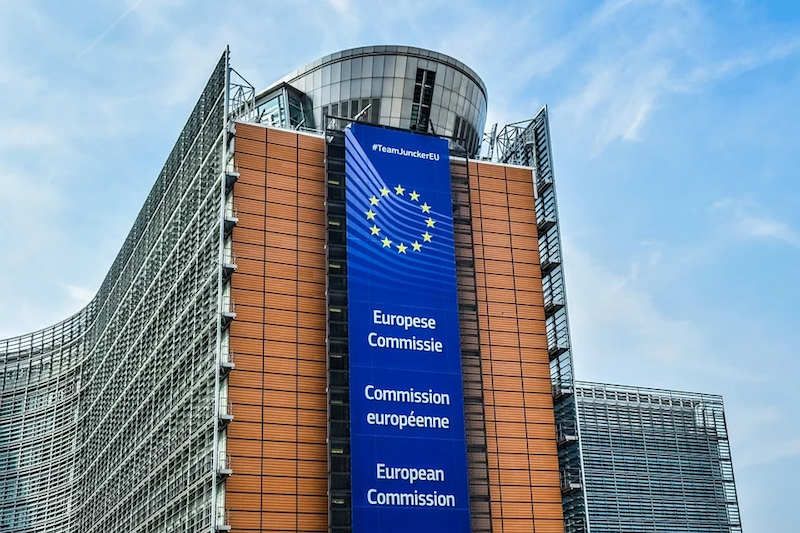
Projects must first be assessed and approved by the European Commission. This assessment determines which projects the Netherlands can or cannot ultimately support financially.
By: Wouter Hoeffnagel
Photo: dimitrisvetsikas1969 via Pixabay











