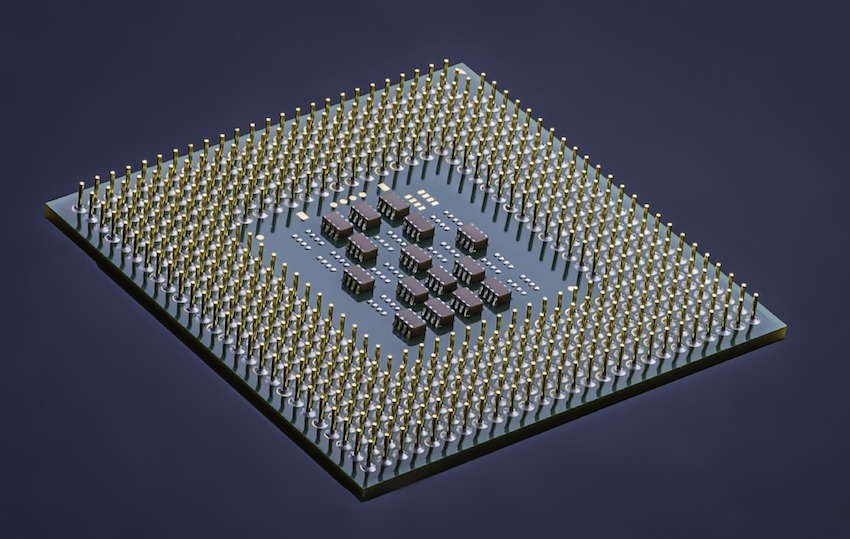

The cabinet wants to invest €300 million in the technology and chip sector before the end of this year. The plan is part of Europe's drive to reduce semiconductor dependence on countries such as China and the United States (US).
This is reported by anonymous sources to De Telegraaf. The cabinet is expected to announce the plan in the short term. The European Union's (EU) dependence on other countries and regions for chip production has become a major concern. Chip shortages are currently causing major problems in a variety of sectors. A well-known example is the automotive industry, which has been plagued by closures due to chip shortages on a regular basis.
Indispensable role in digital world
Increasing digitalisation is making chips indispensable in our contemporary world. A wide range of devices depend on them. Think of the aforementioned cars, but also mobile devices, household appliances, smart devices, electric bikes and healthcare equipment. Chip shortages can disrupt the production and hence availability of these products.
Unfortunately, a quick solution to the problem does not seem possible. Research firm Gartner predicts that the global chip shortage will continue until at least 2023. The Franco-Italian electronics and semiconductor manufacturer STMicroelectronics concurs with this forecast.
Investment in Dutch tech and chip sector
It is therefore no surprise that there is also a lot of attention on the subject from Dutch politicians. Anonymous sources report to De Telegraaf that the cabinet wants to allocate €300 million to the Dutch technology and chip sector. The money is intended, among other things, to develop new technologies and new services in the chip sector. In addition, the investment is aimed at setting up a European cloud infrastructure.
The EU is also pushing for investment in the chip and tech sectors. The sectors have been stamped 'Important Projects of Common European Interest' (IPCEI). The government may finance an IPCEI up to a maximum of 100 per cent.
European Chips Act
In addition, European Commission President Ursula von der Leyen announced the European Chips Act this week. This new European law is to stimulate semiconductor supplier chains on European soil. It should lead to a European ecosystem of chips. And eventually make the EU less dependent on other regions.
"Without chips, there is no digital. Currently, despite growing demand, entire production lines are operating at a reduced speed due to a shortage of semiconductors," Von der Leyen said during her State of the Union speech. "And although global demand has exploded, Europe's share of the entire value chain from design to production capacity has shrunk. We depend on state-of-the-art chips produced in Asia."
"This is not just about our competitiveness. This is also a matter of tech sovereignty. Therefore, let us all put our focus on this."
State-of-the-art European chip system
Among other things, the European Chips Act is to boost research, development and testing in the field of chip production. The EU thus aims to create a 'state-of-the-art European chip system', which includes chip production. This development should lead to greater supply security and also create new markets for European technology.
Von der Leyen acknowledges that the goal is challenging and, according to some parties, cannot be realised. However, she points to Galileo, which was also the subject of much scepticism 20 years ago. "And look what has happened. We have got our act together. European satellites today provide the dat navigation system for more than 2 billion smartphones worldwide. We are world leaders. So let's be powerful again, this time with semiconductors," Von der Leyen said.
Van der Leyen’s State of the Union speech is available here.
Author: Wouter Hoeffnagel
Image: brookhaven via Pixabay











