Siemens and Deutsche Bahn present a model of a hydrogen train. The train is to be used for regional transport from 2024 and emits only steam and water. The hydrogen train is to replace diesel-powered trains.
The model is part of the H2goesRail project, carried out jointly by Siemens and Deutsch Bahn. The hydrogen train is called the Mireo Plus H and was shown at the Siemens plant in Krefeld, Germany. The parties also presented a newly designed mobile hydrogen storage trailer.
Reduce CO2 emissions
The train and new infrastructure should eventually replace diesel trains for passenger and regional goods trains. CO2 emissions from rail traffic should thus be reduced to zero. The range of the Mireo Plus H varies and depends on its configuration. If the train consists of two railcars, the range is up to 800 kilometres. This configuration offers the same power as its electric counterpart. Traction power is 1.7MW, allowing for an acceleration of 1.1m/s. The top speed is 160km/h. Does the train consist of three couples? Then the range increases to 1,000 kilometres.
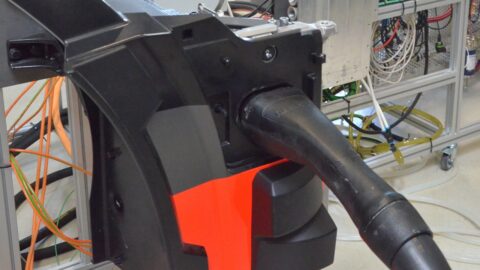
Refuelling on the Mireo Plus H is as fast as on a diesel variant. This is possible thanks to a newly developed refuelling infrastructure developed by Deutsche Bahn. The railway company generates hydrogen using electrolysis at a maintenance depot in Tübingen. In doing so, it deploys green electricity from a high-voltage line. The electrolyser separates water into hydrogen and oxygen using electricity. The system then compresses the hydrogen, after which it is stored in a mobile storage unit. Among other things, this unit allows tests to be carried out on railways without electricity. Before refuelling, the system processes and cools the hydrogen.
Climate-friendly and emission-free passenger transport
"Only with a strong rail system and alternative drives can we make a significant contribution to the fight against climate change. The Mireo Plus H makes climate-friendly and emission-free passenger transport possible," said Michael Peter, CEO of Siemens Mobility. "With the Mireo Plus H, we have developed the next generation of hydrogen-powered trains that offer a particularly long range and faster acceleration. Each train delivered can save up to 45,000 tonnes of CO2 over its 30-year lifetime compared to travelling in cars."
An example demonstrating this CO2 saving is the Tübingen-Pforzheim route. Here, the deployment of a hydrogen train could save 330 tonnes of CO2 on an annual basis compared to the deployment of a diesel train. Deploying the Mireo Plus H on all planned routes could save 520 tonnes of CO2, assuming 200,000 kilometres travelled.
"For Deutsche Bahn, hydrogen trains are an important component of our way to achieve climate neutrality," says Dr Daniela Gerd tom Markotten, member of the executive board for digitalisation and technology at Deutsch Bahn. "With our development of the mobile hydrogen refuelling station and related maintenance infrastructure, we are demonstrating that we can handle not only mobility, but also technology. And that is exactly what is needed to deliver the climate-friendly transport of tomorrow. Together with Siemens and the newly developed hydrogen train, we are creating a system that takes us a step forward towards phasing out diesel and enabling the greening of our fleet."

Grant
The programme will receive €13.74 million in funding from the German Federal Ministry for Digitalisation and Transport. The funding is part of Germany's National Innovation Program for Hydrogen and Fuel Cell Technology (NOW).
"In the coalition agreement, the federal government agreed to have 75% of the country's rail network electrified by 2030," explains Michael Theurer, Germany's state secretary for digitisation and transport. "Alternative propulsion can help reduce emissions from diesel rail transport. In this way, we can operate virtually climate-neutral on rail routes where full electrification is not possible. The H2goesRail project not only tests the use of hydrogen on rail, but also advances the technology significantly."
The Mireo Plus H will be tested in Baden-Württemberg from 2023. From 2024, Deutsche Bahn plans to provide passenger transport by train between Tübingen, Horb and Pforzheim. The Mireo Plus H will replace a diesel train on this route.
Also testing in the Netherlands
There are also plans to deploy hydrogen trains in our country. The first hydrogen train arrived in the Netherlands on 26 February 2020. These trains will make a number of test runs between Groningen and Leeuwarden; only on this route will the hydrogen train be allowed to run independently. This is a project of the province of Groningen in cooperation with ProRail and Arriva. They want trains in the northern Netherlands to run without emissions.
The train deployed by the parties for this purpose is an Alstrom Coradia Ilint. This type is already in train service in Germany, passing through Cuxhaven, Bremerhaven, Bremervörde and Buxtehude. The Netherlands is the second country where the train runs on track. Engie is the supplier of the refuelling installation and the green hydrogen here.
Further information on the H2goesRail project is available here. Further information on the ProRail project can be found here.
Author: Wouter Hoeffnagel
Photos: Siemens