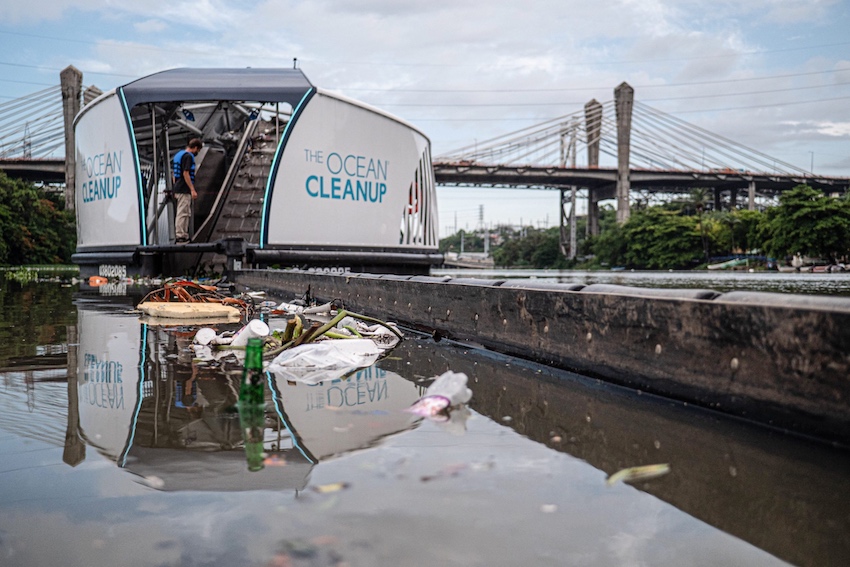

Dutch non-profit organisation The Ocean Cleanup is starting series production of the Interceptor in collaboration with Finland's Kronecranes. This vehicle filters plastic from rivers, preventing the material from reaching seas and oceans.
The Ocean Cleanup was founded in 2013 by Boyan Slat and is based in Rotterdam. The organisation has about 95 experts, focusing on tackling plastic pollution in oceans worldwide. In doing so, they take a two-pronged approach: cleaning up plastic that has already accumulated in oceans and tackling the influx of new plastic via rivers. For instance, research by The Ocean Cleanup shows that about 80% of pollution in oceans comes from 1,000 rivers. The non-profit organisation therefore aims to clean up these 1,000 most polluted rivers worldwide over a five-year period.
Interceptor
This task is intended for the Inceptor. This vessel is 100% solar-powered and filters plastic from rivers completely autonomously. The system works using a barrier, which is placed in rivers. Pollution, thanks to the flow of the river, flows through this barrier to the Interceptor, where the material is removed from the river using a conveyor belt.
On board, a shuttle automatically distributes material to about six containers, with a sensor telling the system when a container is full. An Interceptor can collect 50,000 kilograms of waste per day and stores up to 50 m3 of waste on board. The vessels are internet-connected and automatically notify local partners when they need to be emptied. As the system operates autonomously, the process can continue 24/7 per day. Even while the containers are being emptied, The Interceptor can continue to collect waste.
Pilot
Interceptor should play a major role in tackling plastic pollution in oceans. The vehicle was presented at the end of 2019. Currently, three pilot examples are in use in Malaysia's Klang, Indonesia's Jakarta and Dominican Santo Domingo. A fourth Interceptor for use in Vietnam has been delayed and is expected to be delivered in early 2021.
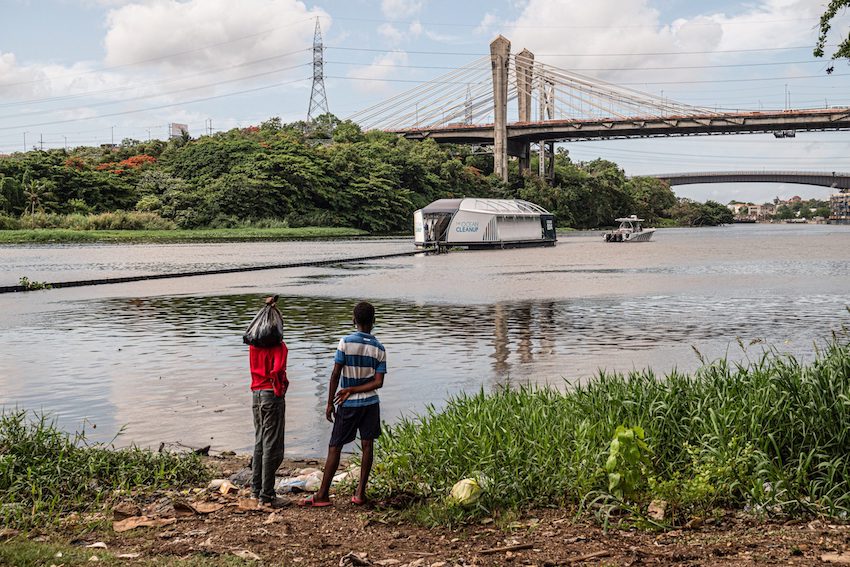
Pilot projects have been used to further refine and optimise the technology for mass production. This included modifications to the conveyor belt, shuttle, waste bins and the barge itself. These changes have been incorporated into the third generation design for the Interceptor, which forms the build pressure for Interceptors to be produced in 2020 and 2021.
Mass production
Interceptor 005 and 006 are currently being built at Kronecranes' MHE-Demag facility in Klang, Malaysia. These vessels are expected to be completed in May 2021. In the long term, Kronecranes will take over the production, installation and maintenance of the Interceptor vessels. Local partners will deploy the Interceptors in the field. The Ocean Cleanup will provide both technology and best practices and take the lead in developing future Interceptor projects.
Author: Wouter Hoeffnagel
Photos: The Ocean Cleanup











