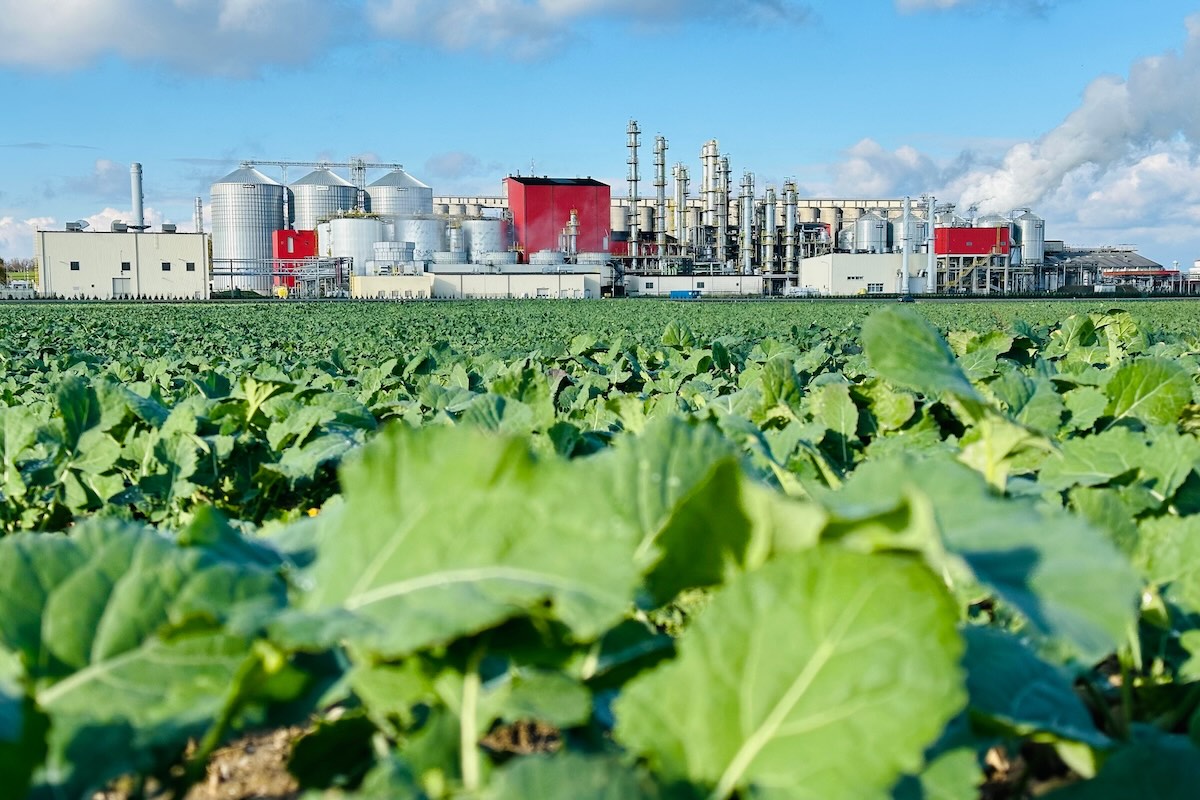

The demand for methanol is rising rapidly. The market is expected to increase fivefold between now and 2050, when demand is expected to reach 500 million tonnes per year. Much methanol is currently produced from fossil sources. However, TNO and Norway's Equinor are investigating the possibility of profitably producing biomethanol from residual waste via gasification.
Methanol is mainly produced from synthesis gas, a mixture of carbon monoxide (CO), hydrogen (H₂) and carbon dioxide (CO₂). In many cases, manufacturers produce this gas via gasification of hydrocarbons such as natural gas, coal or biomass. It is also possible to produce synthesis gas via steam reforming of natural gas, in which natural gas is converted into synthesis gas at high temperature and pressure. Manufacturers then pipe this synthesis gas at high pressure and temperature over a catalyst, producing methanol. Through a purification process, manufacturers then convert the resulting methanol into pure methanol.
Producing methanol from residual waste
TNO developed a gasification technology that could potentially phase out the use of fossil fuels to produce methanol. The technology allows biomethanol to be produced from residual streams such as agricultural waste and scrap wood. In a lab, the research organisation previously demonstrated that the technology works. In collaboration with Equinor, the world's largest methanol producer, TNO now wants to move towards cost-effective biomethanol production based on this technology.
"In our biofuels lab, we have developed and extensively tested several technologies for efficiently producing biomethanol," explains Berend Vreugdenhil, senior researcher in sustainable fuels at TNO. "Biomass gasification is the basic technology. Within this, many variations are possible, each of which has its own advantages and disadvantages in terms of efficiency, costs and yields. In our lab, we can make sustainable fuels such as methanol from biomass via a variety of routes. With this, sectors such as road and water transport and aviation, which now mainly use fossil fuels, can become more sustainable."
Gaining more insight
Equinor has long been interested in gasification as a method for producing green methanol. In doing so, it is looking at various feedstocks, including woody waste streams. In collaboration with TNO, it wants to get answers to several questions, including:
- Under what conditions should you gasify these waste streams?
- What is the quality of the green gas produced?
- How can this be optimally upgraded to methanol?
- What are the technical and financial risks associated with production?
"The wide availability and favourable price of woody waste streams such as bagasse make large-scale production of biomethanol attractive, leading to sustainable fuels, plastics, cosmetics and various market opportunities," says Vreugdenhil.
Applying technology in practice
Gasifying woody waste streams enables the production of high-quality biofuels. In this process, the gasification gas is cleaned, and then converted into a clean synthesis gas via a so-called steam methane reformer (SMR). Technology from TNO then allows the synthesis gas to be converted to methanol or sustainable aviation fuels.
"With Equinor, we will put the technology to practical use, making a conclusive business case. The wide availability and relatively favourable price of woody waste streams such as bagasse make it attractive in principle to start producing biomethanol on a large scale," reports Vreugdenhil. "And with that, you can make sustainable fuels, plastics, cosmetics and so on. There are lots of markets to serve with this. With rapidly growing demand worldwide, there are great opportunities here."
'Europe is leading the way'
Vreugdenhil calls Europe a major player and frontrunner in the field of biomethanol. However, China is also betting heavily on biomethanol production, and is rapidly creating new biomethanol production facilities. Europe therefore faces the challenge of maintaining its lead and becoming a dominant player in sustainable methanol production.
"Now we have to start demonstrating here that we can go from pilots to commercial production. This will involve huge investments. So we want to show with Equinor that biomethanol can be produced profitably. By scaling up from lab to production, we can take out any teething problems, minimise risks and optimise processes. In this way, we in Europe should ensure that we can cope with global competition just fine."











