
Organs-on-chips, recyclable wind turbine blades and hands-free food production are developments that still sound far away. Within the NXTGEN-HIGHTECH programme, however, they are being worked hard on. With support from the National Growth Fund, over 330 parties from industry and knowledge institutes are joining forces and working together on new high-tech machines and production technologies to bring these developments to the market.
Internationally, the Netherlands is a leader in ultra-precise high-tech equipment. But the continuity of this position is threatened by political interests and growing competition from other continents. In addition, R&D investments are significantly lower than in other knowledge-based countries, and this is costing growth. NXTGEN HIGHTECH wants to bring the Netherlands back to the top and contribute to solutions for major societal challenges. To achieve this, the NXTGEN HIGHTECH programme is investing around €1 billion until 2030 and will boost the Dutch economy with 330 partners.
450 million euros of support available
National Growth Fund supports this programme with 450 million euros. "The urgency of new technology applications is high and we need solutions now," states Marc Hendrikse, Board Chairman of NXTGEN HIGHTECH. "The strength lies in the breadth of the programme. It not only works on new applications and technologies, but also on digitising factories and the supply chain."
Over the next seven years, NXTGEN HIGHTECH will work on smart solutions within the six core domains of agrifood, biomedical production technology, energy, composite, laser-satellite communication and semiconductors. Across these domains, the key technologies systems engineering and smart industry play a crucial role. An example is the agrifood domain, where smart solutions are being used to look at applications of sensor technology and robotics. These applications are already widely in use in the other domains, but food production has so far benefited little from growing robotisation and automation. This as operations in the sector are still done manually. An inhibiting factor in a sector where fewer and fewer staff are available, argues NXTGEN HIGHTECH.
Organs-on-chips and sustainable communication devices
Looking to the future, the NXTGEN-HIGHTECH programme offers short-term solutions to several problems within the top sector High Tech Systems and Materials (HTSM). For instance, it is looking at a universal standard for the pharmaceutical industry and the large-scale production of organs-on-chips. Within laser-satellite communication, work is being done on safe and sustainable data-communication equipment.
The energy domain is committed to developing an integrated, scalable production chain for fuel cells, electrolyzers, batteries and plasma conversion. This enables the sustainability of the process industry. The composites domain, with the developments of machinery for light materials, lays the foundation for a sustainable aerospace industry.
Faster and more energy-efficient chips
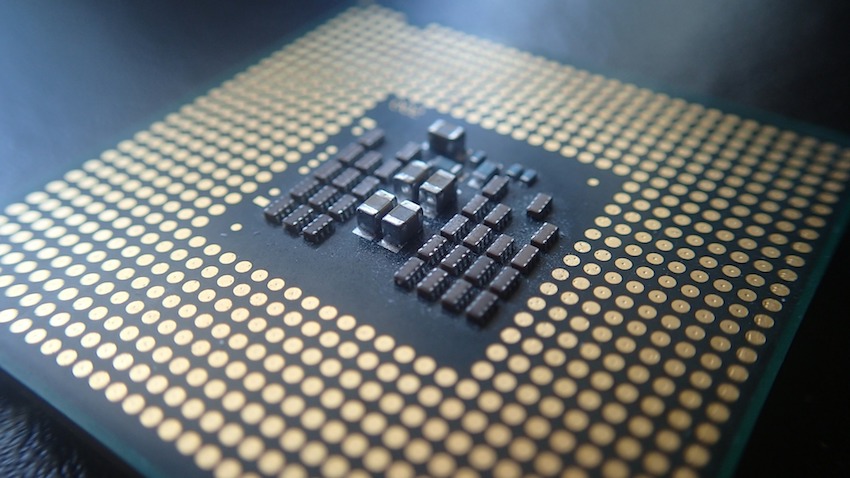
The semiconductor domain is working on devices for faster and more energy-efficient chips, some of which switch with light. An important development, as demand for chips is expected to double by 2030. The European chip regulation therefore aims to strengthen European leadership and increase production capacity to 20% of the global chip market. The programme could give the Netherlands a key position in the market.
Finally, NXTGEN HIGHTECH aims to have developed a system for autonomously operating factories by 2030, with international standards and digital product passports. This will ensure a good digital infrastructure and more security within the supply chain. The ambition of the smart-industry sub-programme is to double the productivity capacity in Dutch industry in the next 20 years.
The Dutch Systems Engineering approach
Parallel to the developments in the six domains, we are working on strengthening the competences of the systems thinking profession. The Netherlands has long had a thriving high-tech industry and has a lot of experience in the subject of systems engineering. At the same time, it remains a challenge to properly transfer the knowledge of increasingly complex systems to the next generation.
Together with colleges and universities, NXTGEN HIGHTECH aims to lay the building blocks for sustainable cooperation in the high-tech industry. The aim is for 'The Dutch Systems Engineering Approach' to be fully embedded in Dutch education by 2030. This approach offers more job prospects in the high-tech industry and ensures a good fit with the rapidly changing labour market. Only by continuing to invest in technical knowledge and skills will the Netherlands become future-proof.
Author: Wouter Hoeffnagel
Image: Tobias Dahlberg via Pixabay











