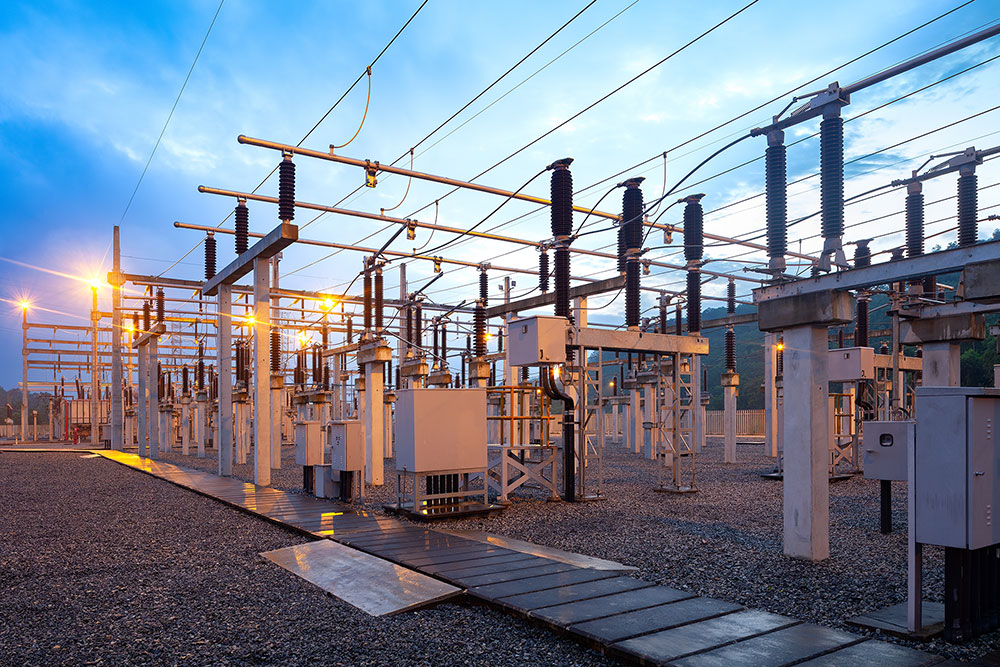
To make the Dutch economy future-proof, be able to connect new homes to the electricity grid and become more energy independent, large-scale investments in grid infrastructure are necessary. "Investments in the grids are a very wise choice, because it delivers more to society than it costs," he said.
In addition, by switching from gas to electricity, the Netherlands will become more independent from fossil energy from dubious countries and we will combat climate change." So says Olof van der Gaag, chairman of the Dutch Sustainable Energy Association (NVDE).
Keep the economy going
There are currently more than 20,000 businesses on the waiting list for a higher-capacity electricity connection. This is because they wish to expand or become more sustainable. Reducing the waiting list by making the maximum possible effort to build new electricity infrastructure will yield far greater benefits for the Netherlands than it costs. A new government report (IBO Funding of Electricity Infrastructure) shows that grid operators need to invest eleven billion euros a year in the grids. That is only around one per cent of our Gross Domestic Product. Grid investments generate tens of billions in social value annually, according to a study by BCG. It is important to streamline planning permission procedures as much as possible, as upgrading a grid can take as long as ten years.
Better utilisation of the electricity grid helps reduce grid costs
Making better use of the grid has the potential to reduce investment costs by 30 billion euros until 2040. We can make better use of the grid by encouraging electricity consumption in businesses and households. There has to be plenty of room on the grid. And of course less if things get tight. In doing so, also match locations for energy generation and storage to locations with energy consumption. These measures can reduce the required investments in the onshore electricity grid by up to 30 per cent. Moreover, timely measures can free up more grid space now.
If grid tariffs depend on when power is used, it must be certain that investment security for sustainability is maintained. Vander Gaag also calls on the government to fully commit to the roll-out of heat networks. But also on renewable gases and energy saving, as this will reduce the need to weigh down the electricity grid.
Offer households and businesses structural solution for lower energy bills
It is important to improve the affordability of energy bills for households and businesses. Previous research by TNO showed that more households could find themselves in financial difficulty due to rising energy prices. Making homes more sustainable and the continued growth of renewable energy are structural ways of reducing energy bills. With the funds allocated by the Government in 2023 for the energy price cap, over 1.1 million households could achieve a structurally secure energy bill that is 1,100 euros lower than at present.
European Commission's Action Plan for Affordable Energy also offers concrete measures to reduce energy costs. The NVDE is positive about the European Commission's call to reduce taxes on electricity. "Electricity is more than one and a half times more heavily taxed than gas, while precisely the switch from gas to electricity is the key to an affordable and sustainable energy supply," said Olof van der Gaag. A lower tax on electricity encourages this electrification. It is also good for affordability for business and improves our investment climate and competitive position.
Green interest rebate
To keep grid costs manageable, the European Central Bank may introduce an interest rate rebate for renewable energy projects. This would save the Netherlands 15 billion euros in grid costs, according to research by Berenschot. Households and businesses will save ten per cent on their net tariff as a result. The high interest rate is mainly caused by inflation due to high fossil energy prices. Lower 'green' interest rates accelerate the energy transition and make us less dependent on inflation-causing coal, oil and natural gas.











