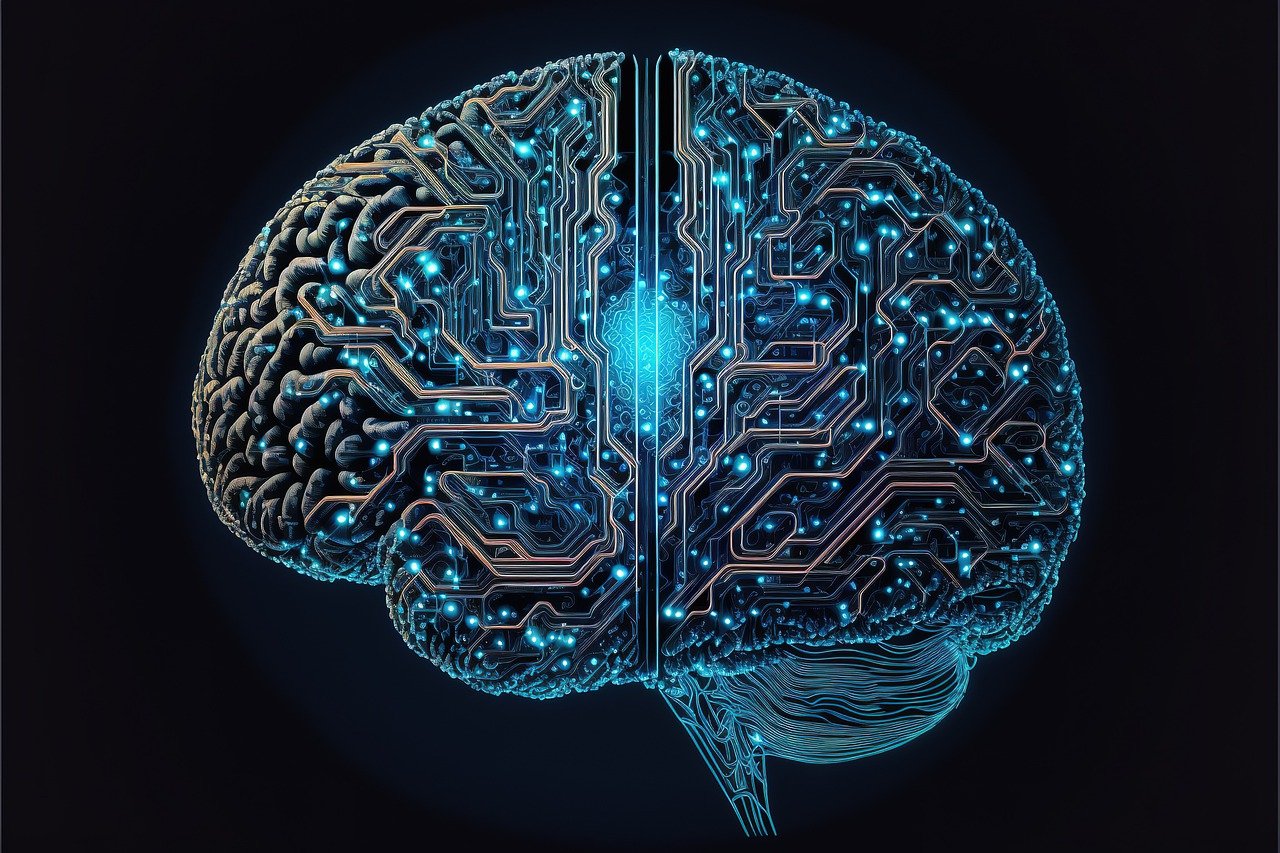

Neuralink gets US FDA approval for clinical testing of its brain implant. This implant can communicate with a computer and, according to founder Elon Musk, should eventually enable paralysed people to move their muscles again, among other things. However, consider also giving sight back to blind people.
For quite some time, Neuralink has been working on its implant. The US company was founded in 2016 by Elon Musk in collaboration with about seven scientists and engineers. The company first went public in March 2017. The company raised $158 million in funding in mid-2019, Musk himself also invested heavily at the time; he put $100 million into the company.
From regaining sight to surfing the internet from your brain
Neuralink is working on a chip that the company plans to implement directly into people's brains. The company wants to use this to address various medical conditions. These include paralysis, where the chip should restore communication between the nervous system and the brain. Another example is restoring sight in people who have gone blind.
However, Musk foresees more possibility. He expects it will eventually even be possible to surf the internet from your brain using the chip. As recently as April 2021, Neuralink showed how a monkey could play the video game Pong using its Neuralink implant. This is not entirely new, by the way; similar technology has been available since 2002. A key difference between this older technology and the Neuralink implant is that the latter works wirelessly. In the long term, Musk claims to want to achieve a "symbiosis with artificial intelligence" with Neuralink.
Prototype to be demonstrated in 2019
That Neuralink is making strides with its development has been clear for some time. Back in 2018, for instance, Gizmodo reported that Neuralink wanted to open a facility for conducting animal tests in San Francisco. A first prototype of the Neuralink was shown to the public during a presentation at the California Academy of Sciences in 2019. This prototype consists of very thin probes that Neuralink implants in the brain using an operating robot, and an electrical system that can process information coming from neurons. The prototype is based on technology developed by UCSF and UC Berkeley.
For some time, Neuralink has wanted to get started on conducting clinical trials. For instance, the company already asked the FDA for permission to conduct clinical trials with its implant in early 2022. However, this request was rejected then. So now this permission has arrived, Neuralink announced on Twitter. It speaks of an important first step through which the company's technology could one day "help a lot of people".
We are delighted to announce that we have received the FDA’s approval to launch our first-in-human clinical trial!
This is the result of incredible work by the Neuralink team in close collaboration with the FDA and represents an important first step that will one day allow our…— Neuralink (@neuralink) 25 May 2023
Details of the clinical tests Neuralink wants to conduct are lacking. For instance, it is unclear what the objectives are in these tests.
ONWARD Medical is also making headway
By the way, Neuralink is certainly not the only party developing this kind of technology. A local example is Swiss-Dutch ONWARD Medical, which recently presented Brain Computer Interface (BCI) that allows paraplegic patients to walk again. The company demonstrated its technology in practice. Gert-Jan Oskam, who was partially paralysed in a cycling accident 12 years ago, saw his walking ability improve significantly thanks to the implant.
Oskam was implanted with a spinal cord stimulator from ONWARD Medical five years ago. Thanks to this implant, his walking ability improved and he was able to walk 100 metres with the help of a walker instead of 20. This spinal cord stimulator is now combined with a brain implant. This combination allows for more natural movements. The researchers report that this has further improved Oskam's walking ability. In a video, the patient tells, among other things, that he can stand better, with all kinds of practical examples. For example, he can now have a beer with friends at the bar again.
Operate a speech computer
Another example is the UMC Utrecht, where a brain implant was placed in an ALS patient in 2016. Using this implant, she can operate a speech computer, communicating with her family and caregivers. The patient operates the speech computer by moving her fingers in her mind. This leads to a change in the brain signal under the electrodes, which is converted into a mouse click. On a screen, the patient sees the alphabet and some additional functions, including backspace. Each time, one of the letters lights up, after which the patient can select a letter by making a mouse click in the brain. Once a word is composed, the speech computer reads it aloud.
Author: Wouter Hoeffnagel
Photo: Kohji Asakawa via Pixabay











