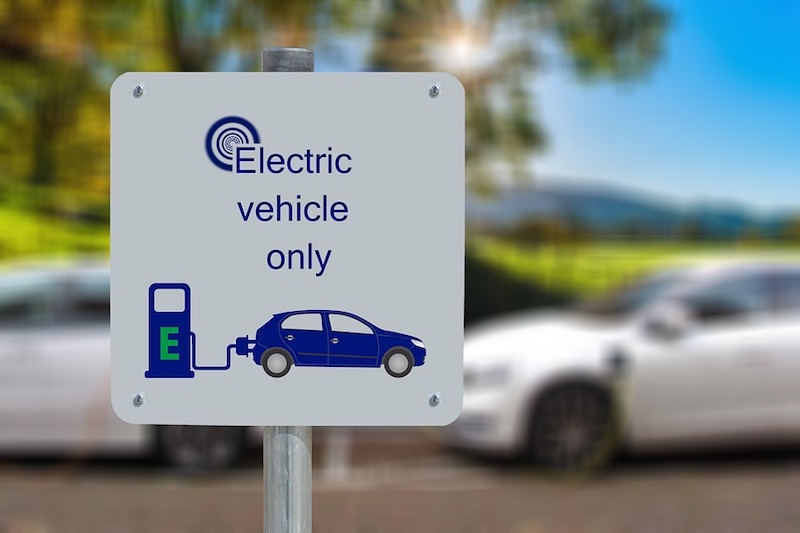

A milestone: the limit of 500,000 charging stations in the Netherlands has been passed, a report by the National Agenda Charging Infrastructure (NAL) shows. At the same time, the Mobility Alliance calls on the government to invest billions of euros in making electric mobility more accessible.
The NAL is a multi-year policy agenda with ambitions and actions to ensure that electric vehicles in the Netherlands can always be charged easily and smartly everywhere. The starting point here is that charging an electric car should be as easy as charging a mobile phone. A widely available charging infrastructure should enable a rapid transition to electric transport.
'We are well on course'
Gerben-Jan Gerbrandy, chairman NAL: "We are well on course. The Netherlands is among the leaders in Europe when it comes to charging infrastructure. But there are also challenges. The growth of electric transport is increasing every year. The construction of charging infrastructure is currently hampered by grid congestion, especially when rolling out fast chargers and charging options for heavy transport. Sufficient available charging capacity is a concern, while this is a prerequisite for the rollout of charging infrastructure. Much is being done nationally and regionally by governments and grid operators to make smarter use of and expand capacity. These interests for mobility should be more firmly embedded in decision-making."
At the end of April 2023, the Netherlands had a total of 518,000 charging points, according to the progress report published by NAL. This figure includes both public and private charging points as well as fast chargers. The Netherlands has a total of more than 384,000 private charging points.
In urban areas more pointed to public chargers
The figures show, among other things, that the ratio of public to private charging varies greatly by region. This is partly because residents of certain regions are more likely to have their own driveway or parking space. In urban areas, this is less often the case, which is reflected in NAL's report. For instance, the number of private charging points in urban areas is proportionally lower than in rural areas.
People in urban areas are therefore relying more on public charging infrastructure. In rural regions, 88 per cent of electric car owners charge at home. Nationally, this percentage is 67 per cent.
Charging infrastructure coverage is highest in the more urban regions. Coverage is particularly high in the north-west and south-west of the Netherlands. An interactive map provides a visual overview of the coverage. The NAL aims to have a nationwide charging network in place by 2025.
Number of fast chargers grows
The number of fast chargers is also increasing rapidly, especially along motorways. However, also consider throughput locations, including shopping centres, supermarkets and DIY stores. In addition, more and more parties are investing in realising fast-charging infrastructure.
The number of battery electric cars in the Netherlands has been rising sharply in recent years. However, the (semi-)public charging infrastructure is rising proportionally along with it, reports NAL. For instance, the ratio of the number of electric vehicles per (semi-)public charging point has hovered just above four vehicles per charging point in recent years. The number of plug-in vehicles per public charging point has been stable in recent years at around 7 to 7.5 vehicles per charging point. However, this number has been increasing somewhat over the past period.
If private charging points are included, a different picture emerges. In that case, the ratio is 1.2 vehicles per charging point. The growth in the number of charging points can therefore currently keep up with the growth in the number of plug-in vehicles.
NAL also points here to the European aspiration: the EU recommends member states to aim for one publicly accessible charging point (public and semi-public including fast chargers) for every 10 electric vehicles. This includes both public and semi-public chargers, including fast chargers.
Placement rate of charging points accelerates
The growth in the number of charging points is also accelerating. In 2019, this number was still around 400 charging points per month. Currently, it is over 1,000 public charging points that are being added every month. The acceleration in the placement rate is visible in every region.
In the report, NAL also identifies bottlenecks. A major concern here is the cost of electric charging, with the energy crisis playing an important role. Gerbrandy: "Due to the energy crisis, charging a car has sometimes become two to three times more expensive. The removal of tax incentives after 2025 and higher motor vehicle taxes due to the higher weight of electric cars will further exacerbate that effect. Without measures that make the electric car more financially attractive relative to the fossil fuel engine, the government's climate goals on mobility could be seriously jeopardised."
Another bottleneck NAL points out is the electrification of the logistics sector. Besides grid congestion, challenges include the high purchase cost of electric equipment, long delivery times of electric trucks and the construction of sufficient charging infrastructure for heavy transport. NAL reports working on solutions to simplify the transition to electric driving for entrepreneurs.
More funding needed for sustainable mobility
At the same time, the Mobility Alliance is calling on the government to provide more financial incentives for a transition to electric driving. The alliance advocates expanding the Climate Fund to include a transition fund for sustainable mobility. This should allow more citizens and companies to participate in the climate transition and ensure support.
The Mobility Alliance points out that only 1.7% of the available budget within the Climate Fund is available for making mobility more sustainable. This while the sector accounts for 18% of CO2 reduction. The Mobility Alliance calls this ratio skewed and calls for a more balanced distribution.
Marga de Jager, chairman of the Mobility Alliance: "Mobility is of great significance for the prosperity and well-being of the Netherlands. Every day, millions of people are on the road to work, school, friends or family. But that has to remain affordable. If the sustainability of mobility is almost entirely the responsibility of citizens and companies, support for it will quickly diminish, with all its consequences. Incentives therefore remain badly needed."
Transition fund for sustainable mobility
The Mobility Alliance brings together 26 mobility parties, including the ANWB, several transport companies, Fietsersbond, Vereniging Zakelijk Rijders and Schiphol Airport. They call on the government to create a transition fund for sustainable mobility. The parties argue that making the available funds per sector more proportional is necessary to keep Dutch people mobile in a sustainable and affordable way. They call this an important prerequisite for participating in society.
In doing so, the alliance makes a number of proposals. For instance, the alliance calls it important to prevent grid congestion for (heavy) mobility. The fund can also encourage sustainable mobility, allowing users to combine different zero-emission transport methods to get to their destination in a sustainable way.
Public transport in dire straits
However, consider also public transport, which the Mobility Alliance says should also be accommodated financially. For instance, the sector is struggling with high energy prices, inflation and disappointing passenger numbers. In practice, this means, among other things, rising costs for passengers and pressure on supply.
"This threatens to put public transport in a downward spiral, even though public transport is an important part of the solution to the climate challenge. The Mobility Alliance therefore urges to take measures that will allow public transport to recover and grow again," the Mobility Alliance writes on its website.
The government can also help by removing administrative and fiscal barriers. Think of being able to offer benefit cards for family members of an employee at a low addition rate. By extension, the alliance points to the importance of encouraging pedestrians, (electric) cyclists and other forms of sustainable mobility to get to stations, stops or the final destination.
'Current policy makes sustainable transport less attractive'
The Mobility Alliance warns that with current policies, the transition to a sustainable car is becoming less and less attractive. For instance, the parties point to the weight of electric vehicles, which is often higher due to the presence of batteries. The Mobility Alliance calls for a weight correction for electric vehicles. Without such a correction, stakeholders fear that the monthly motor vehicle tax for an electric car will be 60% higher than for a petrol car of similar size. This would deter many consumers from switching to a (used) electric car.
Second, the alliance calls for the reintroduction of an attractive additional tax rate for clean vehicles. This incentive is now in danger of being abolished altogether. The parties fear that this will greatly inhibit the rapid build-up of a healthy second-hand market for electric vehicles.
"Finally, the government must move away from the idea that the flow of money from car taxes must be maintained. In practice, this makes car driving more expensive, which erodes the necessary support for the transition," the Mobility Alliance concludes.
Author: Wouter Hoeffnagel
Image: geralt via Pixabay