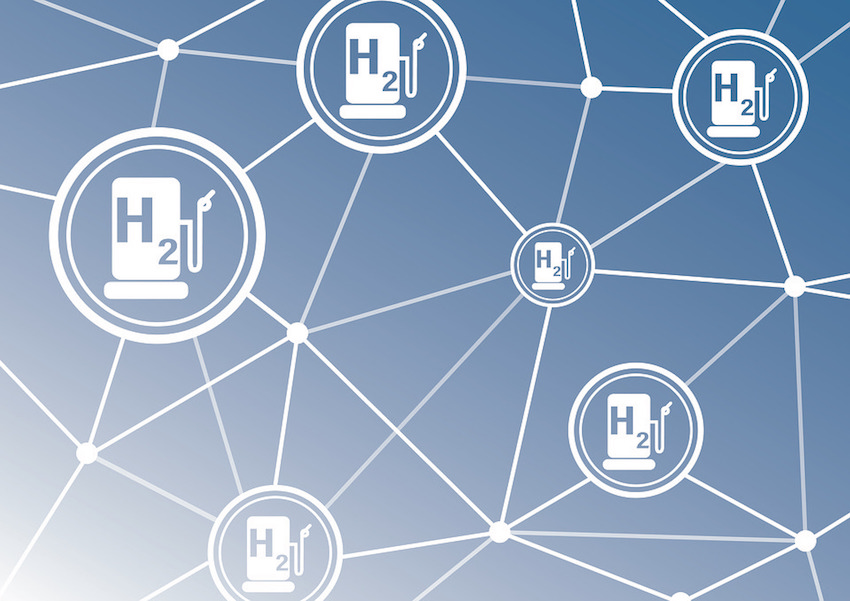

The cabinet wants to stimulate the use of hydrogen as a fuel for trucks and (van) cars. It is allocating a total of €125 million to help entrepreneurs make the switch to hydrogen. Among other things, this should lead to the arrival of 40 new hydrogen filling stations and the introduction of several thousand hydrogen-powered vehicles on Dutch roads in the coming years.
An important part of the energy transition is phasing out the use of fossil fuels. Among others, many business vehicles such as trucks, vans and business passenger cars still run on diesel or petrol. The government points to several advantages of hydrogen-powered vehicles: they are clean, have a long range, do not need to be recharged and therefore do not involve problems with the power grid.
Make sufficient hydrogen refuelling stations available
The government therefore wants to encourage entrepreneurs to switch to driving on hydrogen. An important condition for this is the availability of sufficient hydrogen filling stations. With a subsidy of 125 million euro, the government wants to facilitate the arrival of some 40 new hydrogen filling stations in the Netherlands. In addition, several thousand hydrogen-powered vehicles should find their way onto Dutch roads.
With the subsidy, the cabinet wants to make hydrogen a serious alternative for entrepreneurs who want to drive cleanly. Hydrogen should thus become a good option alongside battery-powered electric driving. State Secretary Viviane Heijnen of Infrastructure and Water Management: "Hydrogen can really break through with this. The promise of hydrogen has been there for years. Especially for entrepreneurs who want to drive cleanly over longer distances with a heavier car, such as a truck, hydrogen can be ideal. But then there need to be refuelling stations and plenty of choice for entrepreneurs. It is time to make sure hydrogen fulfils its promise."
Transport companies and filling station owners must join forces
Entrepreneurs can apply for the subsidy from March 2024. Each application must include at least one filling station and the purchase of enough trucks or vans to make the filling station profitable right from the start. On average, this will involve around 10 to 15 hydrogen trucks.
In practice, this means that transport companies and filling station owners have to join forces in a subsidy application. State Secretary Heijnen thus wants to put an end to the 'chicken-and-egg discussion' whether you must first have a filling station so that people can fill up, or first cars so that you can profitably build a filling station.
The cabinet wants to subsidise up to 40 per cent of the cost of building a hydrogen filling station. In addition, it wants to compensate 80% of the price difference per truck or van compared to a diesel variant. As a condition for refuelling stations, the cabinet stipulates that they must be suitable for both trucks and passenger cars, and be publicly accessible.
In line with European objectives
The subsidy scheme has a duration of four years and runs from 2024 to 2028. The scheme should lead to a nationwide network of hydrogen filling stations, which is in line with European targets. For instance, the EU requires hydrogen filling stations to be found along all main European motorways by 2030. In practice, there should be at least 30 in the Netherlands. The government is therefore aiming for forty filling stations with the subsidy scheme. The Netherlands currently has 17 hydrogen filling stations. Of these, four meet the European requirements that come into force in 2030.
The number of hydrogen-powered vehicles running on Dutch roads is also limited for the time being. The cabinet talks about a "handful" of trucks and vans, while some 600 passenger cars are running on hydrogen.
Long-standing focus on hydrogen
The Netherlands has long been committed to the use of hydrogen. For example, as part of a pilot scheme, a number of listed properties in Lochem have been using hydrogen for heating since December 2022. These are the first homes in the world to be heated using hydrogen.
However, there are also plans for the development of large-scale hydrogen production north of the Wadden Islands. The wind farm is expected to generate around 500 megawatts of electrolysis capacity and be operational from 2031. The Port of Rotterdam Authority had also previously set aside an 11-hectare site for the construction of a large-scale green hydrogen plant.
Author: Wouter Hoeffnagel
Photo: akitada31 via Pixabay











