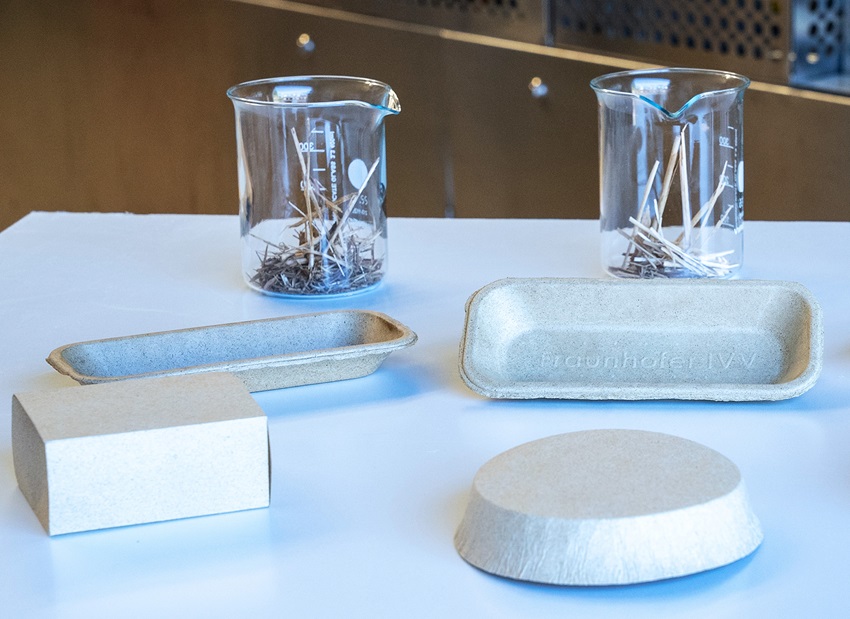

Peat moss, reeds and other marsh plants are already used as building materials, animal feed and food. However, due to their lower lignin content, peat plants could also be an attractive alternative to wood as a raw material for sustainable paper packaging. Researchers at the Fraunhofer Institute for Process Engineering and Packaging (IVV) have shown in feasibility tests that bog plants have great potential for the production of folding boxes, trays and the like.
The main component of paper is the raw material wood. Against the background of sharply rising market prices and a high import quota for wood raw materials, alternative raw material sources are becoming increasingly important for the production of paper packaging. This led researchers at the Fraunhofer IVV in Freising and Dresden to investigate the potential of marsh plants such as reed, sedge and canary grass for sustainable packaging and test corresponding production processes. They did this in the "PALUDI" project. The project is part of the Fraunhofer Initiative for Biogenic Value Creation and Smart Farming. It was funded by the Federal Ministry of Education and Research, the Bavarian State Ministry of Economic Affairs, Regional Development and Energy and the Ministry of Science, Culture, Federal and European Affairs of Mecklenburg-Western Pomerania.
Marsh plants
The bog plants are specifically cultivated in wetland fens and bogs for the project. In the future, bog plants will be given more space. This is because the EU Restoration Act of February 2024 stipulates that at least 30 per cent of the area of forests, grasslands and wetlands must be rewetted and restored. This is also known as paludiculture. "This refers to cultivating wet heathlands with site-adapted plant species. It helps preserve bogs and marshes. And it contributes to climate protection because it minimises CO2 emissions. Another reason to do more research on it," says Fabian Kayatz, who leads the project at the Fraunhofer IVV.
Low lignin content
Compared to wood, reeds and other marsh plants are characterised by lower lignin content. This means that fewer chemicals are needed in breaking down the plant fibres to obtain a fibre quality high enough for packaging applications. This was the result of chemical characterisation of paludicultures from the Freisinger Moos. Depending on the plant, they reached a lignin content between 20 and 23 per cent. Compared to softwood and hardwood, the lignin content of the harvested material was 25 and 15 per cent lower, respectively. "The less lignin present, the lower the use of acids or alkalis during, for example, chemical pulping. And the more stable a fibre network forms," the researcher explains. Moreover, pulp made from these plant fibres has better mechanical properties than pulp made from other straws such as maize or bamboo.
Fibre pulp processes
Moreover, lignin from non-lignified plants is easier to extract or separate from the fibres. This means that pulp processes, such as alkaline soda pulp, are less energy-intensive than conventional paper production from wood. In the pulp process developed in the project, which was tested on reeds and transferred to other paludicultures, the researchers were able to work with temperatures below 100 °C. The values are up to 45 per cent lower than the lowest values for chemical fibre pulp processes. They therefore require less energy. Depending on the set parameters, the Fraunhofer IVV process was able to extract up to 83 per cent of the lignin.
Pulp yield
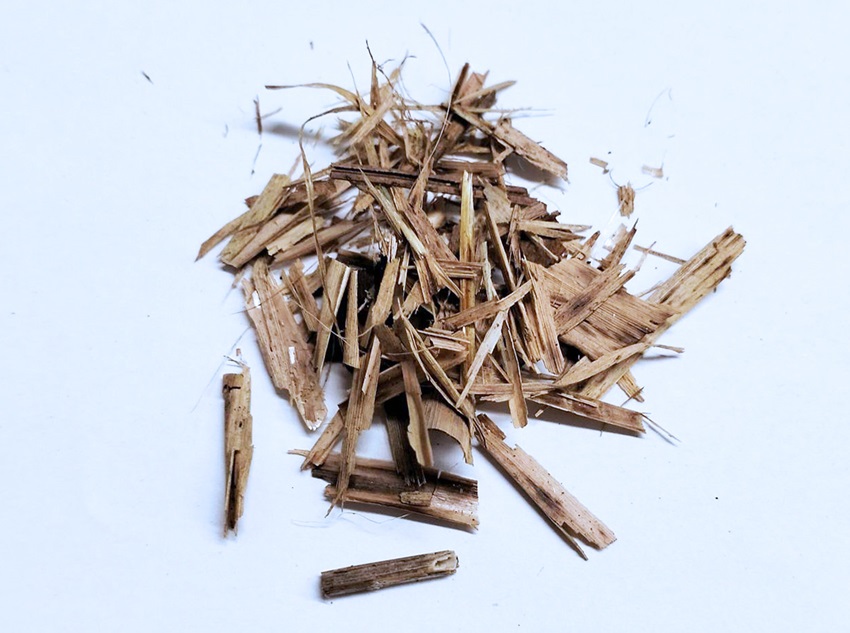
"After harvesting the marsh plants, the biomass obtained could be further processed on an industrial scale at the pulp mill. There, pulp production would then take place by breaking down the plant fibres," said the researcher. He explains the initial process steps for pulp production, although the project was still working on a laboratory scale. Depending on the setting of the combined parameters, the pulp yield was up to 53 per cent, which is within the expected range for conventional chemical processes.
Easy processing
Further tests showed that the flat fibre cast paper produced was easy to process. The tensile strength of the flat cast fibre samples was significantly higher than that of the reference sample, which was shaped like an egg carton. The addition of additives such as starch and glue agents increased the tensile strength and elasticity and water-repellent properties of the paper. In addition, the paper produced from paludiculture was found to be suitable for converting processes such as folding, gluing and printing.
Innovative packaging for the non-food sector
Using fibre casting and deep drawing processes, the researchers were able to produce stable paper pots and trays made of cane fibres without using additives. The researchers developed laboratory plant specifically for the production of these packaging demonstration models. "The potential of swamp plants for producing innovative, bio-based packaging is huge. We were able to demonstrate this with our successful development of resource-saving processes for pulp production. The environmental aspect is very important to us. We support the survival of our peatlands, for example by rewetting farmland and using it for paludiculture," the researcher summarises. However, further optimisation steps are needed to convert production to industrial scale and design consumer-friendly packaging for consumer goods. For example, in terms of sensory perception or coating of the material. Initially, the aim is to produce packaging for the non-food sector, such as cosmetics, logistics and office equipment.
Source: Fraunhofer
Opening photo : Sustainable packaging made from marsh plants (photo: Fraunhofer IVV)
Also read: Glue made from feathers











