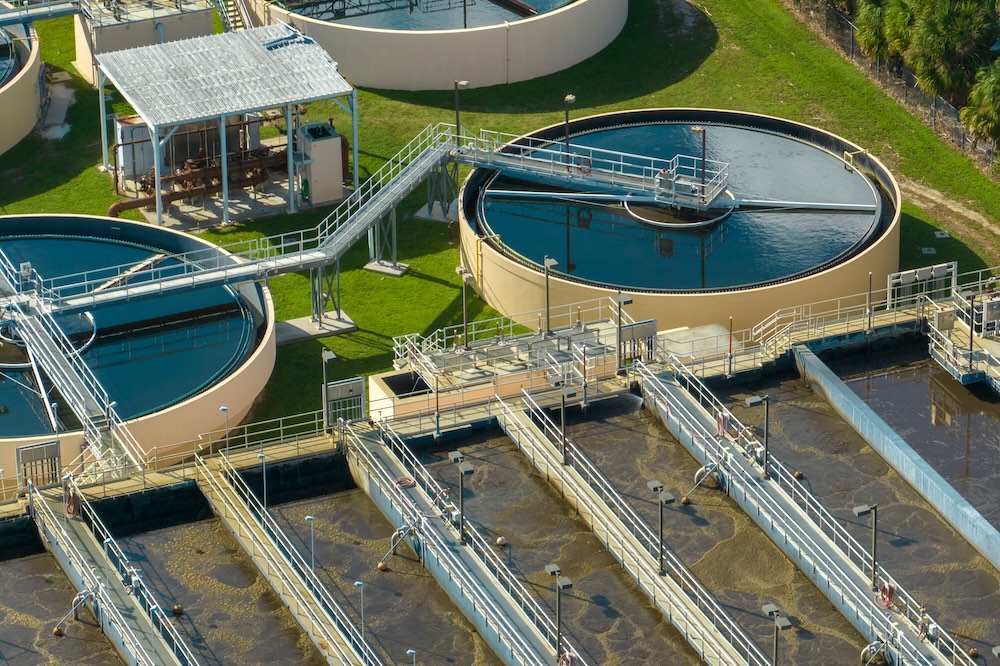

Several strategies can help reduce nitrous oxide (N₂O) emissions, popularly known as nitrous oxide, from water treatment plants. Thus, the environmental impact of water treatment can be reduced.
N₂O is released at water treatment plants mainly through the activities of microorganisms, which purify wastewater. They live in complex communities, with each group playing its own specific role. It is known that N₂O emissions occur throughout the day and season.
Underlying process largely misunderstood
However, the underlying process within micro-organisms that produce N₂O is largely misunderstood. So far, this has made it difficult to develop effective measures to reduce N₂O emissions.
Research by Michele Laureni (University Lecturer in Bioprocess Engineering) and Mark van Loosdrecht (Professor of Environmental Biotechnology) in collaboration with the Dutch water boards and STOWA is changing this. Led by these parties, Nina Roothans, who has now obtained her PhD, spent two years investigating how individual micro-organisms in wastewater treatment plants influence each other. She used advanced techniques, including DNA and protein analyses.
Several factors influence
The study was conducted at the Amsterdam West wastewater treatment plant of Waterschap Amstel, Gooi and Vecht, which is managed by Waternet. The wastewater treatment plant served as a model system. The study shows that various environmental factors including temperature and oxygen affect N₂O emissions.
Among other things, the research shows that the build-up of nitrite - an intermediate product in the breakdown of nitrogen compounds - is related to the imbalance between two types of bacteria. One is bacteria that convert ammonium to nitrite, while the other is bacteria that convert nitrite to nitrate. Since nitrite is a precursor of nitrous oxide, this imbalance seems to be the main cause of nitrous oxide emissions.
Oxygen concentration plays important role in imbalance
It also appears that oxygen concentration is the most important factor causing this imbalance. Important, since oxygen concentration is a parameter on which operators have direct 9influence.
Laureni: "The great thing is that in principle, the solution does not require any major infrastructural changes. The idea is that gradually increasing oxygen levels in winter, rather than abruptly, can already lead to a significant reduction in emissions. Moreover, this is a great example of how basic research can lead directly to applicable technical insights."
'Interventions can be simple and cost-effective'
The study's findings can help water boards reduce N₂O emissions from water treatment. Importantly, the study also found that the required interventions can be both simple and cost-effective.
Whether the proposed strategies are actually successful in practice will have to be proven in the next few years. two new PhD students, in cooperation with the water boards and Royal HaskoningDHV, are looking into the further development and validation of the strategies.
Also of value for agricultural sector
The fundamental insights from Roothans' research could also be of value to the agricultural sector reports TU Delft. In this sector, microbial nitrous oxide emissions pose an even greater challenge.
More information can be found in an article published by the researchers in the scientific journal Nature.











