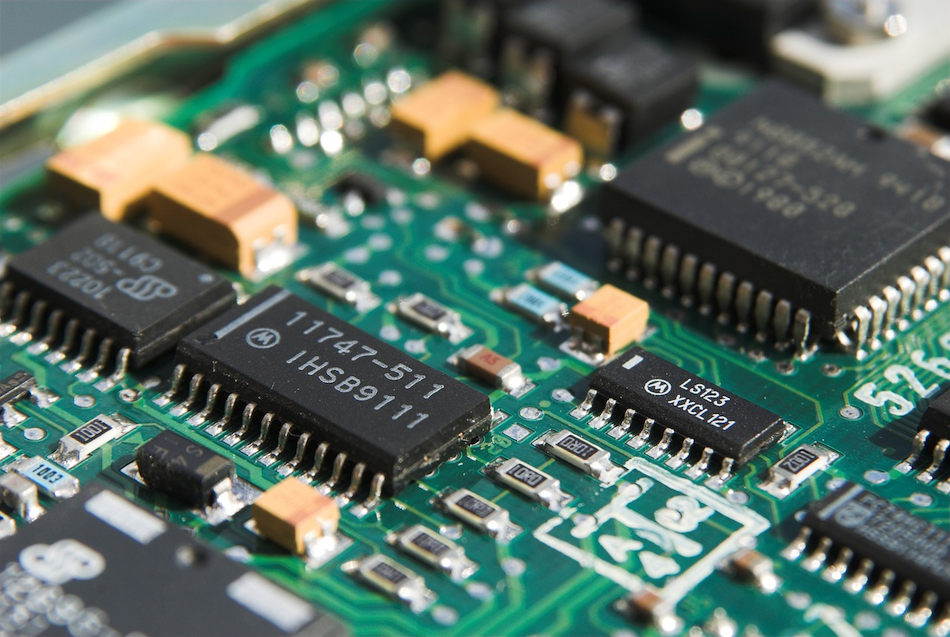

Semiconductor shortage hits no sector as hard as the automotive sector. Globally, 18 billion fewer vehicles have been produced due to the chip shortage. European automakers in particular are facing production problems. The cost of the semiconductor crisis to the European automotive industry is estimated to be around €100 billion in 2021 and 2021, reports credit insurer Allianz Trade.
The automotive industry has to partly turn a blind eye when it comes to the cause of the problems. Allianz Trade argues that the industry is partly to blame for the problems itself. Johan Geeroms, Director Risk Underwriting Benelux of Allianz Trade: "In order to absorb the corona hit, car manufacturers made severe cutbacks. Among other things, by minimising stocks and orders of semiconductors. As a result, chip manufacturers sought refuge elsewhere and aligned production with strong markets such as computers and data centres. When the car market picked up, only a limited amount of chips turned out to be available for the automotive industry."
Unprecedented low production
Vehicle production in Europe has fallen to an unprecedented low of 13 million vehicles. Signs of recovery were visible in late 2021 and early 2022. However, production has since slowed again. This time not because of the chip shortage, but because of supply problems due to ongoing lockdowns in China and the Russian attack on Ukraine."
Geeroms: "According to our calculations, in 2021 and 2022 the chip shortage will have cost Europe almost €100 billion in added value. On the positive side, historically low inventory levels at retailers seem to indicate great upside potential from the automotive sector." However, Geeroms immediately adds that chip supply in Europe will remain an uncertain factor for a long time to come.
Investing in own chips
The European Commission introduced the European Chips Act earlier this year. With it, the commission is making tens of billions of euros available to boost chip production on European soil.
"Europe should not think it can produce enough chips on its own within five or 10 years to fully meet its own demand. Better to focus European support on achievable targets. Then you have to look at products for which Europe itself is both a major production and end market. The car industry is a prime example. Its own chip production should focus on that," Geeroms argues. He therefore calls it advisable to enter into joint ventures with large global chipmakers.
How many chips in cars continues to grow
The use of chips will only continue to grow, Allianz Trade expects. In this respect, the credit insurer points to three developments. For instance, chips provide connections to the manufacturer's network and drivers' phones. But also consider safety, such as motion sensors and blind spot detection. The electrification of vehicles also calls for the use of more chips. Electric cars, for instance, contain twice as many semiconductors as combustion-engine cars.
"If we add up the value of all the chips in a car, we arrive at an average of over €600, globally. With that, that value has more than doubled in the last 10 years. This trend will only continue," Geeroms concludes.
Author: Wouter Hoeffnagel
Photo: axonite via Pixabay











