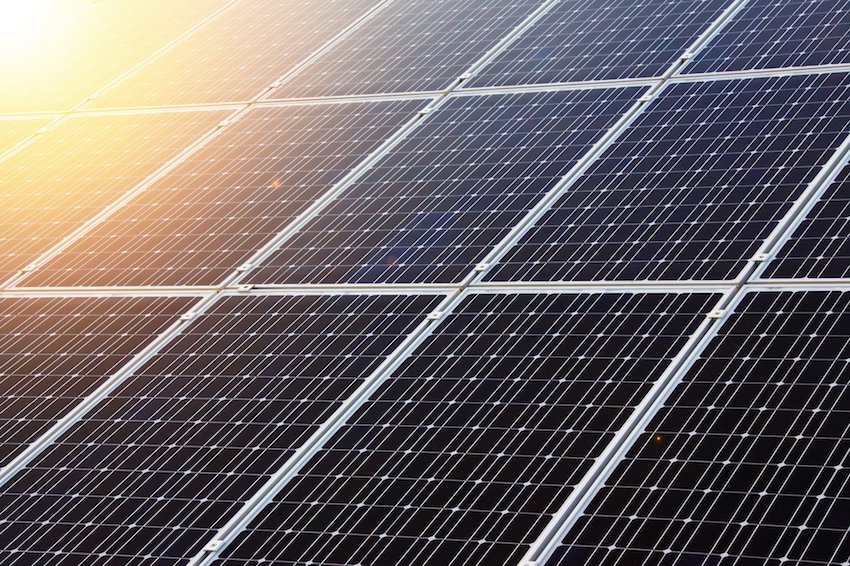

Organisation Producer Responsibility Foundation E-waste Netherlands (OPEN) expects an exponential increase in the number of discarded solar panels in the next 20 years. The foundation says this based on research it commissioned from TNO. To finance the recycling and processing of solar panels in the future, the OPEN Foundation is launching a solar panel guarantee fund on 1 July 2023.
The Foundation has reached an agreement on this with producers and importers of solar panels. OPEN Foundation director Jan Vlak: "We are taking measures now to be prepared for future waste streams. With a stable tariff for the coming years, we can guarantee the high-quality processing of discarded solar panels soon."
Collection and processing
OPEN Foundation regulates the collection and processing of discarded solar panels. The number of solar panels will certainly grow considerably in the next 20 years. This is because more and more consumers are opting for sustainable forms of energy. The current tariff is based on a pay-as-you-go system. This still hardly releases any solar panel waste. With an increasing waste flow, this pay-as-you-go system is no longer adequate. Therefore, in consultation with the industry, it was determined that a tariff of EUR 40 per tonne is needed.
Valuables from solar panels
By the end of December 2021, 14 Gigawatts (GW) of solar panels had been installed in the Netherlands. Converted, that is about 46 million panels. Because of the energy transition, this number will grow rapidly to 42.8 GW (about 140 million panels) by 2030. By 2044, growth is expected to stabilise at 87.5 GW (about 290 million panels). After a lifetime of between 15 and 30 years, solar panels will be discarded.
Increasing waste stream
Meanwhile, the waste stream from solar panels will continue to grow until, at some point, a replacement market emerges. Alongside this shift towards a replacement market, the transition to a circular economy is also taking place. That is why the OPEN Foundation will not only process the current waste and build up the fund. It will also work on optimising the recovery of valuable materials such as silver, silicon and glass – in addition to aluminium, which can already be easily reused. In this way, circularity and cost-effective recycling go hand in hand.
Recycling
"Part of growing and professionalising our sector is also paying sufficient attention to recycling. This proposal is an important step towards fleshing this out," said Wijnand van Hooff. He is Managing Director of Holland Solar, the trade association of the Dutch solar energy sector.
Circular economy
The Ministry of Infrastructure and Water Management is responsible for the transition to a circular economy. It responds positively to the OPEN Foundation's approach. "The strong growth in the number of solar panels as a result of the energy transition makes energetic action necessary. We are pleased that OPEN Foundation and the industry are taking the initiative for this concrete contribution to the realisation of a circular economy in the Netherlands," the ministry said.
Photo: Image by PublicDomainPictures via Pixabay











