3D printers are increasingly being used for medical purposes. For example, 9-year-old Guido Sibering from Emmen made headlines early this year with a 3D-printed hand prosthesis costing just 52 euros. Other examples include a 'heart on a chip' that allows researchers to safely test the effect of drugs or a fully customised eye prosthesis that could be developed using a 3D printer. 3D printers therefore offer interesting opportunities in healthcare.
3D-printed hand prosthesis
9-year-old Guido Sibering from Emmen was born without a left hand. Although the boy is fine living with his disability, he wanted a prosthesis that would allow him to grasp objects. The Dagblad van het Noorden newspaper reports that the boy therefore searched the internet himself for information on hand prostheses, after which he independently selected a suitable hand prosthesis.
The hand prosthesis was built by a mechanical engineer in close consultation with Guido's doctors. Because the prosthesis could be fully printed, the total hand prosthesis cost only 52 euros. In comparison, an average 'ordinary' hand prosthesis quickly costs several tens of thousands of euros.
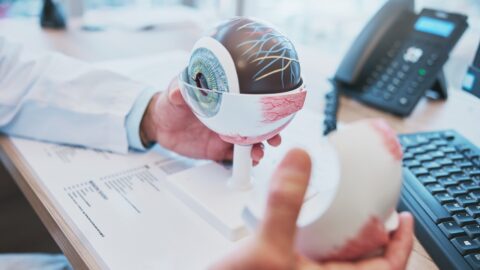
Eye prosthesis based on 3D model
Ophthalmologists at UZ Leuven in the middle of last year developed a custom-made eye prosthesis based on a 3D print of the eye cavity. This is the first time this technique has been used for this purpose.
Traditionally, eye prostheses are made using a mould impression of the patient's eye socket. Researchers at UZ Leuven are taking a different approach. They used a medical cone beam computed tomography (CBCT) scan and 3D software to create a 3D model of the eye cavity, which was then printed out using a 3D printer. An ocularist, specialising in the development of eye prostheses, adapted and customised a 'standard' eye prosthesis for the patient based on this design.
Currently, it is not yet possible to print an eye prosthesis directly in plastic. Prof Ilse Mombaerts, specialist in eye surgery at UZ Leuven: "We saw a directly 3D-printed eye prosthesis a few years ago in England, but only in standard format. A standard prosthesis is not good enough quality to wear day after day. Printing a customised eye prosthesis directly is not yet technically possible. We hope to be able to take that step eventually."
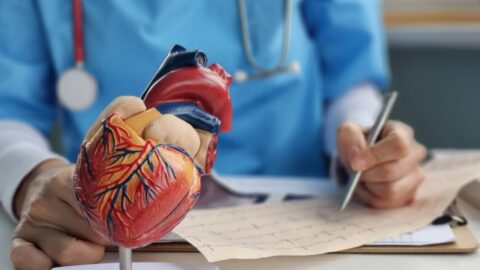
3D-printed heart for heart drug research
Many drugs are tested on laboratory animals. Not only do some people have objections to this, but the speed at which drugs can be tested using this method is limited. Researchers at US Harvard University have developed an artificial heart that offers a solution. Produced using a 3D printer, this 'heart-on-chip' enables faster data collection in medical trials.
Simulating body functions and human organs in a lab is not new. For some time, microphysiological systems have been available that make this possible. However, producing such systems is not only expensive, but also time-consuming. The Harvard Gazette reports that the use of a 3D printer could significantly reduce the production time of such systems.
The heart-on-chip that Harvard University is experimenting with was printed using six different inks, incorporating tiny sensors. These sensors make it possible to test drugs, but also to better predict the development of heart disease.
Incidentally, Harvard University is not the only party experimenting with such chips. For instance, the US Lawrence Livermore National Laboratory (LLNL) is working on a 'human-on-chip' within the 'In-vitro Chip-based Human Investigational Platform' (iCHIP) project. This testing platform offers the ability to simulate multiple human organs and can therefore be used for drug testing on the human body.
By: Wouter Hoeffnagel
Photo: Shutterstock