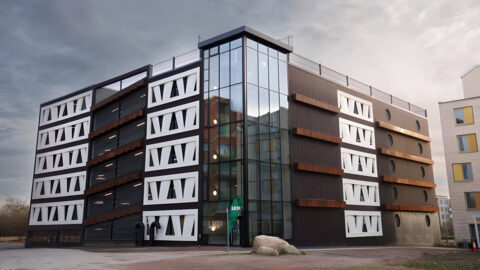

Secondary wood, which is wood that has been used before, is going to play an important role in achieving the sustainability goals of the construction industry. This wood has been reused for some time, including in the form of circular CLT (c-CLT). TNO is working with market parties in the TNO BioBuilt facility to scale up this type of building material.
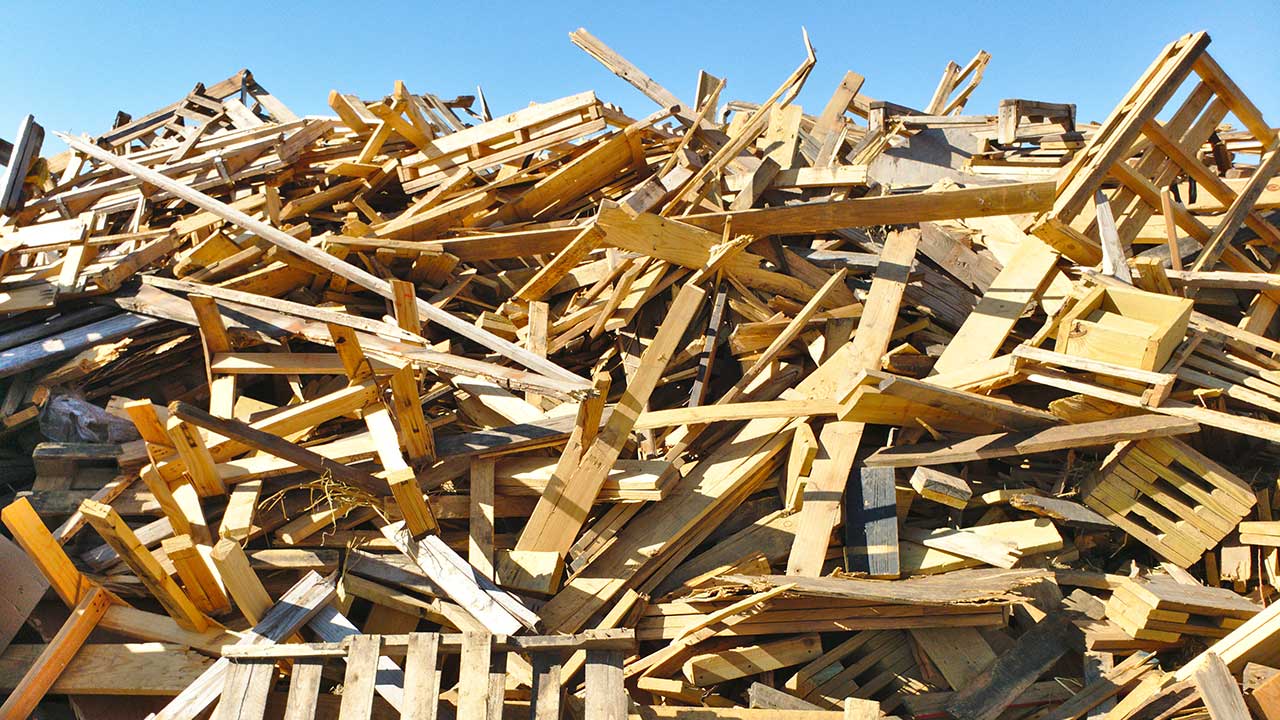
TNO sees a major opportunity in secondary wood to reduce emissions from the construction sector. Today, for instance, this wood is often burned to generate energy, releasing carbon. Reusing secondary wood in construction ensures that the carbon stored in the wood remains stored for longer. Thus, it contributes to limiting global warming.
'Equivalent to a house made of brick or concrete'
Niels Vonk, scientist innovator at TNO and specialised in the application of secondary wood: "The Netherlands has a long tradition of building with stone-like materials such as brick and concrete. We are not originally timber builders, like in Norway where the majority of homes are made of wood. Of course, we also have less forest here, but at least as decisive is the limited acceptance: by no means everyone wants to live in a wooden house. Therein lies a nice challenge for us: to show that a wooden house is equivalent to a house made of brick or concrete in all respects."
The Netherlands has several parties developing new bio-based building materials with the aim of making the construction sector CO2 neutral. However, according to Vonk, they often lack specific knowledge, resources and facilities to scale up. Through TNO BioBuilt, TNO supports the building sector with material knowledge, test methods and production techniques. TNO also gives parties access to machines that allow companies to produce their first so-called '0-series'.
300,000 tonnes annually
The total Dutch wood market is around 6 million tonnes per year, Vonk clarifies. About 1.5 million tonnes of secondary wood is returned on an annual basis. Of this, an estimated 20% is suitable for reuse as solid wood, amounting to about 300,000 tonnes.
Wood residues can also be used in laminated timber building materials, such as CLT (Cross-Laminated Timber) and Glulam (Glued Laminated Timber). "The combination of secondary wood with new wood, of which we also have a reasonable supply in the Netherlands, offers a lot of potential for the development of high-quality bio-based building materials. You can, as we say, 'put the right wood in the right place'."
Combination of new hardwood and secondary wood
"In laminated applications, the inner layers may be weaker than the outer layers, which have to absorb more stresses. In our c-CLT, we use new hardwood for the outer layers, with a core of secondary wood, e.g. from pallets. This is how you work up low valued material into a widely used and sought-after building product for load-bearing walls or floors."
More information on the use of secondary wood in the construction sector can be found here, where Vonk elaborates on the subject.