Exactly 400 years after the Mayflower departs from England for the New World, an autonomous, solar-powered research vessel is set to embark on a mission to collect environmental data on the ocean.
After two years of preparation, the Mayflower Autonomous Ship set off from Plymouth in Devon for a six-month trial run. It aims to cross the Atlantic next year following the route taken by the Pilgrims in 1620.
Artificial intelligence
As the name suggests, there is no captain at the helm, but an artificial intelligence-based navigation system developed by MarineAl. This 'Al Captain' uses data from the onboard radar, GPS, nautical charts, environmental sensors, a fathometer, a transport management system and weather data.
This modern-day Mayflower can scan the horizon for potential hazards, make decisions based on the information gathered, and alter its course based on real-time data. As such, the vessel has more in common with state-of-the-art computer technology than with its17th-century namesake.
Trimaran
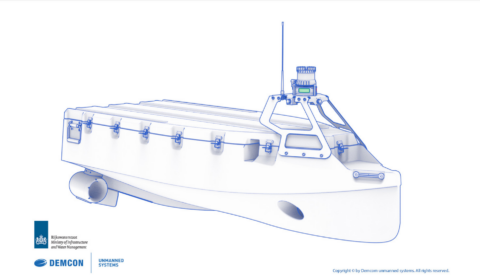
The Mayflower is designed as a trimaran that is 15 metres long and 6.2 metres wide and weighs 4.5 tonnes - less than 3 per cent of the weight of the original Mayflower. The project is a collaboration of IBM and non-profit ocean research ProMare, along with a global consortium of partners - including Thales, Nvidia, the University of Plymouth and Aluship.
The navigation system is composed by navigation satellite systems, inertial measurement unit, radar, satellite communication system, automatic identification system and a weather station. There are six AI-controlled cameras, more than 30 on-board sensors, at least four computers and other sophisticated equipment.
Hybrid propulsion
The hybrid electric propulsion system is powered by solar energy and consists of two twin 20 kW permanent magnet motors and lithium iron phosphate batteries. The vessel's top speed is 10 knots. In addition to the autonomous research vessel, IBM and ProMare have also announced the MAS400 portal. This provides real-time updates on the vessel's position as well as information on environmental conditions and data from research projects. Through the chatbot Artie, visitors to the portal are informed about the ship and its journey. In this way, the public is enthused about protecting our oceans.