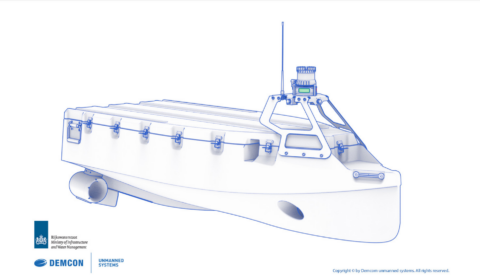
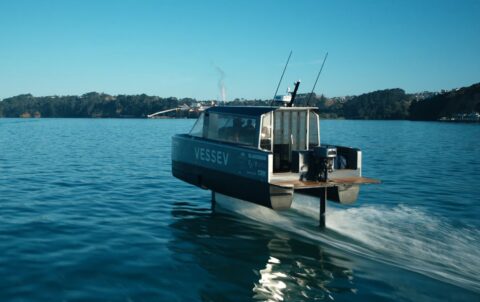
RH Marine is to conduct research into safer autonomous sailing over the next three years. The Schiedam-based company wants to develop alogritms that will allow unmanned self-steering vessels to sail from A to B efficiently. The algorithms will also recognise dangerous situations and learn to avoid these hazards.
Project
The research is part of a larger European project called Safer Autonomous Systems (SAS). It is led by KU Leuven, where the safety of various autonomous systems will be investigated. A consortium of companies are taking part in the project, including MIRA, Bosch, Airbus, Jaguar and Lloyd's Register. RH Marine, together with Dutch maritime research institute MARIN, will focus on the safety of unmanned ships. The project is funded by the EU Horizon 2020 programme, which links and stimulates research and innovation.
RH Marine integrates electrical and autonomous systems in superyachts, dredging and offshore industries and the defence, security and sectors. "We were approached for this project because of our experience and expertise in the field of innovation," said Portfolio Manager Marcel Vermeulen in a press release. "We are already developing complex systems for the naval, dredging, offshore and superyacht sectors. Our future goal is to make our customers' vessels autonomous. By participating in SAS, we can take important steps towards that ambition."
Three algorithms
The main goal of the SAS project is to build certainty into the safety of autonomous systems. To achieve this, RH Marine will develop three different algorithms. The first aims to optimise the path from A to B of autonomous ships in such a way that they can sail as efficiently as possible and at the lowest cost. This algorithm should be able to operate on an entire fleet. In addition, the research should lead to an algorithm that, based on data from sensors, provides a complete overview of the situation and therefore also recognises potential hazards. The third algorithm should avoid those hazards. "That is still the missing link in many systems," says Vermeulen. "Ultimately, the ship itself has to be able to decide what to do in difficult situations. Sometimes, besides following the rules, good ability of sailors is decisive. With artificial intelligence technology, we need to develop an algorithm that works smarter but recognisable for humans."
Over the next three years, a PhD student will be appointed to work with RH Marine's development team on the algorithms. The researcher will also undertake short internships at KU Leuven, MARIN and Lloyd's Register. "Lloyd's participation in the consortium is important because all kinds of different rules have to be set for autonomous sailing. that is also being investigated."
Europe leading
SAS is a so-called Early-Stage Research (ESR). The ultimate goal is to demonstrate through safety analysis and other technologies that the behaviour of an autonomous ship remains safe at all times and in all situations. Globally, it is not the only project focusing on this topic. Vermeulen: "With this project, Europe can take the lead. We already have the technology to control ships from a distance, so they can all be unmanned. We will spend the next few years looking at how we can safely operate fully autonomous ships."
Source + photo: RH Marine.