Old bread increasingly ends up in the beer glass. One of the latest ''old bread beers'' is that of Kaapse Brouwers and Jordy's Bakery. They will be tasting the Kaapse Jordy from 19 May at the 4th Anniversary Beer Festival that the Kaapse Brouwers will then organise at the Fenix Food Factory in Rotterdam.
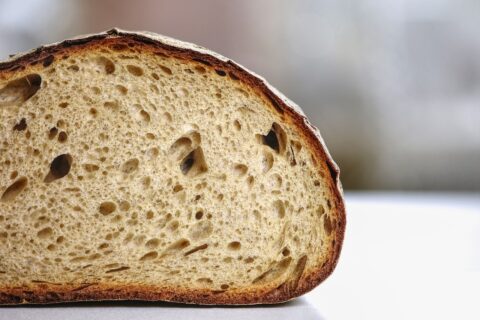
The latest old bread beer comes from the collaboration of craft baker Jordy Klootwijk and beer brewery Kaapse Brouwers. Both entrepreneurs operate in Rotterdam's food hall at de Kaap, Katendrecht. For the Kaapse Jordy, the brewers used Jordy's Bakery's unsold sourdough bread instead of a third of the base malt. This produced a fine Strong Saison with 8 per cent alcohol, a true Rotterdam beer, but the collaboration is above all a good contribution to reducing food waste. The Kaapse Brouwers used about 270 kilos of old bread for 5,000 litres of beer. From bakery to brewery The brewers on Katendrecht ensure that leftover bread from baker Jordy does not end up in the rubbish container, but goes into their brewing process. So do several other entrepreneurs elsewhere in the country. For example, Plus supermarket entrepreneur Jeroen Bruggers in Winterswijk has started a collaboration to develop a new beer with local beer brewer Wentersch. Bruggers is working on this in a pilot with the Supermarket Foundation and Wageningen University & Research (WUR).Some of the bread left over in his two supermarkets and at his bakery outlets already goes to the Food Bank. The other remaining bread goes to Wentersch where it replaces some of the malt used to brew the beer. The brewery also gives another ingredient from the process back to the baker: from beer brew - a protein-rich product left over after soaking grain for wort - bakery Schreuder in Eibergen bakes beer brew bread. The customer thus buys a local product with a story and from a closed chain, an example of circular economy. Brewing beer requires a considerable amount of old bread; about 1,000 litres of beer can be brewed with 125 to 150 kilos of bread. And it's true: a glass of beer contains about one slice of bread.Also in other projectsThe Cape Jordy and Achterhoek beer are not the only projects in which saved bread becomes beer. Some other examples of great co-creations: brewery De Monnik in Monnickendam, with Sneetjesbier - named after former local café De Drie Sneetjes - gives the leftover bread from local baker Gutter a new chance. Amsterdam-based Beeblue, which developed Toost beer from toast and bread together with the brewers of Branie Bier, is going one step further in processing waste streams. The entrepreneurial collective is investigating opportunities in product development of granola, biscuits and bitterballs using toast, bread and malt. The Bammetjes beer, which restaurant Instock launched last year, is brewed at brewery Troost from leftover bread from supermarkets. The beer is one of the products of the platform Verspilling is verrukkelijk and has recently been on a special waste shelf with products from saved food at the Jumbo supermarket in Wageningen.
The dishes on Instock restaurant's menu also consist of leftover products from the supermarket. Instock's restaurants in Amsterdam, The Hague and Utrecht also serve Pieper Beer, made with potatoes, and, like Bammetjes beer, on sale at Albert Heijn.
Bread in top 5 most wasted
Bread is number two in the top five most wasted products after dairy. We throw away around 120 million kilos of bread every year in the Netherlands, a pile of 435,000 every day. We consume an average of 60 kilos of bread a year, of which 20 per cent is wasted, while the average baker has to throw away around 10 to 15 per cent of the bread baked every day. A considerable residual stream to process sustainably.