
Researchers from the RUG, the UMCG and TU Delft are collaborating on a button cell battery that is safe for children. Important, because if children swallow a button cell battery it can have far-reaching consequences and in some cases can even be fatal.
That a button cell battery can be dangerous for children is known to most parents. However, how big the consequences can be is less known. For instance, around 2,000 children die every year after swallowing such a battery.
Found in almost every household
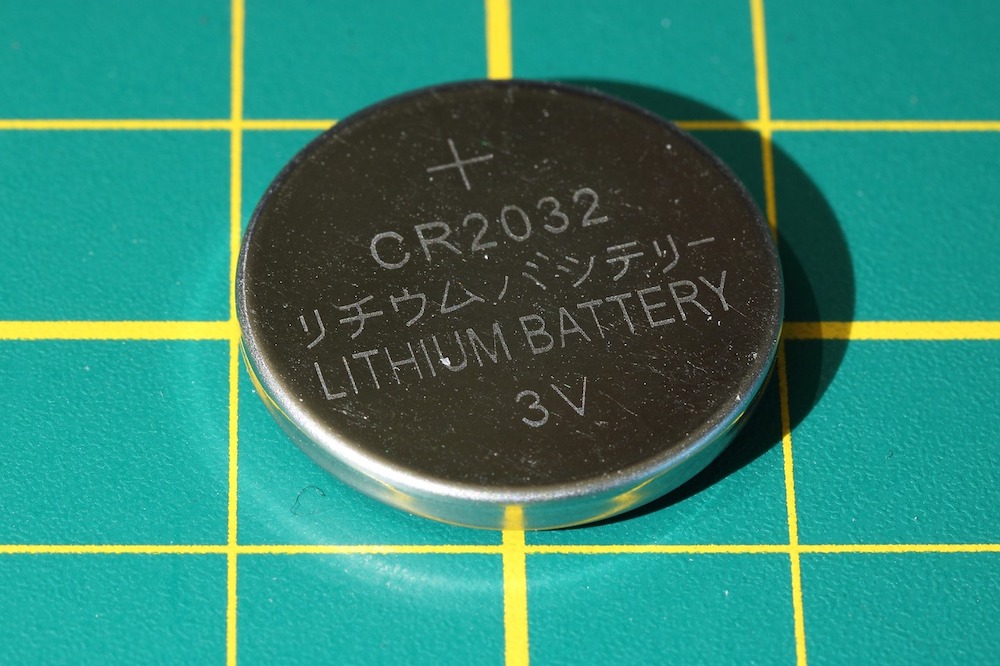
A button cell battery - with a diameter of 2 cm - can be found in a wide range of devices. These include a car key and LED candles, but also cooking alarm clocks, remote controls and soft toys. In the vast majority of households, batteries can therefore be found in several devices.
However, this is not without risk. If a child swallows a battery, it may cause tissue to dissolve. This can lead to permanent damage and in the worst case even death.
Electrical charge dissolves tissue
The new button cell battery developed by the RUG, the UMCG and TU Delft should provide a solution. The button cell battery is equipped with a fuse, which automatically interrupts the flow of the button cell battery a few minutes after ingestion. This can prevent a lot of damage.
Heart-lung surgeon Tjark Ebels of the UMCG explains, "When a button cell battery is swallowed, the electrical charge generated by the battery will immediately start dissolving tissue, leaving a child with permanent damage or, in the worst case, death. In collaboration with TU Delft, we have developed a fused button cell battery. This fuse automatically interrupts the flow of the button cell battery within minutes of ingestion. This power interruption prevents a lot of suffering. The good thing is that the Fused Button Battery system is compatible with all standard manufacturing processes for button cell batteries. We are now focusing on the actual development of the button battery so that the child-friendly button battery will become the new standard. That, of course, is what we are doing it for."
For Ebels and ENT doctor Freek Dikkers, this was reason to join forces with TU Delft. In collaboration with Professor Marnix Wagemaker and Research Technician Frans Ooms, Ebels and Dikkers spent the past few years researching a child-friendly button cell battery. And with success; the RUG, the UMCG and TU Delft submitted a joint patent application for such a battery.
'Saving what can be saved'
Dikkers: "On several occasions, Tjark and I have stood together at the operating table with a child who had swallowed a button cell battery. These are operations where we try to save what can be saved. My grandson is also four and that is an extra motivation for me to make a strong case for this."
The parties highlighted the child-friendly button cell battery last week. They did so on 12 June, the date of the annual Button Battery Awareness Day. The day was initiated by the mother of US girl Reese Hamsmith, who died at the age of 1.5 after swallowing a button battery. The girl would have turned four years old this year.
Button Battery Awareness Day
The aim of Button Battery Awareness Day is twofold. On the one hand, Hamsmith's mother wants the day to make parents aware of the dangers of button cell batteries for small children. At the same time, the day aims to promote laws and regulations regarding a safe battery.
Successfully, by the way; US President Joe Biden signed Reese's Law in August 2022. This federal legislation aims, among other things, to make the use of button cell batteries safer for children. Among other things, it imposes requirements on the accessibility of the batteries, which should not be too easy for children. However, also consider mandatory warnings when selling products containing such batteries.
Eat honey if it does go wrong
The doctors also share a tip for parents in case their child does swallow a button cell battery. Eating honey can help. "Ironically, the danger comes from used/empty batteries that parents collect well-intentioned and take to the recycling bin once in a while. Don't leave empty batteries lying around, but take them away immediately or collect them somewhere your child really can't reach. And if it does happen: let your child eat honey. Fortunately, almost everyone has that in the house. And consult a doctor as soon as possible. If you get there in time, we can help your child properly and limit the damage," the doctors say.
Author: Wouter Hoeffnagel
Photo: Olaf via Pixabay










